The Torres Strait — a chain of over 100 islands stretching between the northern tip of Queensland and Papua New Guinea — is at the epicentre of Australia's mosquito-borne disease crisis. In 2024, a dengue outbreak on Masig Island led to a landmark discovery: for the first time in Australia, dengue virus was detected in Aedes albopictus (Asian tiger mosquito) collected during an outbreak where Aedes aegypti is now absent after being displaced by the invasive species [citation:1][citation:7].
This detection confirms the ability of Ae. albopictus to drive independent dengue outbreaks [citation:1]. With the Asian tiger mosquito now detected on the mainland at Bamaga in 2026 [citation:14], the findings serve as a critical warning for all Australian homeowners.
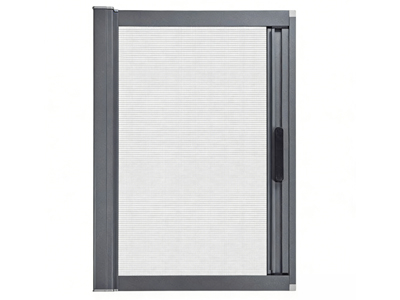
MBORMC H01 invisible retractable screen — blocking dengue-carrying mosquitoes from entering your home
🏝️ H01 Torres Strait Edition – Protect Against Dengue Vectors
2024 Masig Island Outbreak — The Numbers
In November 2024, the Torres and Cape Hospital and Health Service declared a dengue outbreak on Masig Island (also known as Yorke Island) [citation:4]. The outbreak resulted in seven confirmed cases of DENV-3 and one probable case, with local transmission ceasing within two weeks due to intervention with harbourage spraying targeting Ae. albopictus habitat [citation:7].
This followed earlier dengue outbreaks on Mer and Warraber islands in May and June 2024 [citation:4]. Across the Torres Strait, a total of 46 cases of dengue fever had already been recorded in 2024 before the Masig outbreak [citation:4].
On Mer Island, the earlier 2024 outbreak was linked to a large funeral attended by around 100 PNG nationals — illustrating how international movement drives local outbreaks [citation:13].
📊 2024 Torres Strait Dengue Outbreaks: Masig Island — 7 confirmed, 1 probable DENV-3. Mer Island — 44 probable/possible cases linked to PNG funeral. 46 total cases in the region prior to Masig [citation:4][citation:13].
First Detection of Dengue in Ae. albopictus in Australia
During the Masig Island outbreak response, researchers collected 40 adult female Ae. albopictus using sweep-net methods in forested areas on the fringes of the community, adjacent to residential addresses of some of the positive cases [citation:7].
Key findings:
- 9 of 12 mosquito pools tested positive for dengue virus RNA by qRT-PCR [citation:1]
- RNA sequencing confirmed the virus as dengue serotype 3 (DENV-3), consistent with the clinical serotype identified during the outbreak [citation:1]
- This is the first detection and whole genome sequencing of dengue virus in Ae. albopictus collected in Australia [citation:1]
- The detection occurred in the absence of Ae. aegypti, which has been absent from Masig Island in surveys conducted in 2005, 2016, 2021 and 2024 [citation:7]
The study concluded: "The detection of DENV-3 RNA in Ae. albopictus during a concurrent outbreak of the same serotype in the absence of Ae. aegypti supports the ability of Ae. albopictus to drive independent dengue outbreaks" [citation:1].
🔬 Landmark Discovery 2024: First detection of dengue virus in Aedes albopictus in Australia. 9 of 12 mosquito pools positive for DENV-3. Confirms the Asian tiger mosquito can drive dengue outbreaks independently of Ae. aegypti [citation:1][citation:7].
The Displacement — Ae. albopictus Replaces Ae. aegypti
Before 2005, dengue in Australia was transmitted primarily by Aedes aegypti [citation:1]. That year, Ae. albopictus (Asian tiger mosquito) was detected for the first time in the Torres Strait [citation:9].
Since then, Ae. albopictus has rapidly spread to additional islands and has displaced Ae. aegypti on most islands in the Torres Strait [citation:1][citation:10]. A 2019 study titled "Dominance of the Tiger" documented this displacement across the region [citation:15].
As of 2024, surveys have found that:
- Ae. aegypti is now absent on Masig Island [citation:7]
- Ae. aegypti is absent on most islands the species had previously occupied [citation:15]
- Ae. albopictus is now the dominant container-inhabiting mosquito on most islands [citation:15]
This displacement has major implications for dengue management in the region. Ae. albopictus is an aggressive daytime biter that breeds in a wider range of containers than Ae. aegypti, making it harder to control [citation:14].
🏝️ Species Displacement: Aedes albopictus has displaced Aedes aegypti on most Torres Strait islands since its introduction in 2005. Ae. aegypti is now absent on Masig Island [citation:1][citation:10][citation:15].
Dengue in Australia — Non-Endemic but Persistent Threat
Dengue is not endemic in Australia — outbreaks occur occasionally after viraemic travellers visit parts of Queensland where dengue vectors are prevalent [citation:1].
However, the Torres Strait has experienced frequent outbreaks since the 1930s:
- 1930s-present: Outbreaks in north Queensland, including Cairns, Townsville, Gladstone and Rockhampton [citation:7]
- 2016-2024: Outbreaks on Torres Strait islands where Ae. aegypti has disappeared [citation:1]
- 2024: Dengue outbreaks on Mer, Warraber and Masig islands [citation:4]
Rapid dengue tests proved reliable for early detection in remote areas during the Masig outbreak. Four residents presented with fever, myalgia and headache, and all tested positive with point-of-care rapid dengue tests (NS1, IgM, IgG) [citation:11].
Government Response — $3.8m Mosquito Control Program
In January 2025, the Australian Government committed $3.8 million to a mosquito control program in the Torres Strait Protected Zone [citation:3]. The program supports surveillance, control and, where possible, elimination of Aedes albopictus at main population and transport hubs, and increases community awareness regarding dengue, Zika and other mosquito-borne diseases [citation:3].
The program runs until June 2028 and is a Federal Financial Relations Health Agreement with the Queensland Government [citation:3].
💰 Government Response: $3.8 million committed to mosquito control in the Torres Strait Protected Zone (2025-2028) to support surveillance, control and elimination of Ae. albopictus [citation:3].
Control Challenges — Sugar Feeding and Attractive Baits
Implementing control of Ae. albopictus in the outer islands is challenging due to minimal infrastructure and capacity [citation:2]. Researchers are investigating Attractive Targeted Sugar Baits (ATSBs) as a potential control strategy for outdoor mosquitoes like Ae. albopictus [citation:5].
Key findings from Torres Strait research:
- 6,186 Ae. albopictus captured in village and bushland habitats across two islands [citation:2]
- Fructose prevalence: 31.6% in males, 30.5% in females — comparable to studies where ATSBs were effective [citation:2]
- This suggests ATSBs could potentially reduce Ae. albopictus populations in the Torres Strait Islands [citation:2]
Effective control strategies need to be "simple and easy to deploy in the remote outer Torres Strait Islands where there is minimal infrastructure and capacity" [citation:2].
What This Means for Australian Homeowners
The Torres Strait crisis has direct implications for all Australians. The Asian tiger mosquito is now on the mainland at Bamaga [citation:14]. The confirmation that Ae. albopictus can drive dengue outbreaks independently of Ae. aegypti means:
- If Ae. albopictus establishes on the mainland, the risk of large dengue outbreaks increases significantly [citation:1]
- Dengue could become endemic in Australia [citation:7]
- Personal protection — including window screens — is essential for every Australian home
How the H01 Protects Against Dengue Vectors
The H01 is specifically designed to block dengue vectors:
- Blocks Ae. albopictus — Fine 1.2mm mesh prevents the Asian tiger mosquito from entering
- Blocks Ae. aegypti — Primary dengue vector also blocked
- Daytime protection — Ae. albopictus bites all day; the H01 provides 24/7 protection
- Invisible when retracted — Preserve your views when the screen is not needed
- No-drill installation — Perfect for Australian renters and homeowners
- Removable and washable — Easy to clean and maintain
Comparison — H01 vs. Traditional Screen Solutions
How to Order Your H01 for Dengue Protection
Protecting your home is simple:
- Measure your windows or doors (width × height in mm).
- Choose your mesh type — PET for dust/pollen or 304 stainless steel for durability.
- Select your frame colour — any RAL colour to match your home.
- Contact us via WhatsApp or email with your specifications.
- Install yourself in minutes — no drilling required.
We ship to all Australian states and territories. All screens are custom-made to your measurements and shipped with a 2-year warranty.
For the first time, dengue has been detected in Asian tiger mosquitoes in Australia. Ae. albopictus has displaced Ae. aegypti on Torres Strait islands and is now on the mainland. Get your custom H01 today.
Get a Quote