Australia is facing a growing mosquito-borne disease crisis. In 2026, the invasive Asian tiger mosquito (Aedes albopictus) was detected for the first time on the Australian mainland — six individuals found in Bamaga, Cape York Peninsula, about 750 km northwest of Cairns [citation:4]. The species had been in the Torres Strait for two decades but had never been found "in the wild" on the mainland [citation:4].
Meanwhile, national cases of mosquito-borne viruses nearly doubled between 2023 and 2024 [citation:2][citation:7]. Ross River virus (RRV) surged from 1,710 to 3,375 cases, and dengue cases rose from 111 to 205 [citation:8]. The Public Health Association of Australia warns that warmer temperatures heighten the risk of RRV outbreaks, especially in coastal and riverland regions [citation:12]. The MBORMC H01 Invisible Retractable Screen offers Australian homeowners the protection they need — custom-fit screens that block disease-carrying mosquitoes, preserve views, and require no drilling.
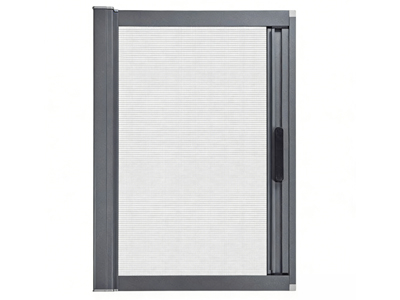
MBORMC H01 invisible retractable screen — protecting Australian homes from mosquito-borne diseases
🇦🇺 H01 Australia Edition – Built for Down Under
Australia's Mosquito-Borne Disease Threat – The Numbers
Mosquito-borne viruses (MBVs) remain a significant public health concern in Northern Queensland, with dengue virus (DENV), Ross River virus (RRV), and Barmah Forest virus (BFV) being the most common pathogens [citation:2]. The national case numbers tell a stark story:
- Ross River virus — 1,710 cases in 2023 → 3,375 in 2024 (97% increase) [citation:8]
- Dengue virus — 111 cases in 2023 → 205 in 2024 (85% increase) [citation:8]
- Barmah Forest virus — 349 cases in 2023 → 726 in 2024 (108% increase) [citation:8]
- Over 919 unclassified flaviviruses have been reported nationwide, including 117 in Queensland [citation:2]
- 2025 first-half data suggests sustained transmission during seasonal peak [citation:2]
RRV remains the predominant contributor to case burden, with major peaks in Townsville (402 cases in 2020) and Cairns (116 in 2020), and sustained detections in the Torres Strait and Cape York [citation:8].
📊 Australia MBV Surge 2023-2024: National mosquito-borne virus cases nearly doubled in one year. RRV +97%, dengue +85%, BFV +108%. Over 919 unclassified flaviviruses detected. "Recent surveillance data indicates increased MBV activity, with national case numbers nearly doubling between 2023 and 2024" [citation:2].
Asian Tiger Mosquito – The "Barbecue Stopper" Arrives on Mainland
In May 2026, the world's most invasive mosquito was detected on the Australian mainland for the first time. Six Asian tiger mosquitoes (Aedes albopictus) were found during routine surveillance near Bamaga, about 750 km north-west of Cairns [citation:4].
This aggressive daytime-biting insect can spread dengue, Japanese encephalitis, Zika and chikungunya [citation:4]. The species has been in the Torres Strait islands for decades but never "in the wild" on the mainland. University of Sydney evolutionary biologist Tom Schmidt said it was "incredible" that the mosquito had only just been detected in the wild, 21 years after it was first found in the Torres Strait [citation:4].
Dr Schmidt explained: "This is the first time that they're seeing multiple individuals on the mainland and not at an airport or seaport. It occasionally comes into Australian airports and seaports, and then those incursions will be eradicated" [citation:4].
The mosquito has a fitting nickname — the "barbecue stopper" — because of its aggressive biting behaviour. "Aedes albopictus is known for biting repeatedly, and they're very painful bites. When they're about, people tend not to want to go outside" [citation:4].
🦟 Asian Tiger Mosquito – Australia 2026: First detected on mainland Australia in Bamaga, Cape York Peninsula, in May 2026. The species had been in the Torres Strait since 2004-2005 but never on the mainland "in the wild." It is an aggressive daytime biter that can transmit dengue, Japanese encephalitis, Zika and chikungunya [citation:4].
First Detection of Dengue in Aedes albopictus in Australia
In 2024, a dengue outbreak on Masig Island in the Torres Strait led to a landmark discovery. Researchers collected adult female Aedes albopictus during the outbreak — where Aedes aegypti is now absent after being displaced by the Asian tiger mosquito [citation:5].
Dengue virus RNA was detected in 9 of 12 mosquito pools. RNA sequencing confirmed the virus as dengue serotype 3 (DENV-3), consistent with the clinical serotype identified during the 2024 outbreak [citation:5].
This represents the first detection and whole genome sequencing of dengue virus in Ae. albopictus collected in Australia [citation:5]. The findings confirm the risk of dengue outbreaks in mainland Australia if Ae. albopictus were to invade and expand beyond its current distribution [citation:5].
The study concluded: "The detection of DENV-3 RNA in Ae. albopictus during a concurrent outbreak of the same serotype in the absence of Ae. aegypti supports the ability of Ae. albopictus to drive independent dengue outbreaks" [citation:5].
🔬 2024 Torres Strait Discovery: First detection of dengue virus in Aedes albopictus in Australia. During a Masig Island outbreak where Ae. aegypti is absent, 9 of 12 mosquito pools tested positive for DENV-3. This confirms the Asian tiger mosquito can drive dengue outbreaks independently [citation:5].
Ross River Virus – Australia's Most Common Mosquito Disease
Ross River virus is the most common mosquito-borne disease in Australia, with around 3,000 cases reported annually [citation:12]. It can be spread by more than 40 different mosquito species, and hosts can include kangaroos, wallabies, bats, horses, and dogs [citation:12].
Ross River virus can cause a rash, fever and joint pain (arthralgia). While most people recover within weeks, in some cases symptoms — specifically joint pain — can persist, hindering quality of life [citation:12].
A 2025 scoping review led by the University of Adelaide, published in the Australian and New Zealand Journal of Public Health, found that warmer temperatures heighten RRV risk, especially in riverland and coastal regions [citation:12].
Key findings:
- Maximum temperatures linked to higher RRV cases in coastal Australia — particularly Queensland (Brisbane, Cairns, Townsville, Mackay, Bundaberg), NSW (North-East NSW), Tasmania (Sorell region), and WA (Mandurah) [citation:12]
- Minimum temperatures appeared to increase RRV risk in Darwin and inland regions of SA, Victoria and Queensland [citation:12]
- Cases are more likely when temperatures are between 17°C and 31°C, with infections spiking when temperatures are around 26°C [citation:12]
Lead author Christina Mary Varghese said: "It is very hard to predict RRV outbreaks, with a complex range of factors contributing to increased risk, including rainfall, humidity, and stagnant water conditions" [citation:12].
🌡️ RRV and Temperature: Ross River virus risk increases when temperatures rise. Cases are more likely between 17°C and 31°C, spiking at 26°C. Coastal Queensland, NSW, Tasmania and WA are at highest risk [citation:12].
Japanese Encephalitis Virus – A National Concern
In 2022, the unprecedented and widespread emergence of Japanese encephalitis virus (JEV) across many Australian states prompted the declaration of a Communicable Disease Incident of National Significance [citation:10].
In NSW, the 2024-2025 arbovirus season recorded five confirmed cases of JEV acquired in NSW [citation:11]. In Tasmania, the detection of a highly competent vector species for JEV, Culex annulirostris, during the 2024–2025 surveillance season underscores the need for a contemporary mosquito species inventory — the species had not been recorded from Tasmania since 1985, a 40-year gap [citation:10].
This highlights the dynamic nature of Australia's mosquito-borne disease landscape and the importance of ongoing surveillance and personal protection measures.
NSW Mosquito-Borne Disease Activity
In NSW, arboviral infections are notifiable under the NSW Public Health Act 2010. The most common locally acquired arbovirus infections are RRV and BFV [citation:11].
2024-2025 season totals [citation:11]:
- 498 RRV notifications (45 confirmed, 453 probable) — slightly higher than the 10-year average
- 90 BFV notifications (4 confirmed, 86 probable)
- 5 JEV cases acquired in NSW
- 1 locally acquired case of Kunjin virus
RRV notifications were highest in inland regions — Hunter New England (107), Murrumbidgee (107), and Western NSW (72) — with elevated activity also reported in coastal areas including Northern NSW (69) and Mid North Coast (67) [citation:11].
How the H01 Protects Australian Homes
The H01 is specifically designed for Australian conditions:
- Blocks RRV vectors — Over 40 mosquito species can transmit Ross River virus; the H01's fine mesh blocks them all [citation:12]
- Blocks dengue vectors — Blocks Aedes aegypti and Aedes albopictus (Asian tiger mosquito) [citation:5]
- Blocks JEV vectors — Blocks Culex annulirostris and other JEV vectors [citation:10]
- Built for Australian climate — 6063-T5 aluminium frame and PET mesh resist heat, UV and humidity
- Invisible when retracted — Preserve views of Australia's stunning landscapes
- No-drill installation — Perfect for Australian renters and homeowners
- Removable and washable — Easy to clean after dust storms and floods
How to Order Your H01 for Your Australian Home
Ordering is simple:
- Measure your windows or doors (width × height in mm).
- Choose your mesh type — PET for dust/pollen or 304 stainless steel for durability.
- Select your frame colour — any RAL colour to match your home.
- Contact us via WhatsApp or email with your specifications.
- Install yourself in minutes — no drilling required.
We ship to all Australian states and territories — Queensland, NSW, Victoria, WA, SA, Tasmania, ACT and NT. All screens are custom-made to your measurements and shipped with a 2-year warranty.
Mosquito-borne virus cases nearly doubled in 2024. Asian tiger mosquito now on mainland. Get your custom H01 today.
Get an Australia Quote