In May 2026, Australia's biosecurity authorities confirmed a discovery that had been feared for decades: the Asian tiger mosquito (Aedes albopictus) — known as the "barbecue stopper" for its aggressive, painful bites — had been detected on the Australian mainland for the first time . Six specimens were found during routine surveillance near the Bamaga community on Queensland's Cape York Peninsula, about 750 kilometres north-west of Cairns .
While the species had been established in the Torres Strait Islands since 2005, this is the first time multiple individuals have been found on the mainland away from airports or seaports . University of Sydney evolutionary biologist Dr Tom Schmidt described it as "incredible" that the mosquito had only just been detected in the wild, 21 years after it was first found in the Torres Strait .
The MBORMC H01 Invisible Retractable Screen offers Australian homeowners the protection they need — custom-fit screens that block this aggressive daytime biter, preserve views, and require no drilling.
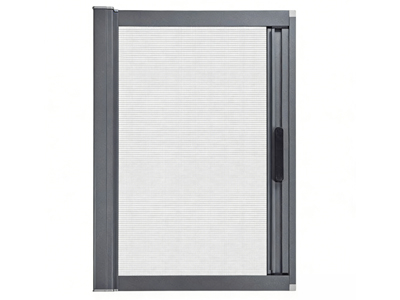
MBORMC H01 invisible retractable screen — blocking the 'barbecue stopper' from entering your home
🦟 H01 Asian Tiger Defence Edition – Block the 'Barbecue Stopper'
What Is the Asian Tiger Mosquito?
The Asian tiger mosquito (Aedes albopictus) is a small, black mosquito with distinctive white stripes, including a single white line running down its back . It is native to Southeast Asia but has spread to parts of Europe, the Americas, Africa, and the Pacific, mostly due to international travel .
Why It's Called the "Barbecue Stopper"
The nickname reflects the mosquito's relentless biting habits. Dr Tom Schmidt explained: "Aedes albopictus is known for biting repeatedly, and they're very painful bites. When they're about, people tend not to want to go outside" . It is an aggressive daytime biter, unlike most mosquitoes that bite at dawn and dusk .
Diseases It Can Carry
The Asian tiger mosquito can transmit dengue fever, yellow fever, Zika, chikungunya, and Japanese encephalitis . According to the Department of Agriculture, Fisheries and Forestry, its bite "can spread serious diseases such as dengue fever, yellow fever and several types of viral infections that can cause swelling to the brain" .
🦟 Asian Tiger Mosquito — Key Facts: Aggressive daytime biter. Distinctive white stripes. Nicknamed "barbecue stopper." Can transmit dengue, Zika, chikungunya, yellow fever and Japanese encephalitis. First detected on Australian mainland in May 2026 .
21 Years in the Torres Strait — A Waiting Game
The Asian tiger mosquito was first detected in the Torres Strait Islands in 2004-2005, likely arriving via Indonesian fishing vessels . The species quickly established itself across the islands.
In 2013, University of Queensland researcher Dr Nigel Beebe warned that the mosquito was "banging on our northern door demanding entrance" and that "once on the mainland, the Asian tiger mosquito is highly capable of travelling with humans and establishing as far south as Tasmania" . He called for "aggressively developing technologies to shut down the risk of an Asian tiger mosquito expansion into Australia" .
In the Torres Strait, Ae. albopictus has now displaced Ae. aegypti as the dominant mosquito species on many islands . During a 2024 dengue outbreak on Masig Island — where Ae. aegypti is now absent — dengue virus RNA was detected in 9 of 12 Ae. albopictus mosquito pools, confirming the species can drive independent dengue outbreaks .
🏝️ Torres Strait — A Warning Sign: Ae. albopictus was first detected in the Torres Strait in 2005. It has now displaced Ae. aegypti on many islands. In 2024, dengue virus was detected in Ae. albopictus during an outbreak on Masig Island — confirming the species can drive dengue outbreaks independently .
The 2026 Bamaga Detection — What We Know
On May 14-15, 2026, health authorities confirmed the detection of six Asian tiger mosquitoes — three male and three female — near Bamaga on Cape York Peninsula .
Key Details
- Location: Bamaga community, about 750 km north-west of Cairns
- Number: 6 specimens (3 male, 3 female)
- No viruses detected: The mosquitoes did not test positive for any viruses
- Response: Spraying operations underway on Cape York Peninsula
State MP for Cook David Kempton noted: "The biggest questions are, where are they coming from, and where are they now? If we find them in large numbers over a large area, we've certainly got an issue on our hands" .
How Did They Get There?
Dr Schmidt said the species excels at travelling with boats, planes, and trucks, and can survive cooler weather better than other tropical mosquitoes .
Possible sources include:
- Illegal foreign fishing activity — Mr Kempton said this "could not be discounted" as a source
- Torres Strait Islands — The species has been there since 2005
- Travel via cargo — The mosquitoes likely enter Australia as eggs or larvae in cargo capable of holding water, such as tyres, machinery, bulk steel and yachts
Dr Schmidt said genetic analysis could confirm where these particular insects originated from, and whether that was connected to illegal foreign fishers .
🔍 Bamaga Detection 2026: 6 specimens found during routine surveillance. No viruses detected. Spraying operations underway. Source unknown — illegal fishing, Torres Strait, or cargo travel possible. "If we find them in large numbers over a large area, we've certainly got an issue on our hands" .
Port of Brisbane Detection — A Border Interception
In 2026, another detection occurred at the Port of Brisbane. Seven adult Asian tiger mosquitoes were detected in a single trap at an Approved Arrangement facility .
Unlike the Bamaga detection, this was a border interception — the mosquitoes were detected at a port facility and were successfully eradicated. The site was treated with fogging and residual surface insecticides, and enhanced surveillance found no evidence of establishment .
Biosecurity officers examined recently imported freight items, including a battle tank for a museum collection and a trailer boat, and found no biosecurity risk .
This detection "highlights the importance of conducting mosquito vector monitoring at the border, which acts as an early warning system" .
🚢 Port of Brisbane Detection: 7 adult Ae. albopictus detected in 2026 at an Approved Arrangement facility. Successfully eradicated. No establishment. Highlights the importance of border surveillance .
Why the Asian Tiger Mosquito Is So Dangerous
Several factors make the Asian tiger mosquito a serious threat to Australia:
- Aggressive daytime biting — Unlike most mosquitoes, it bites throughout the day
- Disease vector — Can transmit dengue, Zika, chikungunya, yellow fever and Japanese encephalitis
- Survives cooler temperatures — Can establish as far south as Tasmania
- Travels with humans — Hitchhikes on trucks, planes, and boats
- Breeds in small containers — Plant saucers, tyres, bottle caps, children's toys
- Hardy eggs — Eggs can survive in dry conditions for months
The Department of Agriculture, Fisheries and Forestry warns that the species is an "aggressive daytime biter" and causes a "major risk to humans and livestock" .
How to Protect Your Home from the Asian Tiger Mosquito
Queensland Health recommends several measures to protect against the Asian tiger mosquito :
- Install screens — Ensure windows and doors are fitted with insect screens to prevent entry
- Eliminate standing water — Remove sources where insects can breed, including plant saucers, tyres, and containers
- Wear light-coloured, long-sleeved clothing — Reduce exposed skin
- Use insect repellents — Apply to exposed skin
- Regularly empty water containers — Prevent mosquito breeding
Dr Ineke Wever, acting medical services director at Torres and Cape Hospital and Health Service, emphasised: "The very best protection against mosquito-borne diseases is to avoid being bitten by mosquitoes in the first place" .
🛡️ Queensland Health Advice: "The very best protection against mosquito-borne diseases is to avoid being bitten by mosquitoes in the first place." Install screens, eliminate standing water, wear protective clothing, and use insect repellent .
How the H01 Protects Against the Asian Tiger Mosquito
The H01 is specifically designed to block the Asian tiger mosquito:
- Fine 1.2mm mesh — Blocks Aedes albopictus, which can fit through standard screens
- Daytime protection — The H01's fine mesh blocks daytime biters as well as nocturnal mosquitoes
- Invisible when retracted — Preserve your views when the screen is not needed
- No-drill installation — Perfect for Australian renters and homeowners
- Removable and washable — Easy to clean and maintain
Comparison — H01 vs. Traditional Screen Solutions
How to Order Your H01 for Asian Tiger Protection
Protecting your home is simple:
- Measure your windows or doors (width × height in mm).
- Choose your mesh type — PET for dust/pollen or 304 stainless steel for durability.
- Select your frame colour — any RAL colour to match your home.
- Contact us via WhatsApp or email with your specifications.
- Install yourself in minutes — no drilling required.
We ship to all Australian states and territories. All screens are custom-made to your measurements and shipped with a 2-year warranty.
The Asian tiger mosquito has arrived on the mainland. This aggressive daytime biter can transmit dengue, Zika and chikungunya. Get your custom H01 today.
Get a Quote