Queensland is Australia's mosquito disease hotspot. With over 300 different mosquito species calling the state home, Queenslanders face the highest risk of mosquito-borne viruses (MBVs) in the country . In 2024 alone, Queensland reported 1,701 Ross River virus infections and 378 dengue cases, plus detections of chikungunya and Japanese encephalitis viruses . The emergence of the Asian tiger mosquito ("barbecue stopper") on the mainland in May 2026 has added a new dimension to the threat . The MBORMC H01 Invisible Retractable Screen offers Queensland homeowners the protection they need — custom-fit screens that block dengue vectors, Ross River virus vectors, and the invasive Asian tiger mosquito.
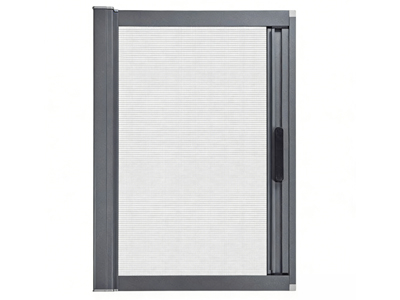
MBORMC H01 invisible retractable screen — protecting Queensland homes from mosquito-borne diseases
🌴 H01 Queensland Edition – Built for the Tropics
Queensland – Australia's Mosquito Disease Epicentre
Queensland's tropical climate, abundant rainfall, and proximity to Southeast Asia make it the frontline of Australia's battle against mosquito-borne diseases. Mosquito-borne viruses (MBVs) remain a "significant public health concern" in Northern Queensland, with dengue virus (DENV), Ross River virus (RRV), and Barmah Forest virus (BFV) representing the most common pathogens .
Recent surveillance data indicates increased MBV activity, with national case numbers nearly doubling between 2023 and 2024, and early 2025 data suggesting sustained transmission during seasonal peak . Over 919 unclassified flaviviruses have been reported nationwide, including 117 in Queensland, exposing significant detection gaps .
🌴 QLD Mosquito Threat: Queensland is home to over 300 mosquito species. In 2024, the state recorded 1,701 RRV infections and 378 dengue cases. Over 100 unclassified flaviviruses have been detected in Queensland alone .
Dengue in Queensland – Persistent Outbreaks
Dengue virus is not endemic in Queensland, but the mosquito vector is common in the north of the state, including the urban areas of Cairns and Townsville . Low-to-moderate risk exists in these areas .
In the 2024/2025 wet season, Townsville experienced its first sustained autochthonous outbreak of dengue disease since 2014, caused by dengue virus type 2 (DENV-2) . The outbreak resulted in sixteen cases in two inner-city suburbs of Townsville during a wet season associated with higher-than-average rainfall .
This outbreak is particularly significant because Townsville has had wMel Wolbachia-infected mosquitoes since 2014 — a biological control program that has been highly effective in reducing dengue transmission . Despite the apparent high coverage of Wolbachia-infected mosquitoes, this second outbreak since 2014 "highlights that Townsville and other north Queensland communities remain vulnerable to DENV incursions and local disease outbreaks" .
The Townsville outbreak strain was most closely related to recent DENV-2 sequences from other Queensland and NSW patients, some of whom had known travel history to Bali/Indonesia — illustrating how international travel drives local outbreaks .
🦟 Townsville Dengue Outbreak 2024-2025: 16 cases in two inner-city suburbs during the wet season. This is the second dengue outbreak in Townsville since 2014 despite high Wolbachia coverage, highlighting that communities remain vulnerable to DENV incursions .
Asian Tiger Mosquito – The "Barbecue Stopper" Arrives
In May 2026, the world's most invasive mosquito was detected on the Queensland mainland for the first time . Six Asian tiger mosquitoes (Aedes albopictus) were found near Bamaga in far-north Queensland during routine monitoring .
The mosquito is an "aggressive daytime biter" and poses a major risk to humans and livestock . Its bite can spread dengue fever, yellow fever, Zika, chikungunya, and several types of viral infections that can cause swelling to the brain .
University of Sydney biology lecturer Dr Tom Schmidt told the ABC: "I think this is the first time that they're seeing multiple individuals on the mainland and not at an airport or seaport. It occasionally comes into Australian airports and seaports, and then those incursions will be eradicated" .
Queensland Health has launched spraying operations across the Cape York Peninsula in an effort to eradicate the pest . As of 18 May 2026, Queensland Health confirmed a "successful spray program" in the Northern Peninsula Area, focused primarily on Bamaga surveillance. Surveillance has detected 6 specimens — with no signs of carrying any tropical disease .
🔥 Asian Tiger Mosquito — QLD 2026: First detected on mainland Australia in Bamaga, Cape York Peninsula, in May 2026. It is an aggressive daytime biter that can transmit dengue, Zika, chikungunya and yellow fever. Queensland Health spray programs are underway .
Ross River Virus – Queensland's Most Common Mosquito Disease
Ross River virus (RRV) is Queensland's most common mosquito-borne illness, with prevention relying wholly on avoiding mosquito bites . In 2024, Queensland recorded 1,701 RRV infections .
RRV can be spread by more than 40 different mosquito species, and hosts can include kangaroos, wallabies, bats, horses, and dogs . It causes rash, fever and joint pain (arthralgia), with symptoms developing within 3-11 days after being bitten by an infectious mosquito . While most people recover within weeks, symptoms can persist for months in about 10% of cases .
Queensland Health publishes weekly RRV surveillance data — in early April 2025, a total of 223 RRV cases had been recorded for the year .
Wolbachia and Vector Control in Queensland
Queensland has been a global leader in Wolbachia-based biological control for dengue. The Eliminate Dengue program introduced the wMel strain of Wolbachia to Aedes aegypti mosquitoes in Cairns and Townsville . Wolbachia stops the dengue virus from replicating in the mosquito's body, blocking its ability to transmit the virus when it bites people .
In the Townsville trial, results showed that more than 80% of mosquitoes were testing positive for Wolbachia, and in many areas it was higher than 95%. Four years on from the Cairns trial, Wolbachia levels remained very high .
However, the 2024-2025 Townsville dengue outbreak demonstrates that Wolbachia programs alone cannot eliminate the risk — ongoing maintenance, monitoring, and community-level personal protection remain essential .
🧬 Wolbachia in Queensland: Wolbachia programs have achieved 80-95% infection rates in Townsville and Cairns mosquito populations. However, the 2024-2025 Townsville dengue outbreak shows that communities remain vulnerable to DENV incursions despite high coverage .
Queensland Towns at Highest Risk
Queensland Health and researchers have identified specific high-risk locations:
- Cairns — 116 RRV cases in 2020; dengue vector present; Wolbachia program active; Asian tiger mosquito risk from Cape York
- Townsville — 402 RRV cases in 2020; 2024-2025 dengue outbreak (16 cases); Wolbachia program active
- Torres Strait and Cape York — Asian tiger mosquito detected 2026; dengue in Ae. albopictus confirmed 2024
- Brisbane and South-East Queensland — Urban mosquito pressure; imported cases drive local risk
How the H01 Protects Queensland Homes
The H01 is specifically designed for Queensland conditions:
- Blocks Aedes aegypti — The primary dengue vector in Queensland
- Blocks Aedes albopictus — The invasive Asian tiger mosquito detected in 2026
- Blocks RRV vectors — Over 40 mosquito species can transmit Ross River virus
- Built for tropical climate — 6063-T5 aluminium frame and PET mesh resist heat, humidity and UV
- Invisible when retracted — Preserve views of Queensland's stunning landscapes
- No-drill installation — Perfect for Queensland renters and homeowners
- Removable and washable — Easy to clean after wet season storms
Comparison – H01 vs. Traditional Queensland Solutions
How to Order Your H01 for Your Queensland Home
Ordering is simple:
- Measure your windows or doors (width × height in mm).
- Choose your mesh type — PET for dust/pollen or 304 stainless steel for durability.
- Select your frame colour — any RAL colour to match your home.
- Contact us via WhatsApp or email with your specifications.
- Install yourself in minutes — no drilling required.
We ship to all Queensland cities — Brisbane, Cairns, Townsville, Mackay, Rockhampton, and beyond. All screens are custom-made to your measurements and shipped with a 2-year warranty.
Dengue outbreaks persist despite Wolbachia programs. Asian tiger mosquito now on mainland. RRV cases surging. Get your custom H01 today.
Get a Queensland Quote