New South Wales — home to Sydney's iconic harbour, the Blue Mountains, and vast inland agricultural regions — is facing a rapidly escalating mosquito-borne disease threat. In the 2024-2025 arbovirus season, NSW recorded 498 Ross River virus (RRV) notifications and 90 Barmah Forest virus (BFV) cases, with both exceeding the 10-year average . The arrival of Japanese encephalitis virus (JEV) — a potentially deadly disease — and Kunjin virus detections in sentinel chickens have prompted a statewide health warning, with 60 Local Government Areas now considered at elevated risk .
The MBORMC H01 Invisible Retractable Screen offers NSW homeowners the protection they need — custom-fit screens that block RRV, BFV, JEV and Kunjin vectors, preserve views, and require no drilling.
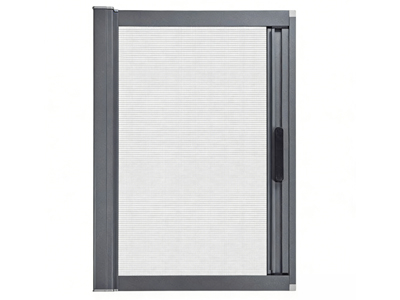
MBORMC H01 invisible retractable screen — protecting NSW homes from rising mosquito-borne disease risk
🏞️ H01 NSW Edition – Built for Inland & Coastal Protection
NSW's 2024-2025 Arbovirus Season — The Numbers
The NSW Health 2024-2025 Arbovirus Surveillance Report reveals a significant disease burden. Ross River virus remained the predominant mosquito-borne disease reported in NSW, with notifications exceeding the 10-year average [citation:2].
Key statistics:
- 498 RRV notifications (45 confirmed, 453 probable) [citation:2]
- 90 BFV notifications (4 confirmed, 86 probable) [citation:2]
- 5 JEV cases acquired in NSW [citation:2]
- 1 locally acquired case of Kunjin virus [citation:2]
Regional Distribution — Where Risk Is Highest
RRV notifications were highest in inland regions, with elevated activity also in coastal areas [citation:2]:
Source: NSW Health Arbovirus Surveillance Report 2024-2025 [citation:2]
📊 NSW Arbovirus Burden: Ross River virus remained the predominant mosquito-borne disease in NSW in 2024-2025, with notifications exceeding the 10-year average. Hunter New England and Murrumbidgee recorded the highest RRV case numbers [citation:2].
Japanese Encephalitis Virus — A Deadly New Threat
In 2022, the unprecedented and widespread emergence of Japanese encephalitis virus (JEV) across multiple Australian states prompted the declaration of a Communicable Disease Incident of National Significance [citation:6]. Since then, JEV has become established in NSW.
In the 2025-2026 season, JEV detections have been earlier than expected. In November 2025, JEV was detected in mosquitoes in Victoria, and in early January 2026, Japanese encephalitis virus was detected in a sentinel chicken in the Upper Lachlan Shire near Goulburn [citation:13]. This indicates that JEV is likely circulating in the area [citation:1].
A probable case of JE is being investigated in a man in his 60s who was likely exposed to the virus in the Riverina region in late December 2025 [citation:1].
JEV is potentially fatal — at least 15 JEV fatalities have been recorded in Australia, including two in NSW earlier in 2025 [citation:6][citation:9]. In February and March 2025, NSW Health reported the deaths of two men aged in their 70s from JE infections [citation:9].
🧬 JEV in NSW: 15+ fatalities nationally, including two in NSW. 2026 detections: sentinel chicken in Goulburn (Jan 2026); probable human case in Riverina (Dec 2025). 60 NSW LGAs now considered at elevated risk [citation:1][citation:6][citation:9].
Kunjin Virus — A West Nile Relative
Kunjin virus is a subtype of West Nile virus that can cause severe neurological illness [citation:5][citation:6]. In November 2025, Kunjin virus was detected in a sentinel chicken blood sample in Western NSW at Cowra [citation:5][citation:13].
NSW Health's Director of Health Protection, Dr Stephen Conaty, said these early season detections are "concerning," with mosquito numbers likely to increase with warmer weather [citation:5][citation:6].
There is no specific treatment or vaccine for Kunjin virus. The best way to avoid infection is to avoid being bitten by mosquitoes [citation:5][citation:6].
Ross River Virus — The Predominant Disease
Ross River virus is the most common mosquito-borne disease in NSW and Australia [citation:2][citation:10]. It can cause a rash, fever and joint pain (arthralgia). While most people recover within weeks, in some cases symptoms can persist, hindering quality of life [citation:10].
In the 2024-2025 season, RRV notifications were higher than the 10-year average [citation:2]. Cases were highest in inland regions — particularly Hunter New England, Murrumbidgee, and Western NSW — with elevated activity also reported in coastal areas including Northern NSW and the Mid North Coast [citation:2].
RRV can be spread by more than 40 different mosquito species, making it difficult to control through vector management alone [citation:10].
NSW Health Protection Measures
NSW Health's surveillance program monitors mosquito-borne viruses through:
- Sentinel chicken flocks — provide early warning of virus circulation [citation:1][citation:8]
- Mosquito trapping — monitors abundance and virus presence [citation:4][citation:8]
- Human notification reporting — tracks disease cases [citation:2]
NSW Health urges residents to:
- Cover windows and doors with insect screens and check for gaps [citation:5][citation:6]
- Apply repellent containing DEET, picaridin, or oil of lemon eucalyptus [citation:5]
- Wear long sleeves and pants, especially at dawn and dusk [citation:5]
- Eliminate standing water — remove items that may collect water such as old tyres and empty pots [citation:5]
For JEV, a safe, effective, and free vaccine is available to anyone who lives or routinely works in 60 NSW Local Government Areas west of the dividing range and in northern NSW [citation:5][citation:6].
🛡️ NSW Health Advice: "Cover windows and doors with insect screens and check there are no gaps." — NSW Health [citation:5]. For JEV, a free vaccine is available for residents of 60 high-risk LGAs. For RRV, BFV and Kunjin — protection relies wholly on avoiding mosquito bites [citation:5].
The Riverina and Murrumbidgee — Wetlands and Mosquito Risk
NSW's inland river systems — particularly the Murrumbidgee and Murray rivers — create extensive wetland habitats that support mosquito populations. The Reconnecting River Country Program aims to deliver higher environmental flows to the Murrumbidgee to improve river health [citation:3][citation:7]. These flows will create additional wetland habitats that could influence mosquito activity.
Higher environmental flows are not expected to commence before December 2026, and are likely to occur only a handful of times per decade [citation:3][citation:7]. The upper flow limit of 40,000 ML/day at Wagga Wagga is significantly below the 2022 flood level and below minor flood level for most areas [citation:3][citation:7].
However, with JEV now detected in the Riverina and Upper Lachlan Shire, residents of the Murrumbidgee and Riverina regions face elevated mosquito-borne disease risk [citation:1].
How the H01 Protects NSW Homes
The H01 is specifically designed for NSW conditions:
- Blocks RRV vectors — Over 40 mosquito species can transmit Ross River virus; the H01's fine mesh blocks them all [citation:10]
- Blocks JEV vectors — Blocks Culex annulirostris, the primary JEV vector in NSW
- Blocks Kunjin vectors — Prevents West Nile/Kunjin virus transmission
- Blocks BFV vectors — Prevents Barmah Forest virus transmission
- Built for inland and coastal NSW — 6063-T5 aluminium frame and PET mesh resist heat, humidity and UV
- Invisible when retracted — Preserve views of NSW's stunning landscapes
- No-drill installation — Perfect for NSW renters and homeowners
- Removable and washable — Easy to clean after dust and storms
How to Order Your H01 for Your NSW Home
Ordering is simple:
- Measure your windows or doors (width × height in mm).
- Choose your mesh type — PET for dust/pollen or 304 stainless steel for durability.
- Select your frame colour — any RAL colour to match your home.
- Contact us via WhatsApp or email with your specifications.
- Install yourself in minutes — no drilling required.
We ship to all NSW regions — Sydney, the Hunter, Riverina, Murrumbidgee, Northern NSW, Mid North Coast, Western NSW, and beyond. All screens are custom-made to your measurements and shipped with a 2-year warranty.
RRV cases exceed the 10-year average. JEV is circulating in sentinel chickens. Kunjin has been detected in Western NSW. Get your custom H01 today.
Get an NSW Quote