Tasmania — Australia's island state, known for its pristine wilderness, cool temperate climate, and the famous Tasmanian devil. But this cool climate has long been considered a natural barrier against mosquito-borne diseases [citation:1]. That assumption is now being challenged. In a landmark 2026 study published in Austral Entomology, researchers compiled the first comprehensive baseline checklist of Tasmanian mosquito species, revealing 51 species across 7 genera — and a threat that had been hiding in plain sight [citation:1][citation:8].
During the 2024–2025 surveillance season, the highly competent Japanese encephalitis virus (JEV) vector, Culex annulirostris, was detected in Tasmania for the first time since 1985 — a 40-year gap [citation:1][citation:8]. The reappearance of this species, combined with the presence of Aedes notoscriptus — a mosquito linked to the transmission of Buruli ulcer — has prompted a statewide public health alert [citation:1]. The MBORMC H01 Invisible Retractable Screen offers Tasmanian homeowners the protection they need — custom-fit screens that block these disease vectors, preserve views of Tasmania's stunning landscapes, and require no drilling.
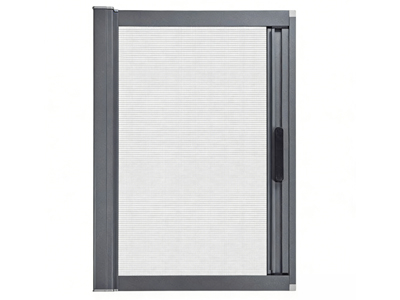
MBORMC H01 invisible retractable screen — protecting Tasmanian homes from re-emerging mosquito disease risks
🌿 H01 Tasmania Edition – Built for the Island State
Tasmania's Mosquito Fauna — 51 Species and Counting
The 2026 Austral Entomology study represents the first comprehensive baseline checklist of Tasmanian mosquito species [citation:1][citation:8]. Researchers compiled records from:
- Peer-reviewed literature and Lee's The Culicidae of the Australasian Region [citation:1]
- Previously unpublished Department of Health Tasmania surveillance records (2023–2026) [citation:1][citation:8]
- Atlas of Living Australia records with museum voucher specimens [citation:1]
- Physical examination of specimens at the Tasmanian Museum and Art Gallery [citation:1]
Species composition:
- Aedes — 28 species (the most diverse genus)
- Culex — 9 species
- Anopheles — 6 species
- Culiseta — 4 species
- Tripteroides — 2 species
- Aedeomyia — 1 species
- Coquillettidia — 1 species
The most frequently recorded species was Aedes camptorhynchus, which has been associated with recent Ross River virus (RRV) research. Other frequently recorded species include Ae. notoscriptus, Ae. cunabulanus, and Ae. rubrithorax [citation:8].
🦟 Tasmanian Mosquito Species: 51 species across 7 genera, including 28 Aedes species, 9 Culex species, and 6 Anopheles species. Aedes camptorhynchus is the most frequently recorded species [citation:1][citation:8].
Culex annulirostris — The JEV Vector Returns After 40 Years
Perhaps the most significant finding of the 2026 study was the detection of Culex annulirostris (the common banded mosquito) during the 2024–2025 surveillance season [citation:1]. This species is a highly competent vector for Japanese encephalitis virus [citation:1].
Prior to this detection, Cx. annulirostris had not been recorded from Tasmania since 1985 — a 40-year gap [citation:1][citation:8]. The species has a wide distribution across Australia, including New South Wales, Queensland, South Australia, Victoria, Western Australia, and the Northern Territory [citation:2].
Its reappearance in Tasmania has significant implications:
- JEV risk assessment — current knowledge of competent vectors is "important for public health risk assessment, including vaccine policy and surveillance planning" [citation:1]
- Climate change driver — the reappearance may be linked to warming temperatures allowing species to expand their range southward
- Surveillance imperative — underscores the need for ongoing mosquito-based surveillance in Tasmania [citation:1][citation:8]
🧬 Culex annulirostris Returns: This highly competent JEV vector was detected in Tasmania during the 2024–2025 surveillance season — the first record since 1985, a 40-year gap. This has significant implications for public health risk assessment [citation:1][citation:8].
Buruli Ulcer — A Mosquito-Borne Skin Disease
Beyond JEV, the presence of Aedes notoscriptus in Tasmania raises concerns about Buruli ulcer (caused by Mycobacterium ulcerans) [citation:1]. Research has linked mosquitoes to the transmission of Buruli ulcer, which causes severe skin lesions and can lead to permanent disability if not treated early [citation:4][citation:7][citation:10].
Key facts about Buruli ulcer:
- Geographic distribution: In Australia, most cases are linked to temperate, coastal Victoria and tropical, northern Queensland [citation:7]
- Reservoir hosts: Australian native possums act as reservoir hosts [citation:4][citation:10]
- Transmission: Mosquitoes are implicated in transmitting the infection to humans [citation:4][citation:10]
- One Health dimension: Interdisciplinary research has uncovered connections between human health, animal health, and the environment [citation:4][citation:10]
- Tasmanian risk: The presence of Ae. notoscriptus and established possum populations "raises the possibility that Tasmania's mosquito fauna may be relevant to other mosquito-borne diseases" [citation:1]
🩺 Buruli Ulcer Risk: Aedes notoscriptus, present in Tasmania, has been linked to the transmission of Buruli ulcer. Combined with established possum populations, this raises the possibility of Buruli ulcer emergence in Tasmania [citation:1][citation:4].
Japanese Encephalitis Virus — National Context
In 2022, the unprecedented and widespread emergence of JEV across many Australian states prompted the declaration of a Communicable Disease Incident of National Significance [citation:1]. This led to the Department of Health Tasmania's mosquito monitoring and surveillance programme, established in 2023 [citation:1].
More recent outbreaks in 2024–2025 have heightened the focus on JEV transmission risk. A 2026 ScienceDirect study on JEV sylvatic co-occurrence probabilities found:
- Areas with high JEV co-occurrence values will likely remain relatively high in the future [citation:3]
- Coastal regions will remain priority areas for surveillance [citation:3]
- Results should be interpreted as national-scale strategic tools rather than fine-scale management guides [citation:3]
While the study was national in scope, the reappearance of Cx. annulirostris in Tasmania means the island state must now be considered part of the national JEV risk landscape [citation:1].
Tasmania's Cool Climate Myth
Tasmania has historically been considered low-risk for mosquito-borne diseases due to its cool temperate climate [citation:1]. The state's average mean maximum temperature is 19.8°C, and Hobart is the second driest capital city in Australia [citation:1].
However, this myth is being dismantled by several factors:
- Climate change: The detection of Cx. annulirostris after a 40-year absence suggests warming temperatures may be allowing species to expand their range [citation:1]
- JEV emergence: The 2022 declaration of a CDINS demonstrates that JEV can establish in areas previously considered unsuitable [citation:1]
- Buruli ulcer risk: The presence of Ae. notoscriptus and possum populations creates a potential transmission pathway [citation:1]
🌡️ Climate Change & Mosquito Risk: Tasmania's cool climate has long been considered a barrier to mosquito-borne diseases. The reappearance of Culex annulirostris after 40 years suggests climate change may be changing this [citation:1].
Chikungunya in Tasmania — A Warning Sign
In 2025, Tasmania recorded its first chikungunya virus notification [citation:5]. While still a small number (one case), it demonstrates that mosquito-borne diseases can reach even the most remote parts of Australia.
Nationally, chikungunya cases rose from 0 in 2024 to 165 in 2025 [citation:5]. Victoria recorded the lion's share (80 cases), followed by NSW (29), Western Australia (27), Queensland (13), South Australia (11), the ACT (4) and Tasmania (1) [citation:5].
Tasmania's Mosquito Habitats
Tasmania's diverse landscape supports a variety of mosquito habitats:
- Coastal wetlands and saltmarshes — breeding grounds for Aedes camptorhynchus and other coastal species
- Tea-tree swamps in northern Tasmania — habitat for species like Aedes imperfectus [citation:13]
- Inland waterways and agricultural areas — habitats for Culex and Anopheles species
- Urban environments — Aedes notoscriptus and other container-breeding species thrive in urban areas
With almost two-thirds of Tasmania's 570,000 population living outside the Hobart metropolitan area, rural and regional Tasmanians face significant mosquito exposure risk [citation:1].
How the H01 Protects Tasmanian Homes
The H01 is specifically designed for Tasmanian conditions:
- Blocks Culex annulirostris — the primary JEV vector that has reappeared in Tasmania [citation:1]
- Blocks Aedes notoscriptus — the species linked to Buruli ulcer transmission [citation:1][citation:4]
- Blocks RRV vectors — including Aedes camptorhynchus, the most frequently recorded species in Tasmania [citation:8]
- Built for cool temperate climate — 6063-T5 aluminium frame and PET mesh resist Tasmania's variable weather
- Invisible when retracted — Preserve views of Tasmania's World Heritage wilderness
- No-drill installation — Perfect for Tasmanian renters and homeowners
- Removable and washable — Easy to clean and maintain
How to Order Your H01 for Your Tasmanian Home
Ordering is simple:
- Measure your windows or doors (width × height in mm).
- Choose your mesh type — PET for dust/pollen or 304 stainless steel for durability.
- Select your frame colour — any RAL colour to match your home.
- Contact us via WhatsApp or email with your specifications.
- Install yourself in minutes — no drilling required.
We ship to all Tasmanian regions — Hobart, Launceston, Devonport, Burnie, and beyond. All screens are custom-made to your measurements and shipped with a 2-year warranty.
Culex annulirostris, the JEV vector, has reappeared after 40 years. Buruli ulcer risk is present. Get your custom H01 today.
Get a Tasmania Quote