Scotland's cool, damp climate has long been associated with midges, not mosquitoes. But a growing body of scientific evidence is challenging that assumption. Mosquito Scotland — a collaborative project between the University of Glasgow, the MRC-University of Glasgow Centre for Virus Research (CVR), the UK Health Security Agency (UKHSA) and the UK Centre for Ecology & Hydrology (UKCEH) — has confirmed the presence of 21 separate mosquito species across Scotland, with reports as far north as the Shetland Isles [citation:10].
The northernmost record of Culex pipiens in Great Britain was collected on Shetland in 2012, and the northernmost record of Anopheles claviger was collected on Orkney the same year [citation:8][citation:9]. These discoveries have profound implications for public health: a 2026 study published in Malaria Journal found that potential malaria vectors are still common throughout Scotland, with historical malaria hotspots (eighteenth-century parish records) consistently associated with higher predicted current suitability for Anopheles species [citation:3][citation:11].
The MBORMC H01 Invisible Retractable Screen offers Scottish homeowners the protection they need — custom-fit screens that block Anopheles, Culex, and Aedes mosquitoes, preserve views of Scotland's stunning landscapes, and require no drilling — perfect for Scotland's historic homes and conservation areas.
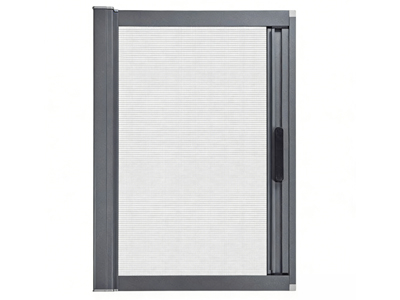
MBORMC H01 invisible retractable screen — protecting Scottish homes from emerging mosquito risks
🏴 H01 Scotland Edition – Climate-Ready Protection
Mosquito Scotland – Challenging the Misconception
The Mosquito Scotland project was established in 2023 with £1.5 million in funding from DEFRA and UK Research & Innovation [citation:10]. It represents the first systematic effort to assess the threat of mosquito-based pathogen emergence in Scotland and how this might be affected by climate change [citation:2].
Project co-leader Professor Heather Ferguson, an infectious disease ecologist at the University of Glasgow, explained: "Their participation has helped fill large gaps in our understanding of mosquitoes both in Scotland and the UK more generally" [citation:10].
The project's initial results, presented in 2025, revealed that at least 16 mosquito species had been identified, with Culex pipiens s.l. widely distributed, and no obvious latitudinal constraint to overall mosquito abundance [citation:15].
🦟 Mosquito Scotland Key Finding: "There is a widespread misconception that the cool Scottish climate is thought to limit mosquito abundance. Mosquitoes in Scotland have historically been neglected as a subject of research" [citation:2]. The project found at least 16 species with no latitudinal constraint to abundance [citation:15].
Northernmost Records – Shetland and Orkney
In 2012, researchers made a landmark discovery: the northernmost mosquito record of Great Britain to date — Culex pipiens collected on the Shetland Islands [citation:8][citation:9]. The same fieldwork also produced the northernmost record of Anopheles claviger sensu stricto, collected on Orkney [citation:8].
These findings are documented in the Journal of the European Mosquito Control Association, which reported that the mosquito occurrences in Scotland (263 records in total) include a fauna of 18 species [citation:1]. The Shetland record is particularly significant because it demonstrates that mosquitoes can survive and reproduce at latitudes previously thought inhospitable.
🗺️ Northernmost UK Mosquito Records: The Culex pipiens collected on Shetland in 2012 is the northernmost mosquito record of Great Britain to date. Anopheles claviger was collected on Orkney the same year [citation:8][citation:9].
Malaria Vectors in Scotland – A Historical Threat
Scotland has a historical connection to malaria. Records indicate that malaria was prevalent in Scotland until the early nineteenth century [citation:3]. While current environmental conditions are unsuitable for transmission, future climate, environmental, and land-use change may alter Scotland's receptivity to malaria and other mosquito-borne diseases [citation:11].
A 2026 study published in Malaria Journal used data from the 2023-2024 Mosquito Scotland surveillance programme to map the distribution of two native Anopheles mosquito species in Scotland — Anopheles claviger and An. plumbeus — that have been implicated in historical malaria transmission [citation:3].
The study's findings are significant:
- Anopheles species were predicted to have widespread distribution across coastal and lowland Scotland, with pockets of habitat suitability extending up to the northeast coast and Shetland islands [citation:3].
- Historical hotspots of malaria (parish locations from eighteenth-century records) were consistently associated with higher predicted current suitability for Anopheles species than background locations [citation:11].
- Another historical vector, An. maculipennis s.l., was also recorded [citation:3].
This means that the environmental conditions that once supported malaria transmission in Scotland are still present. Climate change could make these areas suitable again [citation:7].
🧬 Anopheles Distribution in Scotland: A 2026 Malaria Journal study found that potential malaria vectors are still common throughout Scotland. Anopheles species were predicted to have widespread distribution across coastal and lowland Scotland, with habitat suitability extending to the northeast coast and Shetland [citation:3]. Historical malaria hotspots consistently associated with higher predicted current suitability [citation:11].
Culex pipiens – The West Nile Vector
Culex pipiens is the primary vector for West Nile virus in Europe. The Mosquito Scotland project confirmed that Culex pipiens is widely distributed across Scotland, with records from multiple locations including Fife (Dunfermline), Clyde Isles (Kildonan), Midlothian (Edinburgh) and Moray (Findhorn) [citation:4][citation:5].
In 2022, researchers also confirmed the presence of the Culex pipiens biotype molestus in Scotland — a form of the mosquito that is adapted to urban environments and is an important vector of emerging vector-borne diseases in mainland Europe [citation:7].
A 2026 study published in Parasites & Vectors found that among the adult Culex pipiens s.l. specimens collected from 22 wetland sites across Scotland, approximately 8% were Culex pipiens biotype molestus or hybrid forms [citation:7].
This is concerning because West Nile virus is spreading northward across Europe. Between 2010 and 2023, human cases of West Nile virus have been reported across much of continental Europe [citation:15]. The UKHSA's nationwide mosquito surveillance programme is monitoring the situation [citation:13].
🦟 Culex pipiens molestus in Scotland: A 2026 Parasites & Vectors study confirmed the presence of Culex pipiens biotype molestus in Scotland — an important vector of emerging vector-borne diseases in Europe. Approximately 8% of adult Culex pipiens s.l. specimens were biotype molestus or hybrids [citation:7].
Climate Change – Driving Mosquito Expansion
Climate change is a key driver of mosquito expansion in Scotland. The Parasites & Vectors study found that total mosquito abundance and that of key vector species were positively associated with temperature and rainfall [citation:7].
Heather Ferguson, professor of infectious disease ecology at the University of Glasgow, has emphasised that climate change is a critical factor: "The recent spread of mosquito-borne pathogens and their vectors within Europe highlights the impact of climate change on vector-borne disease distributions" [citation:7].
The Mosquito Scotland project is already seeing the effects: observers reported sightings as late as December and as far north as the Shetland Isles — the most northerly UK ever reported [citation:10].
Dr Emilie Pondeville, senior research fellow at the MRC-University of Glasgow CVR, explained that public contributions are "invaluable for understanding mosquito biodiversity in Scotland and assessing the potential risks these species may pose as the climate changes" [citation:10].
Citizen scientists working with the project have amassed more than 700 reports over a year [citation:10].
🌡️ Climate Change & Mosquito Abundance: A 2026 study found that total mosquito abundance and that of key vector species in Scotland were positively associated with temperature and rainfall. Predicted associations indicate that climate change could favour mosquito populations in Scotland [citation:7].
Scottish Homes – At Risk from Mosquitoes
Many Scottish homes are vulnerable to mosquito entry. Common risk factors include:
- Historic windows — Sash windows and casement windows often have gaps that allow insects to enter
- No screens — Many Scottish homes lack insect screens entirely
- Proximity to wetlands — Scotland's extensive wetlands, coastal saltmarshes, and wet woodlands provide ideal mosquito habitat
- Conservation areas — External modifications, including traditional screens, may require planning permission
The H01 solves all these problems: it mounts internally, preserves the external appearance of historic buildings, and blocks all mosquito species present in Scotland [citation:3][citation:7].
H01 Applications for Scottish Homes
🏴 Urban Scotland (Glasgow, Edinburgh, Aberdeen)
Citizen scientists have reported mosquitoes present indoors in large urban centres such as Glasgow [citation:10]. The H01 protects flats and houses in cities where mosquitoes have been found.
🏡 Rural Scotland (Highlands, Islands, Argyll)
Rural Scottish homes are surrounded by habitats ideal for mosquitoes. Anopheles species are predicted to have widespread distribution across coastal and lowland Scotland [citation:3]. The H01 provides essential protection for rural homes.
🏰 Conservation Areas and Listed Buildings
Scotland's many conservation areas and listed buildings require protection that doesn't compromise historic character. The H01's internal installation, invisible cassette, and no-drill adhesive tape preserve the external appearance of historic properties [citation:3].
🌿 Near Wetlands and Coastal Areas
Homes near Scotland's extensive wetlands, saltmarshes, and coastal areas face higher mosquito pressure [citation:7]. The H01 provides a barrier between your home and the mosquitoes breeding in nearby wetlands.
How to Order Your H01 for Your Scottish Home
Protecting your Scottish home is simple:
- Measure your windows or doors (width × height in mm).
- Choose your mesh type — PET for dust/pollen or 304 stainless steel for durability.
- Select your frame colour — any RAL colour to match your home.
- Contact us via WhatsApp or email with your specifications.
- Install yourself in minutes — no drilling required.
We ship to all Scottish regions — Glasgow, Edinburgh, Aberdeen, Inverness, the Highlands, the Islands, and beyond. All screens are custom-made to your measurements and shipped with a 2-year warranty.
21 species identified across Scotland. Malaria vectors widespread. Culex pipiens molestus present. Get your custom H01 today.
Get a Scotland Quote