The United Kingdom is home to over 400,000 listed buildings and 10,000 conservation areas — a national treasure of historic architecture spanning centuries. But for owners of these properties, making any modification can be a legal minefield. From Grade I and II listed buildings to conservation areas and World Heritage Sites, strict planning rules govern every alteration [citation:1][citation:2].
External modifications — including window guards, security grilles, and traditional screens — almost always require planning permission or listed building consent [citation:1][citation:6]. But what about mosquito screens? The answer depends on how and where they are installed. The MBORMC H01 Invisible Retractable Screen offers a planning-compliant solution — installed internally, requiring no drilling or permanent damage to historic fabric, and invisible from the outside when retracted.
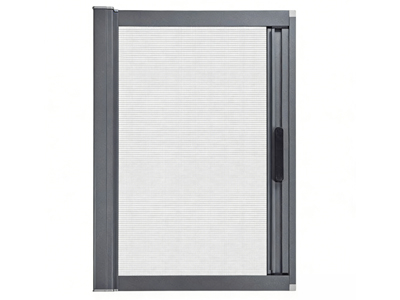
MBORMC H01 invisible retractable screen — preserving historic character while protecting against mosquitoes
🏛️ H01 Heritage Edition – Planning-Compliant Protection
Understanding the Planning Framework
Before installing any screen, homeowners must understand the legal framework governing their property. The rules differ significantly between listed buildings and conservation areas.
Listed Buildings
Buildings in England and Wales are listed as Grade I, Grade II*, or Grade II. Scotland uses Category A, B, or C. Listed building consent (LBC) is required for any alteration that affects the building's special interest [citation:1][citation:8].
This includes both external and internal work. As one legal analysis noted, "even mundane internal works, such as replacing a solid door with a glass door... might require consent" [citation:8]. In a recent appeal, listed building consent was refused for TV screens installed in a medical practice because the screens, when seen from the street, had an "adverse effect on the character of each window and, in turn, the principal elevation of the building" [citation:8].
For listed buildings, external window screens or guards almost always require listed building consent [citation:1]. In one case, a Woodbridge woman was ordered to remove protective window bars from her Grade II-listed property because they were installed without listed building consent and were "deemed to be of poor design that harms the special interest of the listed building, in the conservation area" [citation:1].
Similarly, North Yorkshire Council's planning guidance states that external grilles "will not normally be acceptable unless it can be shown that security glass or internal grilles are inappropriate" [citation:6].
Conservation Areas
In conservation areas, planning controls are stricter than in standard areas but less stringent than for listed buildings. In Scotland, permitted development rights for altering or replacing windows in conservation areas changed in May 2024 [citation:2]:
- If a window is on the principal elevation or a side elevation that fronts a road, and the design changes, prior approval is required [citation:2].
- If the window is to the rear or a side elevation that does not front a road, no prior notification is required [citation:2].
- For listed buildings, LBC is always required [citation:2].
In England, the Town and Country Planning (General Permitted Development) Order 2015 (as amended) provides similar restrictions. Internal work — including internal screens — generally does not require planning permission [citation:6].
📋 Key Planning Principle: External modifications to listed buildings and conservation areas almost always require planning permission or listed building consent. Internal installations that do not alter the external appearance do not require consent [citation:1][citation:6].
The H01 Solution – Internal, Invisible, Planning-Compliant
The H01 is designed specifically to avoid planning complications:
- Installed internally — Screens are mounted on the interior of the window frame, not the exterior. This means they do not alter the external appearance of the building [citation:6].
- Invisible when retracted — The cassette sits at the top of the window frame and is completely invisible from the outside when the screen is rolled up. This preserves the building's external character.
- No drilling or permanent damage — The adhesive tape installation requires no screws, no holes, and no permanent alteration to historic fabric [citation:1].
- No planning permission required — Because it's an internal installation with no external visual impact, the H01 does not require planning permission or listed building consent [citation:6][citation:9].
This makes the H01 ideal for Grade I, II*, and II listed buildings, properties in conservation areas, and homes within World Heritage Sites such as Bath, Edinburgh, and Westminster [citation:2][citation:12].
🏛️ Grade I, II*, II Acceptance: Specialist heritage glazing systems have been accepted in Grade I, II*, and II listed buildings [citation:3]. The H01's internal, non-invasive installation follows the same principle — preserving historic character while providing modern protection.
Case Studies – What the Planning System Allows
Internal Screens – Accepted
North Yorkshire Council's shop front security guidance explicitly states: "The use of internal grilles does not require planning permission. Internal grilles can be installed immediately behind the windows" [citation:6]. The guidance further notes that "internal 'glass' or 'see-through transparent' screens will generally be acceptable" [citation:6].
This principle applies directly to mosquito screens: an internal, retractable screen installed behind the window glass does not alter the external appearance and does not require planning permission [citation:6].
External Screens – Require Consent
By contrast, external grilles and screens face stricter scrutiny. North Yorkshire Council advises that "all external grilles require planning permission" [citation:6]. For listed buildings and conservation areas, "external roller grilles may be acceptable subject to stringent design criteria" — but are "unacceptable on listed buildings and in conservation areas, main shopping streets and district or local shopping centres" [citation:6].
Similarly, the Woodbridge case illustrates the consequences of installing external protective bars without listed building consent: the council ordered their removal [citation:1].
Polycarbonate and Protective Screens – Need Careful Design
Protective screens, including polycarbonate screens, can be acceptable if carefully designed. In Lerwick, Shetland, listed building consent was granted for "new polycarbonate protective screens" as part of a broader window replacement project at St Margaret's, a listed church [citation:5]. However, this was part of a full listed building consent application, with detailed drawings and specifications [citation:5].
CJL Designs, a specialist window restoration studio, offers "window protection grilles and polycarbonate screens" for listed buildings and conservation areas, demonstrating that protective screens can be acceptable when designed sympathetically and installed with appropriate approvals [citation:9].
🔑 The Lesson: External screens require planning permission or listed building consent. Internal screens do not. By choosing an internal solution like the H01, homeowners avoid the planning minefield entirely [citation:6].
Heritage Windows and Mosquito Protection – The Challenge
Historic UK windows pose unique challenges for mosquito protection:
- Sash windows — The sliding mechanism means traditional fixed screens interfere with operation. The H01's retractable design allows full sash movement.
- Casement windows — Inward or outward opening casements require screens that don't block the opening. The H01 mounts on the interior frame, preserving full opening.
- Arched and shaped windows — Many historic buildings have arched, curved, or irregularly shaped windows. The H01 is custom-made to any shape or size [citation:3].
- Stone mullion windows — Popular in historic buildings, these require slim sightlines. Specialist heritage glazing systems are designed to meet these requirements [citation:3].
Traditional screen solutions — fixed mesh panels, external grilles — often fail on heritage properties because they damage historic fabric, alter external appearance, or require planning consent. The H01 solves all three problems.
H01 Applications for Listed Buildings and Conservation Areas
🏛️ Grade I, II*, II Listed Buildings
The H01's internal installation and invisible cassette mean no listed building consent is required. The no-drill adhesive installation preserves historic window frames — no screws, no holes, no permanent damage [citation:1]. Specialist heritage glazing suppliers have been accepted in Grade I, II*, and II listed buildings — the H01 follows the same principles [citation:3].
🏘️ Conservation Areas
Internal screens do not require planning permission in conservation areas [citation:6]. The H01's invisible cassette when retracted preserves the external character of the conservation area. This is especially important in conservation areas with strict design controls, such as those in Bath [citation:12].
🌍 World Heritage Sites
Properties in World Heritage Sites — including Bath, Edinburgh, Liverpool, Westminster, and the Tower of London — face even stricter controls. The H01's internal installation avoids the need for UNESCO-related consents [citation:2][citation:12].
🏰 Historic Towns (York, Chester, Canterbury, Edinburgh)
York's conservation areas, Chester's city walls, Canterbury's cathedral precincts, and Edinburgh's New Town all have strict planning controls. The H01 provides mosquito protection without compromising historic character.
Comparison – H01 vs. Traditional Heritage Screen Solutions
How to Order Your H01 for Your Heritage Home
Protecting your historic home is simple:
- Measure your windows or doors (width × height in mm). For arched or shaped windows, please provide a tracing.
- Choose your mesh type — PET for dust/pollen or 304 stainless steel for durability.
- Select your frame colour — any RAL colour to match your window frames. For heritage properties, we recommend white, cream, or grey.
- Contact us via WhatsApp or email with your specifications.
- Install yourself in minutes — no drilling required. No planning permission needed.
We ship to all UK heritage locations — Bath, York, Chester, Edinburgh, Canterbury, and beyond. All screens are custom-made to your measurements and shipped with a 2-year warranty.
Internal installation means no planning permission required. No drilling — no damage to historic fabric. Invisible when retracted.
Get a Heritage Quote