London is one of the world's great cities — a global hub of finance, culture, and history. But climate change is bringing a new challenge to the capital: the growing risk of mosquito-borne diseases. The London School of Hygiene & Tropical Medicine (LSHTM) has warned that by the 2060s, the climate in London and surrounding areas will likely support endemic transmission of dengue . In 2023, Aedes aegypti eggs — the primary dengue vector — were detected near London Heathrow Airport .
The MBORMC H01 Invisible Retractable Screen offers London homeowners and renters a simple, effective solution — custom-fit screens that block both Aedes and Culex mosquitoes, preserve views of the London skyline, and require no drilling — perfect for London's historic buildings and rental flats.
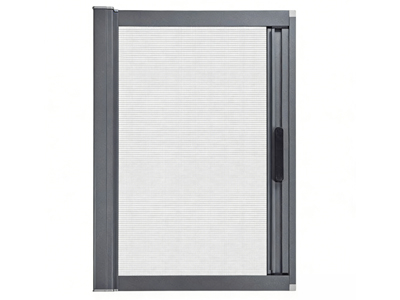
MBORMC H01 invisible retractable screen — protecting London homes from 2060s dengue risk
🇬🇧 H01 London Edition – Climate-Ready Protection
LSHTM Modelling – London's 2060s Dengue Risk
In 2026, the London School of Hygiene & Tropical Medicine published updated climate modelling for dengue transmission in the UK . The findings are stark: by the 2060s, the climate in London and surrounding areas will likely support endemic (sustained local) transmission of dengue .
The modelling accounts for multiple factors:
- Rising average temperatures in London, with summers becoming hotter and longer
- Milder winters that allow mosquito species to survive and breed year-round
- Increased rainfall creating more standing water habitats
- The urban heat island effect — London's built environment retains heat, creating microclimates warmer than surrounding areas
LSHTM modelling also shows that the Asian tiger mosquito (Aedes albopictus) — a known dengue vector — may already be capable of surviving summer seasons in London, with the potential for full overwintering by the 2040s .
🌡️ LSHTM 2026 Forecast: "By the 2060s, the climate in London and surrounding areas will likely support endemic transmission of dengue." The urban heat island effect makes London particularly vulnerable .
London's Historic Mosquito Connection
London has a long history with mosquito-borne diseases. The UK formerly had endemic malaria — known as "marsh fever" or "ague" — with the last major outbreak occurring in 1917-1921 . The last known indigenous case of malaria in the UK was diagnosed in 1957 .
The malaria parasite was carried by Anopheles atroparvus mosquitoes, which were once widespread in the UK, especially in coastal marshes and wetlands . While malaria was eventually eradicated, its historical presence demonstrates that the UK has both the right mosquito species and the right ecological conditions to support mosquito-borne disease transmission.
With climate change, there is renewed concern that warmer temperatures could make the UK suitable once again for malaria transmission . This historical precedent, combined with modern climate change projections, underscores the importance of mosquito protection in London and throughout the UK.
🏛️ London's Malaria History: The UK formerly had endemic malaria, known as "marsh fever" or "ague." The last major outbreak was in 1917-1921, and the last known indigenous case was diagnosed in 1957 .
Heathrow Airport – A Gateway for Invasive Mosquitoes
In September 2023, UKHSA researchers made a concerning discovery: Aedes aegypti eggs were detected at a freight storage facility near London Heathrow Airport . The only previous known incursion of this species in the UK was an adult male discovered near Liverpool in 2017 .
Aedes aegypti — the yellow fever mosquito — is the primary vector for dengue, Zika, chikungunya, and yellow fever. It is an aggressive daytime biter that prefers feeding on humans and breeds in small containers of water .
The detection at Heathrow highlights the role of international travel and trade in introducing invasive mosquito species to the UK. Heathrow is one of the world's busiest airports, with thousands of flights arriving from countries where Aedes aegypti is endemic .
UKHSA now conducts surveillance at 117 locations across England, Wales, and Northern Ireland, including seaports, airports, and roadside locations .
London's Urban Heat Island – A Mosquito Accelerator
London's urban heat island effect is a major factor in the city's mosquito vulnerability. The built environment — concrete, asphalt, and brick — absorbs and retains heat, making London consistently warmer than surrounding rural areas .
This creates ideal conditions for mosquito reproduction:
- Warmer temperatures accelerate mosquito development from egg to adult
- Milder nights extend mosquito activity periods
- Longer seasons allow multiple generations of mosquitoes per year
- Protected microclimates in urban areas allow species to survive that would not survive in rural areas
The combination of the urban heat island effect and climate change projections makes London particularly vulnerable to the establishment of invasive mosquito species .
London's Varied Window Types – H01 Fits All
London's architectural diversity — from Georgian and Victorian terraces to modern high-rises — means windows come in many styles. The H01 is compatible with all of them:
- Sash windows — Common in Georgian and Victorian properties, sash windows present a challenge for traditional screens. The H01 mounts with adhesive tape on the interior frame, preserving the window's original appearance and operation.
- Casement windows — Found in many London homes, casement windows open outward. The H01 mounts on the interior frame, allowing full window operation without interference.
- French doors — Popular in London gardens and patios, French doors benefit from the H01's top-hung design with no floor track.
- Tilt-and-turn windows — Increasingly common in modern London developments, the H01 preserves full tilt-and-turn functionality.
The no-drill installation is especially important in London's conservation areas and listed buildings, where drilling into window frames is prohibited .
London Borough Focus – Where Mosquito Risk Is Highest
Mosquito risk in London is not evenly distributed. Certain boroughs and areas face higher pressure:
- Westminster — The urban heat island effect is strongest in central London .
- Kensington & Chelsea — Wealthy conservation areas with historic windows that require no-drill solutions .
- Camden & Islington — Dense urban housing with high population density — more human hosts for mosquitoes .
- Greenwich & Southwark — Proximity to the Thames creates moist habitats .
- Heathrow area (Hillingdon) — Port of entry for invasive species .
How the H01 Protects London Homes
The H01 is specifically designed for London's unique environment:
- Blocks Aedes aegypti & albopictus — The fine 1.2mm mesh prevents the dengue/Zika vectors from entering your home
- Blocks Culex vectors — Prevents West Nile virus-carrying mosquitoes from entering
- Exceeds UK mesh standards — 20+ mesh per inch provides superior protection
- Invisible when retracted — Preserve views of the London skyline, parks, and gardens
- No-drill installation — Perfect for London renters, conservation areas, and listed buildings
- Complies with UK building regs — Meets Part O and Part F requirements for ventilation
- Removable and washable — Easy to clean and maintain
Comparison – H01 vs. Traditional London Screen Solutions
How to Order Your H01 for Your London Home
Protecting your London home is simple:
- Measure your windows or doors (width × height in mm).
- Choose your mesh type — PET for dust/pollen or 304 stainless steel for durability.
- Select your frame colour — any RAL colour to match your home.
- Contact us via WhatsApp or email with your specifications.
- Install yourself in minutes — no drilling required.
We ship to all London boroughs — Westminster, Kensington & Chelsea, Camden, Islington, Hackney, Lambeth, and beyond. All screens are custom-made to your measurements and shipped with a 2-year warranty.
LSHTM warns London will support dengue transmission by the 2060s. Invasive Aedes mosquitoes have already been detected at Heathrow. Get your custom H01 today.
Get a London Quote