Kent — the Garden of England, famous for its rolling hills, historic castles, and the white cliffs of Dover. But Kent is also the frontline of the UK's battle against invasive mosquito species. The county's proximity to continental Europe, its busy ports (Dover, Folkestone), and its role as a major transport hub (the M20 motorway, Eurotunnel, and Eurostar terminals) make it the most likely entry point for the Asian tiger mosquito (Aedes albopictus) into the UK .
In August 2024, the Asian tiger mosquito was detected near a fast-food drive-through at a service station on the M20 motorway in Kent — the first detection since 2019 . Between 2016 and 2019, Aedes albopictus eggs were detected at a truck stop in Kent, with enhanced surveillance preventing establishment . With climate change making Kent's summers warmer and more humid, the risk of establishment grows each year. The MBORMC H01 Invisible Retractable Screen offers Kent homeowners the protection they need — custom-fit screens that block Aedes albopictus and other disease-carrying mosquitoes, preserve views of the Kent countryside, and require no drilling — perfect for Kent's historic homes and conservation areas.
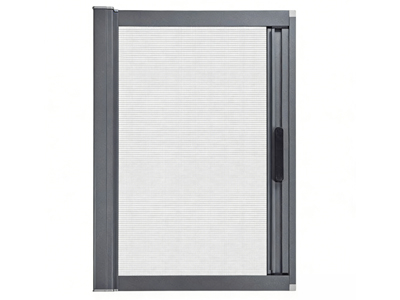
MBORMC H01 invisible retractable screen — protecting Kent homes from Asian tiger mosquito invasion
🏴 H01 Kent Edition – Frontline Defence
Kent – The UK's Gateway for Invasive Mosquitoes
Kent's geographic position makes it the most likely entry point for invasive mosquito species into the UK. The county has:
- Busiest ports — Dover and Folkestone handle millions of passengers and vehicles annually from continental Europe
- Eurotunnel and Eurostar terminals — Direct rail connections to France, with thousands of passengers and cargo shipments daily
- M20 motorway — A major transport corridor linking the ports to London and the rest of the UK, with motorway service stations where mosquitoes can be carried by vehicles
- Proximity to France — The Asian tiger mosquito is already established in northern France, including Calais and the Normandy coast
UKHSA has identified Kent as a high-priority surveillance area, with enhanced monitoring at ports, motorway service stations, and other high-risk locations .
🛳️ Kent's Gateway Role: Kent is the UK's frontline against invasive mosquito species. The county's ports, motorways, and proximity to France make it the most likely entry point for Aedes albopictus and other invasive vectors.
Asian Tiger Mosquito – The Aggressive Invader
The Asian tiger mosquito (Aedes albopictus) is one of the most invasive and dangerous mosquito species in the world. Native to Southeast Asia, it has spread to every continent except Antarctica .
Why It's a Threat
- Aggressive daytime biter — Unlike most mosquitoes that bite at dawn and dusk, the Asian tiger mosquito bites all day long .
- Disease vector — It can transmit dengue, Zika, chikungunya, and West Nile virus .
- Breeds in small containers — It breeds in birdbaths, tyres, plant saucers, bottle caps, and children's toys — making urban and suburban environments ideal habitat .
- Hardy and adaptable — It can survive in temperate climates and lay drought-resistant eggs that can survive for months, hatching when conditions are favourable .
- Readily transported — It travels easily in used tyres, bamboo, and other cargo .
The Distinguishing Mark
The Asian tiger mosquito is named for its black body with distinctive white stripes — including a single white stripe down the centre of its head and back .
🦟 Asian Tiger Mosquito Fact: The Asian tiger mosquito is an aggressive daytime biter that can transmit dengue, Zika, chikungunya, and West Nile virus. It breeds in small containers and is readily transported in tyres and cargo .
Kent Detections – What We Know
Kent has been the site of multiple detections of Asian tiger mosquitoes in recent years:
- August 2024: Aedes albopictus was detected near a fast-food drive-through at a service station on the M20 motorway in Kent . This is the first detection since 2019 .
- 2016-2019: Aedes albopictus eggs were detected at a truck stop in Kent, with enhanced surveillance preventing the species from establishing .
- 2017: An adult male Aedes aegypti was discovered near Liverpool — the only previous confirmed finding of that species in the UK .
The M20 detection is particularly concerning because motorway service stations are high-risk locations for invasive mosquito introduction — mosquitoes can be carried by vehicles, and the service station environment provides both water sources (drainage, puddles) and human hosts for blood feeding .
UKHSA has now established enhanced surveillance at 117 locations across England, Wales, and Northern Ireland, including seaports, airports, and roadside locations .
🔬 Kent Detection 2024: "In August 2024, Aedes albopictus was detected near a fast-food drive-through at a service station on the M20 motorway in Kent — the first detection since 2019." — PLOS Global Public Health
Climate Change – Kent's Warming Climate
Climate change is making Kent warmer and more humid, creating conditions that are increasingly favourable for Asian tiger mosquito establishment .
The Asian tiger mosquito is already established in northern France, including the areas around Calais and the Normandy coast . With the Channel Tunnel and frequent ferry crossings, the journey from established populations in France to potential new populations in Kent is remarkably short .
UKHSA modelling shows that the risk of Aedes albopictus establishment in the UK increases significantly with rising temperatures . Milder winters, warmer summers, and increased humidity are all contributing factors .
As Dr. Jolyon Medlock, head of the Medical Entomology team at UKHSA, has noted: "The UK is no longer free from the risk of invasive mosquitoes. Climate change and increased international travel mean that the conditions for these species to survive and establish in the UK are becoming more favourable" .
West Nile Virus – Culex Mosquitoes in Kent
Beyond the Asian tiger mosquito, Kent also faces risks from Culex mosquitoes that carry West Nile virus. A 2023 UKHSA surveillance study collected 2,157 adult Culex mosquitoes from 200 sites across England and Wales — including Kent .
Of particular concern is the presence of Culex modestus, a known West Nile virus vector that was last recorded in the UK in 1937 but reappeared in 2010 and is now established in Essex and Kent .
In 2025, the BMJ reported that West Nile virus fragments were detected in UK mosquitoes for the first time . This serves as a wake-up call for Kent residents.
Kent's Historic Homes – Preservation Concerns
Kent is home to thousands of historic buildings, including castles, manor houses, and historic townhouses in towns like Canterbury, Rochester, and Maidstone. These homes often have strict planning restrictions on modifications.
The H01 is the ideal solution for Kent's historic properties:
- No drilling — The adhesive tape installation requires no screws, no holes, and no damage to historic woodwork
- Internal installation — Screens are installed on the interior of the window frame, preserving the external appearance of the building
- Invisible when retracted — The screen rolls up into a compact cassette that is completely invisible from the outside
- No planning permission required — Because it's an internal installation with no external visual impact, the H01 does not require planning permission even in conservation areas .
🏛️ Kent's Historic Homes: Kent has thousands of listed buildings and conservation areas. The H01's no-drill installation and invisible cassette preserve the external appearance — no planning permission required.
H01 Applications for Kent Homes
🏡 Canterbury & East Kent
Canterbury, Ashford, and the coastal towns of East Kent face the highest risk of invasive mosquito introduction due to their proximity to Dover and the Eurotunnel terminal. The H01 provides essential protection for homes in these areas.
🏰 Historic Kent (Maidstone, Rochester, Tonbridge)
Kent's historic towns have beautiful period homes — many with sash windows and original woodwork. The H01 mounts with adhesive tape — no drilling into historic woodwork. The invisible design preserves the external appearance of these historic properties.
🌳 Garden of England (West Kent, Sevenoaks, Tunbridge Wells)
Kent's rural and semi-rural areas have large gardens and green spaces that provide ideal mosquito habitat. The H01 provides protection for homes in these areas, and the washable mesh is easy to clean after gardening.
🌊 Coastal Kent (Dover, Folkestone, Whitstable)
Kent's coastal towns face both invasive mosquito risk (via ports) and salt-air corrosion. The 304 stainless steel option is ideal for coastal homes, resisting corrosion from salt air .
Comparison – H01 vs. Traditional Kent Screen Solutions
How to Order Your H01 for Your Kent Home
Protecting your Kent home is simple:
- Measure your windows or doors (width × height in mm).
- Choose your mesh type — PET for dust/pollen or 304 stainless steel for coastal durability.
- Select your frame colour — any RAL colour to match your home.
- Contact us via WhatsApp or email with your specifications.
- Install yourself in minutes — no drilling required.
We ship to all Kent towns — Canterbury, Dover, Folkestone, Maidstone, Rochester, Sevenoaks, Tunbridge Wells, and beyond. All screens are custom-made to your measurements and shipped with a 2-year warranty.
Asian tiger mosquitoes have been detected on the M20. Protect your home with a custom H01 screen today.
Get a Kent Quote