New South Wales' South Coast — stretching from Sydney's southern suburbs to the Victorian border — is a beloved holiday destination, famous for its pristine beaches, national parks, and laid-back lifestyle. But the region is also one of Australia's most active mosquito-borne disease hotspots. The saltmarsh mosquito, Aedes vigilax, is the primary vector of Ross River virus, which has been repeatedly isolated from mosquitoes along the coast [citation:2][citation:6]. In 2024, researchers confirmed the emergence of Buruli ulcer — a flesh-eating skin disease — in Batemans Bay, with cases now detected across the South Coast [citation:12]. Meanwhile, Japanese encephalitis virus (JEV) has been detected in Horsham, Victoria, and is considered a growing risk for coastal communities [citation:4].
The MBORMC H01 Invisible Retractable Screen offers South Coast homeowners the protection they need — custom-fit screens that block Aedes vigilax, Culex annulirostris, and other disease vectors, preserve coastal views, resist salt-air corrosion, and require no drilling.
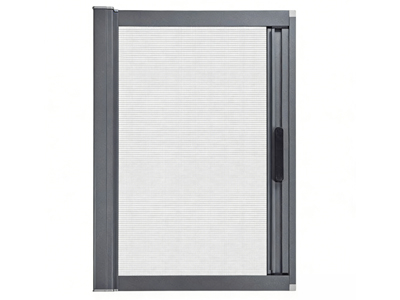
MBORMC H01 invisible retractable screen — protecting South Coast homes from Ross River virus, Buruli ulcer and JEV risk
🏖️ H01 South Coast Edition – Coastal Protection
The South Coast Mosquito Threat — Aedes vigilax
Along the NSW South Coast, the mosquito of greatest public health concern is Aedes vigilax [citation:2]. This species breeds in coastal saltmarshes and is an aggressive biter that can travel substantial distances from its breeding sites. Studies have shown that Ae. vigilax can disperse over areas exceeding 60 km, making localized control efforts ineffective [citation:10].
Ae. vigilax is the primary vector for Ross River virus (RRV) along the coast [citation:2][citation:6]. It is also a vector for Barmah Forest virus [citation:5]. The species is most abundant during the warmer months, with peak activity from midsummer through mid-autumn [citation:2]. High tides (>1.8 metres) trigger egg hatching, leading to sudden spikes in mosquito populations [citation:5].
During investigations at Nelson Bay, 12 strains of Ross River virus were recovered from mosquito pools [citation:6]. At Batemans Bay and Termeil State Forest, a 1985-1988 survey found 86 isolates of Ross River virus, with Ae. vigilax yielding the majority of isolations [citation:2].
🦟 Aedes vigilax — The South Coast's Primary Vector: This saltmarsh mosquito is the most abundant species in coastal NSW. It is the primary vector of Ross River virus and Barmah Forest virus. High tides trigger mass hatchings, and the mosquito can travel over 60 km from breeding sites [citation:2][citation:5][citation:10].
Ross River Virus — A Persistent Coastal Threat
Ross River virus is the most common mosquito-borne disease in Australia, with around 5,000 cases reported annually [citation:15]. Along the South Coast, the virus has been detected repeatedly in mosquitoes and human cases.
In the 2024-2025 NSW arbovirus season, RRV notifications exceeded the 10-year average, with significant numbers reported across the state [citation:5][citation:14]. Coastal areas including Batemans Bay, Narooma, and Tweed Heads have been identified as high-risk locations [citation:5].
RRV causes symptoms including fever, rash, and joint pain (arthralgia). While most people recover within weeks, in some cases symptoms can persist for months [citation:9]. There is no vaccine for RRV — prevention relies wholly on avoiding mosquito bites [citation:9].
The NSW Health Arbovirus Surveillance Program monitors mosquito populations and virus activity across the state. Aedes vigilax and Culex annulirostris are the key vectors of interest for RRV and Barmah Forest virus [citation:5].
📊 RRV on the South Coast: Ross River virus is the most common mosquito-borne disease in Australia, with approximately 5,000 cases annually. Coastal NSW — including Batemans Bay, Narooma, and the South Coast — is a high-risk region. There is no vaccine [citation:5][citation:9][citation:15].
Buruli Ulcer Emerges on the South Coast
In 2024, researchers confirmed the emergence of Buruli ulcer on the NSW South Coast [citation:12]. Two cases were identified in Batemans Bay — one in a 94-year-old man and another in a 71-year-old man. The disease is caused by Mycobacterium ulcerans, a bacteria linked to possum excrement and transmitted by mosquitoes [citation:12].
Key findings:
- Two confirmed cases in Batemans Bay (2024) [citation:12]
- Positive possum excreta samples confirm the bacteria is present in local possum populations [citation:12]
- The new cases "could be a harbinger of a disease expansion in NSW similar to Victoria" [citation:12]
- Victoria reports nearly one case per day [citation:12]
Buruli ulcer causes skin lesions that can lead to bone swelling and permanent skin loss if not treated early. The toxins produced by the bacteria destroy skin cells, small blood vessels, and fat under the skin [citation:12].
Lead researcher Dr Mehrab Hossain, an infectious disease physician formerly of Canberra Hospital, said: "If GPs come across a skin infection and an ulcer which doesn't clear up even with usual antibiotics, then they should think about this Buruli ulcer" [citation:12].
NSW Health advises: "Early recognition and diagnosis is important to ensure appropriate treatment is provided to minimise skin damage. With appropriate treatment Buruli ulcer is curable" [citation:12].
🩺 Buruli Ulcer — A New Threat: Two confirmed cases in Batemans Bay in 2024. The bacteria is linked to possum excrement and spread by mosquitoes. Victoria reports nearly one case per day. South Coast cases may signal wider expansion [citation:12].
Japanese Encephalitis Virus — A Growing Coastal Risk
In December 2025, Japanese encephalitis virus (JEV) was detected in mosquitoes in Horsham, Victoria — the first detection of the 2025-2026 season [citation:4]. The virus has since been detected more broadly, with NSW Health confirming 60 Local Government Areas are now at elevated risk [citation:14].
JEV is transmitted by Culex annulirostris, the common banded mosquito, which is found along the NSW coast [citation:5][citation:14]. The virus can cause severe brain infection (encephalitis) and is fatal in approximately 1 in 250 cases [citation:4].
A free JEV vaccine is available for eligible people in high-risk areas, including 24 LGAs in Victoria and 60 in NSW [citation:4][citation:14]. Vaccination is the most effective protection, but avoiding mosquito bites remains essential [citation:4].
Victoria's Chief Health Officer, Dr Caroline McElnay, warned: "Anyone can be bitten by mosquitoes, but people living, working or spending time outdoors in northern Victoria — especially near rivers — may be at higher risk" [citation:4]. The South Coast, with its extensive river systems and estuaries, is similarly vulnerable.
🧬 JEV Detected in Victoria — Coastal NSW at Risk: First JEV detection of the 2025-2026 season in Horsham, Victoria. NSW Health has identified 60 LGAs at elevated risk. JEV is transmitted by Culex annulirostris, which is present along the South Coast [citation:4][citation:5][citation:14].
Kunjin and Barmah Forest Viruses
In addition to RRV and JEV, the South Coast is at risk from Kunjin virus (a subtype of West Nile virus) and Barmah Forest virus.
In November 2025, Kunjin virus was detected in a sentinel chicken in Cowra, Western NSW [citation:14]. The virus can cause severe neurological illness. There is no specific treatment or vaccine [citation:14].
Barmah Forest virus is less common than RRV but causes similar symptoms — fever, rash, and joint pain. It is also transmitted by Aedes vigilax and other mosquito species [citation:5][citation:7].
NSW Health Protection Advice
NSW Health and the Victorian Department of Health recommend the following measures to protect against mosquito-borne diseases [citation:4][citation:9][citation:12]:
- Secure insect screens on windows, doors, and other openings — ensure there are no gaps [citation:12]
- Use insect repellents containing DEET or picaridin [citation:4][citation:9]
- Wear long, loose-fitting, light-coloured clothing outdoors [citation:4]
- Limit outdoor activity at dawn and dusk when mosquitoes are most active [citation:4]
- Remove standing water around your home — including pot plant containers, buckets, and tyres [citation:12]
- Wash cuts and abrasions promptly with soap and apply antiseptic [citation:12]
As one South Coast resident's experience illustrates, the mosquito pressure can be severe. Researchers documented a case of epidemic polyarthritis probably contracted at Bawley Point — approximately 400 kilometres south of Nelson Bay — demonstrating that mosquito-borne disease affects both residents and visitors to the South Coast [citation:6].
🛡️ NSW Health Advice: "Mosquito proof your home by securing insect screens on accommodation" [citation:12]. The best protection against mosquito-borne diseases is to avoid mosquito bites — including through proper window and door screens [citation:4][citation:9].
How the H01 Protects South Coast Homes
The H01 is specifically designed for South Coast conditions:
- Blocks Aedes vigilax — The primary RRV vector is excluded by the fine mesh [citation:2]
- Blocks Culex annulirostris — The JEV vector is also blocked [citation:5]
- Blocks Aedes notoscriptus — Linked to Buruli ulcer transmission [citation:12]
- 304 stainless steel option — Resists salt-air corrosion, ideal for coastal properties [citation:13]
- Invisible when retracted — Preserve coastal and escarpment views
- No-drill installation — Perfect for South Coast holiday homes and rentals
- Removable and washable — Easy to clean after salt spray and storms
Comparison — H01 vs. Traditional South Coast Solutions
How to Order Your H01 for Your South Coast Home
Ordering is simple:
- Measure your windows or doors (width × height in mm).
- Choose your mesh type — PET for general use or 304 stainless steel for coastal resistance.
- Select your frame colour — any RAL colour to match your home.
- Contact us via WhatsApp or email with your specifications.
- Install yourself in minutes — no drilling required.
We ship to all South Coast towns — Batemans Bay, Narooma, Bega, Merimbula, Eden, and beyond. All screens are custom-made to your measurements and shipped with a 2-year warranty.
RRV, Buruli ulcer and JEV are active on the South Coast. Secure your home with custom H01 screens today.
Get a South Coast Quote