Detroit is a city of resilience, rich history, and a proud industrial legacy. But it's also home to a public health challenge that many residents face daily: mosquitoes. In 2026, Detroit ranked #4 on Orkin's list of worst US cities for mosquito activity, moving up one spot from the previous year [citation:1][citation:6][citation:9]. The city's unique urban landscape — thousands of vacant lots and abandoned structures — creates ideal breeding grounds for mosquitoes that carry West Nile virus [citation:3][citation:8].
West Nile virus is a serious threat in Detroit. In 2024, Michigan reported 49 cases, and cases have risen significantly from 26 in 2023 to 34 in 2024 to 61 in 2025 [citation:2][citation:12]. In 2026, a Wayne County mosquito pool tested positive for West Nile — the first positive sample in the county and the 13th in Michigan for the season [citation:12]. The MBORMC H01 Invisible Retractable Screen offers Detroit homeowners the protection they need: custom-fit, retractable screens that block disease-carrying mosquitoes while preserving views of Detroit's iconic skyline.
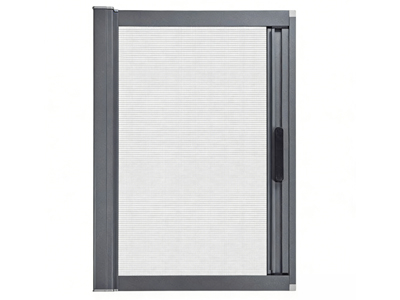
H01 invisible retractable screen — protecting Detroit homes from the #4 mosquito city in America
🏭 H01 Detroit Edition – Built for Urban Protection
Detroit – America's #4 Mosquito City
Detroit has consistently ranked among the top mosquito cities in the US. In Orkin's 2026 list, Detroit moved up to the #4 position, behind Los Angeles (#1), Chicago (#2), and New York (#3), and ahead of Atlanta (#5) [citation:1][citation:6][citation:11].
The ranking is based on the number of new residential mosquito treatments performed by pest control professionals over a one-year period from March 2025 to March 2026 [citation:1][citation:9]. As Detroit continues to experience significant mosquito pressure, the demand for effective home protection grows.
📊 Orkin 2026 Top 10 Mosquito Cities: 1. Los Angeles, 2. Chicago, 3. New York, 4. Detroit, 5. Atlanta, 6. Washington DC, 7. Houston, 8. Dallas, 9. Cleveland, 10. Denver [citation:1][citation:6]
The Vacant Lot Problem – Detroit's Unique Mosquito Challenge
Detroit's mosquito problem is deeply connected to its urban landscape. The city has a significant number of vacant lots and abandoned structures scattered throughout its neighborhoods — a legacy of decades of population decline [citation:8]. These unmanaged sites create meaningful pest pressure for the occupied homes around them.
According to a local pest control analysis, "vacant lots accumulate standing water from rainfall that becomes mosquito breeding habitat — a single neglected site can generate significant mosquito pressure for an entire block radius" [citation:8]. Abandoned swimming pools, neglected birdbaths, waterlogged flowerpots, and dirty gutters all become havens for mosquitoes [citation:3][citation:13].
As entomologist Mark Sheperdigian explained during the 2009 economic downturn: "You've got all these houses in foreclosure or abandoned all over. And abandoned swimming pools? They get pretty green and can breed mosquitoes by the hundredweight" [citation:3]. Today, that challenge persists.
Detroit's vacant lot situation is more pronounced than Chicago's, creating neighborhood-level mosquito pressure that Chicago's more uniformly developed urban fabric doesn't experience to the same degree [citation:8]. This means that even if your own property is well-maintained, a vacant lot nearby can still generate significant mosquito pressure for your home.
🏚️ The Vacant Lot Impact: "A single neglected site can generate significant mosquito pressure for an entire block radius." For Detroit homeowners, this means you can't control the source of the problem — but you can protect your home with the H01.
West Nile Virus – A Growing Threat in Detroit
West Nile virus is the most common mosquito-borne disease in the continental US, and Detroit is at the center of the threat [citation:4].
West Nile in Detroit: By the Numbers
- 2026: Wayne County mosquito pool tested positive for West Nile in July — the first positive sample in the county and the 13th in Michigan [citation:12]
- 2025: Michigan reported 61 human cases of West Nile virus, up from 34 in 2024 [citation:2]
- 2024: Michigan reported 49 cases (CDC data), including one human case in Detroit [citation:2][citation:12]
- 2023: Michigan had 26 cases [citation:2]
- 2024: 102 mosquito pools, 25 birds, and one horse in Michigan tested positive for West Nile virus [citation:7]
- 2024: A dead falcon found near Seven Mile and the Southfield Freeway tested positive for West Nile virus [citation:7]
The West Nile virus originated in central Africa and appeared in New York City around 1999. Now, it is present in Michigan, and its primary carrier is the northern house mosquito (Culex pipiens) [citation:4].
Climate Change Extends the Threat
Mosquito season in Michigan is lengthening due to climate change. MSU Professor Ned Walker explains that "seasonality is not a static thing, it's changing and dynamic, and we can have biting mosquitoes as long as the weather is warm enough" — and temperatures of 50°F or higher are sufficient for mosquitoes to fly [citation:4].
Walker and his team have found that mosquitoes carrying West Nile virus have been active for longer periods, lasting into October when previously their activity would have stopped a month earlier. Continued blood feeding activity into the fall means a greater potential transmission period for the virus [citation:4].
Outbreaks more commonly occur in years that are especially hot and dry — and 2025 was one of those years [citation:4].
🦟 West Nile Virus Symptoms: Most people infected with West Nile don't develop symptoms, but about 20% experience fever, head and body aches, joint pain, vomiting, diarrhea, or a rash. Symptoms develop 2 to 14 days after the patient is bitten. Older people, individuals with weakened immune systems, or those with chronic illness can suffer from potentially deadly issues such as meningitis or brain infection [citation:12].
The Role of Abandoned Structures in Mosquito Breeding
Detroit's abandoned structures are more than just an eyesore — they're a public health hazard when it comes to mosquitoes. A single abandoned home can have:
- Open foundations with standing water
- Clogged gutters that collect rainwater
- Old tires, buckets, and containers that hold water
- Leaky basements and crawl spaces
- Abandoned swimming pools and hot tubs that collect stagnant water [citation:3][citation:8][citation:13]
As one Detroit resident reported via the city's SeeClickFix system, an overgrown area behind a garage with a full-sized hot tub collecting water "has become a breeding ground for mosquitoes. The neighbors can't even enjoy an evening outside without being chased back inside by hundreds of mosquitoes" [citation:13].
Homeowners near vacant lots or abandoned structures should establish more frequent perimeter monitoring given the elevated mosquito pressure from adjacent unmanaged sites [citation:8].
How the H01 Protects Detroit Homes
The H01 is specifically designed for Detroit's unique urban environment:
- Fine mesh — Blocks Culex pipiens mosquitoes (the primary West Nile vector) as well as other urban mosquito species. A mosquito can lay 100-200 eggs in water as small as a bottle cap, but the H01 prevents them from entering your home [citation:14].
- Invisible when retracted — Preserves views of Detroit's skyline, the Detroit River, and Belle Isle
- PET electrostatic mesh — Captures urban dust and PM2.5, improving indoor air quality
- No-drill installation — Perfect for Detroit renters and homeowners who don't want to damage window frames
- Custom fit — Made to your exact window dimensions — no gaps for mosquitoes to enter
H01 Applications for Detroit Homes
🏡 Single-Family Homes
Detroit's historic single-family homes often have beautiful, distinctive windows — many built in the early 20th century. The H01 mounts with adhesive tape — no drilling into historic wood frames, no damage to architectural details. This is especially important in neighborhoods like Indian Village, Boston-Edison, and Palmer Woods.
🏢 Apartments & Condos
Detroit's condos and apartments often have strict HOA rules about window modifications. The H01's no-drill adhesive installation requires no screws or permanent changes — perfect for renters and condo owners. The invisible cassette when retracted complies with building rules.
🌊 Detroit Riverfront Properties
Homes along the Detroit River and Lake St. Clair shoreline face the highest seasonal mosquito pressure in the Wayne County metro [citation:8]. The H01 provides essential protection for riverfront homeowners, and the 304 stainless steel option resists corrosion from lake moisture.
🏘️ Properties Near Vacant Lots
If you live near a vacant lot or abandoned structure, you're at higher risk of mosquito pressure [citation:8]. The H01 provides a barrier between your home and the mosquitoes breeding in neglected sites nearby. You can't control the vacant lot, but you can protect your home.
🏙️ Downtown & Midtown
Even in Detroit's bustling downtown, mosquitoes are a problem. Standing water on construction sites, parking lots, and rooftops all contribute to mosquito pressure. The H01 protects apartments and lofts in downtown, Midtown, and New Center.
Comparison – H01 vs. Traditional Detroit Solutions
How to Order Your H01 for Your Detroit Home
Protecting your Detroit home is simple:
- Measure your windows or doors (width × height in mm or inches).
- Choose your mesh type — PET for dust/pollen or 304 stainless steel for durability.
- Select your frame colour — any RAL colour to match your home.
- Contact us via WhatsApp or email with your specifications.
- Install yourself in minutes — no drilling required.
We ship to all Detroit neighborhoods — downtown, Midtown, Indian Village, Boston-Edison, Palmer Woods, and beyond. All screens are custom-made to your measurements and shipped with a 2-year warranty.
Vacant lots and abandoned structures create mosquito pressure in Detroit. Get your custom H01 today.
Get a Detroit Quote