New York City — the city that never sleeps, home to world-class culture, iconic architecture, and… mosquitoes. In 2026, NYC ranked #3 on Orkin's list of worst US cities for mosquito activity, behind only Los Angeles and Chicago [citation:8][citation:9]. With the West Nile virus transmission season now 20 days longer than in 1999 due to climate change, and the NYC Health Department urging residents to "make sure doors and windows have tight-fitting screens," the need for effective home protection has never been greater [citation:6][citation:9][citation:5].
Yet here's the catch: NYC landlords are not legally required to provide window screens [citation:10]. The Housing Maintenance Code requires window guards for child safety, but not screens [citation:10]. If you're a renter in NYC and want to keep mosquitoes, flies, and city dust out, you're on your own [citation:10]. The MBORMC H01 Invisible Retractable Screen is the ideal solution — custom-fit, no-drill installation, and invisible when not in use, making it perfect for NYC renters and homeowners alike.
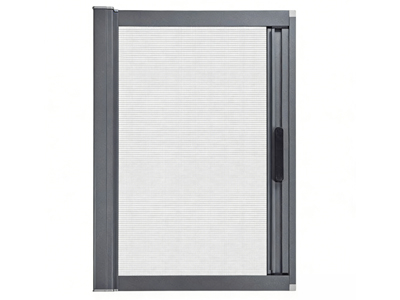
H01 invisible retractable screen — protecting NYC homes from the #3 mosquito city in America
🗽 H01 NYC Edition – Renter-Friendly Protection
NYC – America's #3 Mosquito City
New York City has consistently ranked among the top mosquito cities in the US. In Orkin's 2026 list, NYC held the #3 position, ahead of Detroit (#4) and Atlanta (#5), behind only Los Angeles (#1) and Chicago (#2) [citation:8][citation:9].
NYC's mosquito problem is driven by its dense urban environment, extensive parklands, and the 5.2 million catch basins across the city that collect standing water — perfect mosquito breeding grounds [citation:2][citation:5]. The NYC Department of Health and Mental Hygiene (DOHMH) conducts year-round mosquito surveillance, trapping mosquitoes at over 260 locations and testing them for diseases [citation:2][citation:5].
🦟 NYC Mosquito Surveillance: The DOHMH monitors mosquito populations across all five boroughs, testing adult mosquitoes for West Nile and other viruses at the Public Health Laboratory. If WNV is detected, supplemental traps are added to better define virus distribution [citation:5].
West Nile Virus – NYC's #1 Mosquito-Borne Threat
West Nile virus (WNV) first emerged in the United States in 1999, with New York City at the epicenter of the outbreak [citation:9][citation:12]. Since then, WNV has become endemic in NYC, with cases reported every year [citation:6][citation:9].
Key WNV facts for NYC:
- Season length: The WNV transmission season in New York State has lengthened by an average of 20 days over the past 25 years, beginning 3.8 days earlier and ending 16.3 days later [citation:9][citation:12].
- Annual cases: Since 1999, there have been between 2 and 45 people with West Nile Neuroinvasive Disease annually. Six of the nine years with more than 25 cases have been since 2010 [citation:6].
- Climate change link: Climate model analyses indicate that the observed increase in WNV season length is 6.4 times more likely under historical climate forcing than under pre-industrial conditions [citation:9][citation:12].
- High-risk populations: People over 60 have the highest risk of severe WNV illness. Most infections occur due to a mosquito bite within NYC [citation:6].
- Vector species: The primary WNV vector in NYC is the Culex pipiens mosquito, which breeds in stagnant water in catch basins, tires, birdbaths, and clogged gutters [citation:2][citation:5].
The NYC Health Department's West Nile Virus Plan for 2025 recommends that residents "make sure doors and windows have tight-fitting screens. Repair or replace screens that have tears or holes" [citation:2].
🌡️ Climate Change & WNV Season: A 2025 study published in bioRxiv found that the WNV transmission season in NYS has lengthened by an average of 20 days since 1999. Longer transmission seasons are positively associated with higher WNV prevalence in both mosquito vectors and humans [citation:9].
Aedes Mosquitoes – Dengue, Zika & Chikungunya Risk
Beyond West Nile virus, NYC faces growing risks from Aedes mosquitoes — the species that spread dengue, Zika, and chikungunya. A 2019-2020 study of mosquitoes in NYC identified Culex pipiens, Aedes albopictus (Asian tiger mosquito), and Drosophila relpelta — all considered invasive species [citation:8].
The Aedes albopictus (Asian tiger mosquito) is now established in NYC, and is known to be a vector of West Nile virus, Western Equine Encephalitis, and Japanese Encephalitis virus [citation:8]. It also transmits dengue and chikungunya, which have been reported in NYC among travelers.
In addition, Brooklyn community gardens have been identified as breeding sites for both Aedes albopictus and Culex pipiens, as both species breed in human-made plastic containers. Community garden abundance is a concern for urban mosquito management [citation:11].
NYC Landlord Screen Requirements – What Renters Need to Know
If you rent in NYC, you need to know your rights — and your responsibilities. Here's what the law says:
- Landlords are NOT required to provide screens under the Housing Maintenance Code [citation:10]. Real estate attorney Catharine Grad confirms: "The Housing Maintenance Code sets out requirements for housing in New York City, and it does not require that a landlord maintain storm windows or screens in windows" [citation:10].
- If you're rent-stabilized and screens were provided at move-in, the landlord must maintain them as a "required service" [citation:10].
- Window guards ARE required if the building has more than three apartments and children 10 or younger reside there [citation:10].
- Natural ventilation requirements: The NYC Building Code requires naturally ventilated buildings to provide a minimum openable area equivalent to 5% of floor area [citation:4]. However, window stops installed for child safety can limit this.
The NYC Health Department emphasizes: "Make sure doors and windows have tight-fitting screens. Repair or replace screens that have tears or holes" [citation:2]. But for NYC renters, this responsibility falls on the tenant, not the landlord [citation:10].
That's where the H01 comes in. It's a renter-friendly solution that requires no drilling, no permanent modifications, and can be removed without leaving residue when you move out.
NYC Building Code – What It Says About Screens
While NYC's Housing Maintenance Code doesn't require landlords to provide screens, building owners must maintain vermin and insect protection for certain building systems [citation:7].
Specifically, the NYC Plumbing Code requires that "inlets and vents to the system shall be inspected to verify that each is protected to prevent the entrance of insects and vermin into the storage..." [citation:7]. This applies to nonpotable water systems, not residential windows [citation:7].
For residential windows, the International Property Maintenance Code, adopted by NYC, requires screens for "all doors, windows and other outside openings in residential buildings" [citation:4]. However, enforcement varies, and it is generally the tenant's responsibility to ensure their own windows are screened.
For NYC Health Code, the DOHMH's West Nile Virus Plan recommends screens but does not mandate them [citation:5].
The bottom line: If you want window screens in NYC, you'll likely need to provide them yourself [citation:10].
📋 NYC Renter FAQ: "Is my landlord legally required to put in a screen?" No. "Can my landlord remove existing screens?" Maybe — if you're rent-stabilized and screens were provided at move-in, they must be maintained. "What should I do?" Get your own screen — like the H01, which is removable, requires no drilling, and can be taken with you when you move [citation:10].
How the H01 Protects NYC Homes
The H01 is specifically designed for NYC's unique urban environment:
- No-drill installation — Perfect for renters and condo owners who can't modify window frames
- Fully removable — Take it with you when you move — no damage, no lost security deposit
- Fine mesh — Blocks Culex pipiens (West Nile vector) and Aedes albopictus (dengue/Zika vector)
- PET electrostatic mesh — Captures urban dust and PM2.5, improving indoor air quality
- Invisible when retracted — Preserves NYC's iconic views of the skyline and parks
- Custom fit — Made to your exact window dimensions — no gaps, no insects
- Any RAL colour — Match your window frames or interior decor
H01 Applications for NYC Apartments
🗽 Manhattan Apartments
From pre-war walk-ups to luxury high-rises, Manhattan apartments have diverse window types. The H01 works on all of them — double-hung, casement, sliding, and tilt-and-turn. The invisible design when retracted preserves the building's exterior appearance — important for co-op and condo boards. The no-drill installation is perfect for renters in Upper East Side, Upper West Side, Greenwich Village, and beyond.
🏙️ Brooklyn Brownstones
Brooklyn's historic brownstones have beautiful, distinctive windows. The H01 mounts with adhesive tape — no drilling into historic wood frames, no damage to architectural details. The mesh is washable — ideal for Brooklyn's tree-lined streets where pollen is a concern.
🌳 Queens & Bronx Homes
Queens and the Bronx have more single-family homes and suburban-style living. The H01 is ideal for these homes, providing protection against mosquitoes, flies, and dust from the city. The 304 stainless steel option is available for homes with pets or near saltwater.
🏖️ Staten Island
Staten Island's coastal homes face salt-air corrosion. The H01 with 304 stainless steel mesh is marine-grade — it resists rust and corrosion, making it ideal for coastal homes.
Comparison – H01 vs. Traditional NYC Screen Solutions
How to Order Your H01 for Your NYC Home
Protecting your NYC home is simple:
- Measure your windows or doors (width × height in mm or inches).
- Choose your mesh type — PET for dust/pollen or 304 stainless steel for durability.
- Select your frame colour — any RAL colour to match your home.
- Contact us via WhatsApp or email with your specifications.
- Install yourself in minutes — no drilling required.
We ship to all five boroughs — Manhattan, Brooklyn, Queens, Bronx, and Staten Island. All screens are custom-made to your measurements and shipped with a 2-year warranty.
Your landlord isn't required to provide screens. Get your custom H01 today. No drilling, no damage, fully removable.
Get an NYC Quote