Chicago is a world-class city — known for its architecture, deep-dish pizza, and vibrant lakefront. But it also holds an unwelcome distinction: America's #2 worst city for mosquito activity, according to Orkin's 2026 Mosquito Cities List[citation:1][citation:3]. With West Nile virus risk rated as "high" and city health officials reporting "a higher proportion of mosquitoes testing positive for West Nile virus than usual" in 2025, Chicago homeowners need effective protection[citation:2][citation:14]. The MBORMC H01 Invisible Retractable Screen provides the solution — custom-fit screens that block disease-carrying mosquitoes while complying with Chicago's building codes and preserving your views of the skyline.
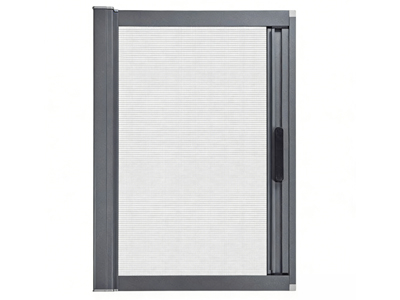
H01 invisible retractable screen — protecting Chicago homes from the #2 mosquito city in America
🏙️ H01 Chicago Edition – Code-Compliant Protection
Chicago – America's #2 Mosquito City
For several years, Chicago has ranked near the top of Orkin's annual mosquito list. In 2026, the city held its #2 position, behind only Los Angeles, and ahead of New York (#3), Detroit (#4), and Atlanta (#5)[citation:1][citation:5]. The ranking is based on the number of new residential mosquito treatments performed by pest control professionals over a one-year period from March 2025 to March 2026[citation:3].
The Midwest is seeing some of the fastest growth in mosquito activity year-over-year, with Milwaukee, Minneapolis, and downstate Springfield joining the list for the first time[citation:3]. Orkin entomologist Shannon Sked explained: "While major cities continue to experience consistent pressure, emerging trends — especially in the Midwest — show how shifting climate conditions and the expanding range of the yellow fever mosquito are creating new hot spots across the country"[citation:3].
📊 Orkin 2026 Top 10 Mosquito Cities: 1. Los Angeles, 2. Chicago, 3. New York, 4. Detroit, 5. Atlanta, 6. Washington DC, 7. Houston, 8. Dallas, 9. Cleveland, 10. Denver[citation:1]
Climate Change and Chicago's Lengthening Mosquito Season
Historically, Chicago's long, brutal winters provided a "hard reset on the mosquito population," according to Shannon LaDeau, a senior scientist at the Cary Institute of Ecosystem Studies. But climate change is changing that[citation:11][citation:15].
As temperatures warm globally and Chicago's winters become milder, mosquito season is lengthening. Warmer temperatures also allow mosquitoes to reach adulthood faster, meaning they have more time to reproduce and their populations increase more quickly[citation:11][citation:15]. Chicago had 26 more "mosquito days" in 2022 than in 1979, according to a Climate Central analysis[citation:11][citation:15].
Shannon LaDeau explains the mechanism: "Because mosquitoes are ectotherms, everything about their physiology is temperature-dependent. Warmer temperatures speed up their growth and their replication of viruses"[citation:11][citation:15]. This means not just more mosquitoes, but also greater disease risk.
Urban mosquitoes are largely invasive species that have adapted to city life. As LaDeau notes: "Mosquitoes that emerge from standing water in a tire someone left on the side of the road have gotten adept at surviving urban areas and it gives them very close access to humans"[citation:11].
🌡️ Mosquito Disease Days Increase: Climate Central found that 95% of major US cities saw an increase in mosquito disease days — days warm enough for West Nile virus transmission. Chicago now experiences 26 more days suitable for mosquitoes than in 1979[citation:11].
West Nile Virus – Chicago's Growing Threat
West Nile virus is the most common cause of mosquito-borne disease in Chicago and the United States[citation:2]. In 2025, Chicago reported its first three human cases in August, with patients ranging in age from 40 to 80 years old residing on the Northwest and South sides[citation:2][citation:14]. The Illinois Department of Public Health had previously confirmed the first human case in the state on June 24.
The risk of West Nile virus in Chicago was rated as "high" in August 2025, with health officials noting "a higher proportion of mosquitoes testing positive for West Nile virus than usual"[citation:2][citation:14]. The Chicago Department of Public Health reported that several batches of mosquitoes tested positive for West Nile virus in June in at least 16 counties across the state, including Cook County[citation:14].
The numbers are significant. In 2024, suburban Cook County had 19 West Nile virus cases and five deaths from the virus — marking the highest number of county deaths due to the disease since 2018[citation:14]. Illinois as a state had nearly 70 human cases of West Nile virus in 2024, down from 119 in 2023 but still a serious public health concern[citation:14].
Dr. Olusimbo "Simbo" Ige, CDPH Commissioner, emphasized: "The best way to protect yourself from West Nile virus is to avoid mosquito bites and take measures to stop them from breeding around your home"[citation:2].
Why Urban Chicago Mosquitoes Are Hardier
One factor contributing to higher West Nile virus rates in Chicago may be the urban habitat. Justin Harbison, a Loyola University associate professor specializing in mosquito control research, explained: "Because so much of our mosquitoes that are transmitting West Nile virus grow up in these storm sewers that are really polluted … they become a lot more hardy and just stronger in general"[citation:3].
Chicago's storm drains provide an ideal breeding ground for the Culex pipiens mosquito — the primary vector for West Nile virus in urban areas. The city manages more than 80,000 catch basins with larvicide treatments to control mosquito populations[citation:2][citation:14].
Invasive species are also a growing concern. Scientists have seen a wider range of invasive species that carry viruses like dengue and yellow fever in recent years in Cook County[citation:3].
Chicago Building Code – Screen Requirements
Chicago homeowners need to know: the Chicago Building Code requires every door opening and every window to have screens in place from April 15 to November 15 of each year[citation:4][citation:8].
Specifically, the code requires:
- Every door opening directly from any family unit to the outdoors must be supplied with a screen of not less than 16 mesh per inch[citation:4][citation:8]
- Every window or other outside opening used for ventilation must be supplied with a screen
- Every screen door shall have a self-closing device in good working condition
This code serves a dual purpose: keeping mosquitoes and other pests out, and preventing children from falling from windows. In 2014 alone, the Department of Buildings issued 1,526 violations for window-related issues[citation:8].
The H01 meets and exceeds the Chicago Building Code requirement. With a mesh density of approximately 1.2mm openings (approx. 20 mesh per inch), it provides superior protection while maintaining airflow and visibility.
📋 Chicago Building Code – Screen Compliance: "Every door opening directly from any family unit to the outdoors and every window, or other outside openings used for ventilation purposes, must be supplied with a screen of not less than 16 mesh per inch and every screen door shall have a self-closing device in good working condition" (Chicago Building Code, Section 14X-3-305.2)[citation:4][citation:8]. The H01's fine mesh meets this requirement and more.
How the H01 Protects Chicago Homes
The H01 is specifically designed for Chicago's urban environment:
- Fine mesh (20+ mesh per inch) — Blocks Culex pipiens mosquitoes that carry West Nile virus, as well as invasive Aedes species[citation:3]
- Invisible when retracted — Preserves views of Chicago's iconic skyline and lakefront
- No-drill installation — Perfect for Chicago renters and homeowners who don't want to damage window frames
- PET electrostatic mesh — Captures urban dust and pollen, improving indoor air quality
- Removable and washable — Easy to clean after Chicago's dusty summer
- Code compliant — Meets Chicago Building Code requirements for screens[citation:4]
H01 Applications for Chicago Homes
🏙️ Chicago Condos & Apartments
Chicago's condos and apartments often have strict HOA rules about window modifications. The H01's no-drill adhesive installation requires no screws or permanent changes — perfect for renters and condo owners. The invisible cassette when retracted complies with even the strictest building rules.
🏡 Single-Family Homes (Northwest Side, South Side, Suburbs)
Chicago's single-family homes face mosquito pressure from nearby storm drains and catch basins. The H01 provides year-round protection. The washable mesh means you can easily clean off dust and pollen.
🌊 Lakefront Properties (Lincoln Park, Gold Coast, Hyde Park)
Lakefront homes enjoy spectacular views of Lake Michigan — and they also face lake-effect weather that can extend mosquito seasons. The H01's invisible design preserves your lake views when the screen is retracted.
🏘️ Suburban Cook County
Suburban Cook County experienced 19 West Nile cases and 5 deaths in 2024[citation:14]. The H01 provides essential protection for families in the suburbs. The 304 stainless steel option is available for homes near the lake or with pets.
Comparison – H01 vs. Traditional Chicago Screens
How to Order Your H01 for Your Chicago Home
Protecting your Chicago home is simple:
- Measure your windows or doors (width × height).
- Choose your mesh type — PET for dust/pollen or 304 stainless steel for durability.
- Select your frame colour — any RAL colour to match your home.
- Contact us via WhatsApp or email with your specifications.
- Install yourself in minutes — no drilling required.
We ship to all Chicago neighborhoods — The Loop, Lincoln Park, Gold Coast, Hyde Park, Wicker Park, South Side, Northwest Side, and beyond. All screens are custom-made to your measurements and shipped with a 2-year warranty.
West Nile risk is high in Chicago. Custom H01 screens meet building code requirements while blocking disease-carrying mosquitoes.
Get a Chicago Quote