Los Angeles is a city of sunshine, beaches, and stunning views. But it also holds a less desirable title: the worst city in America for mosquito activity. For six consecutive years, Los Angeles has ranked #1 on Orkin's annual mosquito cities list — and the problem is only getting worse[citation:11]. The MBORMC H01 Invisible Retractable Screen offers LA homeowners a simple, effective solution: custom-fit, retractable screens that protect against West Nile virus, Aedes mosquitoes, and urban pests without blocking your views.
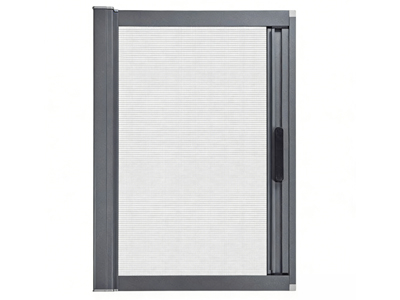
H01 invisible retractable screen — protecting LA homes from the #1 mosquito city in America
🌴 H01 LA Edition – Built for the #1 Mosquito City
Los Angeles – America's #1 Mosquito City
For the sixth consecutive year, Los Angeles has been ranked the worst city in the United States for mosquito activity. According to Orkin's 2026 Mosquito Cities List, LA maintained its top spot, with Chicago and New York following at #2 and #3[citation:11].
This ranking reflects a significant geographic shift in mosquito activity. From 2015 through 2020, Atlanta held the top spot. But since 2021, Los Angeles has consistently ranked #1 — marking a major shift in mosquito pressure from the Southeast to the West Coast[citation:11]. As Orkin entomologist Shannon Sked explained, "Over the past decade, we've seen mosquito activity expand beyond traditional hotspots and become a nationwide concern"[citation:8].
📊 Orkin 2026 Top 10 Mosquito Cities: 1. Los Angeles, 2. Chicago, 3. New York, 4. Detroit, 5. Atlanta, 6. Washington DC, 7. Houston, 8. Dallas, 9. Cleveland, 10. Denver[citation:11]
Why LA Is a Mosquito Hotspot
🌆 The Urban Heat Island Effect
Los Angeles's sprawling urban landscape creates a powerful "urban heat island" effect — cities are consistently warmer than surrounding rural areas due to concrete, asphalt, and lack of vegetation. In Dallas, which has a similar urban heat island effect to LA, researchers found that the downtown area is "always two, three, or four degrees warmer" than outlying areas, creating ideal conditions for mosquito-borne disease transmission[citation:7].
The Culex quinquefasciatus mosquito, which spreads West Nile virus, thrives in urban environments. It "lives around houses — they breed in bottle caps full of water, drains, overwatered lawns, and any kind of anything holding water around your house — and they don't go very far"[citation:7]. This makes LA homes particularly vulnerable.
🦟 Multiple Mosquito Species
Los Angeles is home to multiple disease-carrying mosquito species:
- Culex mosquitoes — spread West Nile virus, the most common mosquito-borne disease in the US[citation:1]. In 2024, Fresno County (Central California) saw West Nile cases and a death[citation:6].
- Aedes mosquitoes — including the Asian tiger mosquito (Aedes albopictus) and the yellow fever mosquito (Aedes aegypti), which spread dengue, Zika, and chikungunya. Aedes mosquitoes are now established throughout Southern California[citation:9].
- Southern house mosquito — the primary vector for West Nile virus in urban areas[citation:7].
In Southern California, mosquitoes carrying West Nile virus have been detected in multiple cities including Westminster, Costa Mesa, Newport Beach, Buena Park, Garden Grove, Santa Ana, Seal Beach, Huntington Beach, Cypress, and Fullerton[citation:9].
🌡️ Climate Change and Mosquito Disease Days
According to a Climate Central analysis of 239 major US cities, 95% of cities experienced an increase in mosquito disease days — days with temperatures suitable for West Nile virus transmission. On average, US cities now experience 18 more mosquito disease days annually than in the early 1970s[citation:1].
In California, San Francisco saw the largest increase of any US city — 52 more mosquito disease days. Santa Maria (+49) and Salinas (+40) also ranked in the top five[citation:1]. As climate change continues to lengthen mosquito seasons, LA homeowners face a growing threat.
Mosquito-Borne Disease Risks in LA
West Nile Virus
West Nile virus is the most common mosquito-borne disease in the US, with about 2,000 people diagnosed annually and cases typically peaking in August and September[citation:1]. While about 80% of infected people show no symptoms, about one in five develop flu-like symptoms, and about one in 150 develop severe neurological illness such as encephalitis or meningitis[citation:7].
Aedes-Borne Diseases
With the establishment of Aedes aegypti and Aedes albopictus in Southern California, LA faces additional risks:
- Dengue — California reported 720 dengue cases in 2024, making it the second-highest state for dengue incidence after Florida, with 18 locally acquired cases across three counties.
- Zika — remains a threat, with ongoing transmission in the Americas and imported cases in the US.
- Chikungunya — has spread to more than 110 countries globally.
🌍 Global Mosquito Toll: The World Health Organization estimates that over 700,000 people die from mosquito-borne diseases each year. Malaria alone accounts for more than 600,000 deaths annually, mostly in sub-Saharan Africa. Dengue cases have risen dramatically, with over 5 million reported in 2023. The global burden underscores the importance of personal protection — and the H01 is your first line of defense at home.
How the H01 Protects LA Homes
The H01 is specifically designed for urban LA environments:
- Fine mesh — The 1.2mm openings block all mosquito species, including Culex, Aedes aegypti, and Aedes albopictus.
- Invisible when retracted — Preserves LA's iconic views of the Pacific, mountains, and skyline.
- PET electrostatic mesh — Captures PM2.5 and urban dust, improving indoor air quality in LA's smoggy environment.
- 304 stainless steel option — For coastal LA homes in Santa Monica, Venice, and Malibu, salt-air corrosion resistance is essential.
- No-drill installation — Perfect for LA renters and homeowners who don't want to damage window frames.
H01 Applications for LA Homes
🏖️ Coastal LA (Santa Monica, Venice, Malibu)
Coastal homes face salt-air corrosion that destroys ordinary screens within months. The 304 stainless steel option is marine-grade — it resists saltwater corrosion and maintains structural integrity. The invisible design preserves ocean views that homeowners pay a premium for.
🏙️ Urban LA (Downtown, Hollywood, West LA)
Urban homes face city dust, smog, and the urban heat island effect. The PET electrostatic mesh captures PM2.5 particles and urban pollution, while the retractable design preserves city views. The no-drill installation works on all window types common in LA apartments and condos.
🌿 Valley Homes (San Fernando Valley, San Gabriel Valley)
Valley homes experience hotter temperatures that prolong mosquito seasons. The H01 provides year-round protection, and the washable mesh means you can easily clean off valley dust and pollen.
🌊 Beach Communities (Huntington Beach, Newport Beach, Long Beach)
Beach communities face both salt-air corrosion and mosquitoes. The H01 with 304 stainless steel mesh is the ideal solution — rust-proof, mosquito-proof, and invisible when retracted to preserve coastal views.
Comparison – H01 vs. Traditional LA Screens
How to Order Your H01 for Your LA Home
Protecting your LA home is simple:
- Measure your windows or doors (width × height).
- Choose your mesh type — PET for dust/pollen or 304 stainless steel for coastal durability.
- Select your frame colour — any RAL colour to match your home.
- Contact us via WhatsApp or email with your specifications.
- Install yourself in minutes — no drilling required.
We ship to all LA neighborhoods — Santa Monica, Venice, Malibu, Hollywood, Downtown, Pasadena, and beyond. All screens are custom-made to your measurements and shipped with a 2-year warranty.
Custom H01 screens for West Nile and Aedes protection. Invisible when retracted — preserve your views.
Get an LA Quote