Atlanta is the cultural and economic heart of the Southeast — but it's also a city with a long and formidable mosquito problem. From 2015 through 2020, Atlanta was ranked America's #1 mosquito city for six consecutive years.[citation:1] In 2026, Atlanta ranks #5 nationally, and the city's warm, humid climate, extensive tree canopy, and history as the entry point for invasive mosquito species create a year-round mosquito challenge.[citation:1][citation:6] The MBORMC H01 Invisible Retractable Screen is the ideal solution for Atlanta homeowners — custom-fit screens that block disease-carrying mosquitoes while preserving views of the city's lush greenery.
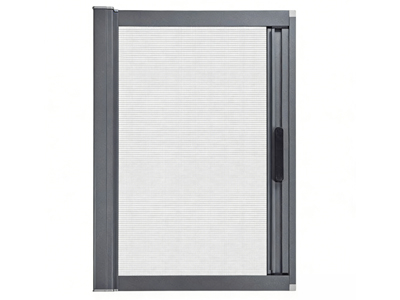
H01 invisible retractable screen — protecting Atlanta homes from the former #1 mosquito city in America
🌳 H01 Atlanta Edition – Built for the Southeast
Atlanta – America's Former #1 Mosquito City
Atlanta's mosquito legacy is unmatched. For six consecutive years, from 2015 through 2020, Atlanta held the top spot on Orkin's annual mosquito cities list.[citation:1] While Los Angeles has since taken that title, Atlanta remains a mosquito powerhouse at #5 nationwide in 2026.[citation:1][citation:6]
The ranking is based on the number of new residential mosquito treatments performed by pest control professionals over a one-year period.[citation:1] Atlanta's continued high ranking reflects the persistent mosquito pressure that defines life in the Southeast.
📊 Orkin 2026 Top 10 Mosquito Cities: 1. Los Angeles, 2. Chicago, 3. New York, 4. Detroit, 5. Atlanta, 6. Washington DC, 7. Houston, 8. Dallas, 9. Cleveland, 10. Denver[citation:1]
The Asian Tiger Mosquito – Atlanta's Invasive Legacy
Atlanta is the ground zero for the Asian tiger mosquito (Aedes albopictus) in the United States. The species was first discovered in the U.S. in the early 1980s, likely arriving in a shipment of used tires from Asia. In 1986, the CDC conducted a survey that found Aedes albopictus only in two locations: Atlanta (Fulton County) and Savannah, Georgia.[citation:9]
By 1991, the species had spread to all 159 counties in Georgia. By 1994, all 159 counties were confirmed infested.[citation:9] The commercial movement of used tires is implicated in this rapid dispersal, and adult mosquitoes have even been observed following humans and entering automobiles — demonstrating how human activity accelerates their spread.[citation:9]
Today, Aedes albopictus is established throughout the Southeast, and Atlanta remains a core habitat for this aggressive, daytime-biting mosquito. UGA research shows that urbanization, which alters microclimate and is often characterized by increasing surface imperviousness and heat island effects, increases Ae. albopictus abundance. Minimum relative humidity has a significant negative effect on adult abundance, while impervious surface coverage and daily temperature range have a significant positive effect.[citation:4]
Canopy cover also predicts greater larval habitat density, meaning Atlanta's tree-filled neighborhoods — while beautiful — create ideal conditions for Asian tiger mosquitoes to breed.[citation:4] The genetic structure of Ae. albopictus across Atlanta shows a single introduction event, likely from the initial invasive population in the early 1990s, followed by rapid population movement across the city — often leap-frogging over nearby sites.[citation:4]
🦟 The Asian Tiger Mosquito: Aedes albopictus is an aggressive daytime biter. Unlike most mosquitoes that feed at dusk and dawn, Asian tiger mosquitoes bite all day long. They are vectors for dengue, Zika, chikungunya, and West Nile virus. They breed in small containers — bottle caps, tires, flowerpots — making urban environments ideal habitat.[citation:9]
West Nile Virus – An Active Threat in Atlanta
West Nile virus is the most common mosquito-borne disease in the continental U.S., and Atlanta is at the center of the threat. In Georgia, the most important vector species are Culex quinquefasciatus, Aedes albopictus, and Culiseta melanura.[citation:3]
2025 West Nile Season in Atlanta
- July 2025: Two mosquito traps in metro Atlanta tested positive for West Nile virus — in Hapeville and northwest Atlanta. Fulton County Board of Health confirmed the presence of infected mosquitoes in the area.[citation:11]
- Late July 2025: Additional positive samples were recovered from traps in three locations: one each in the northwest, northeast, and southwest quadrants of the City of Atlanta.[citation:2][citation:7][citation:15]
- August 2025: DeKalb Public Health confirmed two mosquito surveillance traps tested positive for West Nile virus in zip codes 30033 (Unincorporated DeKalb/NE Atlanta) and 30360 (Doraville).[citation:12]
Fulton County Board of Health officials urged residents to remember the "5 Ds" of mosquito prevention:
- Dusk/Dawn — Avoid outdoor activities when mosquitoes are most active
- Dress — Wear long sleeves and pants
- DEET — Use insect repellent
- Drain — Eliminate standing water
- Doors — Ensure window and door screens are intact to prevent mosquitoes from entering the home[citation:7][citation:11]
A 2026 study at Berry College in northwest Georgia found that Aedes albopictus and Culex pipiens complex — both competent vectors of West Nile virus and Eastern Equine Encephalitis — were present at most sampling sites, with the majority at the Rollins Dairy.[citation:8] This confirms that mosquito-borne disease risk extends beyond Atlanta into surrounding regions.
Atlanta's Climate – A Mosquito Paradise
Atlanta's humid subtropical climate creates ideal conditions for mosquitoes:
- Long mosquito season: Atlanta's warm weather extends from April through October, giving mosquitoes ample time to breed and multiply.
- High humidity: The Southeast's humidity supports mosquito survival. UGA research found that lower minimum relative humidity reduces adult Ae. albopictus abundance — meaning Atlanta's high humidity increases mosquito populations.[citation:4]
- Abundant rainfall: Atlanta receives about 50 inches of rain annually, creating countless standing water sources for mosquito breeding.
- Tree canopy: Atlanta's "City in a Forest" nickname reflects its extensive tree cover — which also provides ideal habitat for mosquitoes. Canopy cover predicts greater larval habitat density.[citation:4]
These conditions mean that mosquitoes are a year-round concern in Atlanta. The city's warm, humid environment supports multiple mosquito species, including the Culex mosquitoes that spread West Nile virus and the Aedes mosquitoes that spread dengue and Zika.
Georgia Building Code – Screen Requirements
Georgia has adopted the International Property Maintenance Code (IPMC), which includes specific requirements for window screens. Section 304.14 of the IPMC states:
"Every door, window and other outside opening required for ventilation of habitable rooms... shall be supplied with approved tightly fitting screens of not less than 16 mesh per square inch and every swinging door shall have a self-closing device in good working condition."[citation:5]
The H01 meets and exceeds this requirement. With a mesh density of approximately 1.2mm openings (approx. 20 mesh per inch), it provides superior protection while maintaining airflow and visibility.
📋 IPMC Screen Requirement: The International Property Maintenance Code, adopted by many Georgia jurisdictions, requires screens of not less than 16 mesh per inch on all windows and doors used for ventilation. The H01's fine mesh exceeds this standard, providing better insect protection while maintaining airflow.[citation:5]
How the H01 Protects Atlanta Homes
The H01 is specifically designed for Atlanta's urban environment:
- Fine mesh — Blocks Culex quinquefasciatus (West Nile vector), Aedes albopictus (dengue/Zika vector), and other urban mosquito species
- Daytime protection — The H01's fine mesh blocks Asian tiger mosquitoes, which bite during the day
- Invisible when retracted — Preserves views of Atlanta's tree-filled neighborhoods and skyline
- PET electrostatic mesh — Captures pollen and urban dust, improving indoor air quality during Atlanta's allergy season
- No-drill installation — Perfect for Atlanta renters and homeowners who don't want to damage window frames
- Custom fit — Made to your exact window dimensions — no gaps for mosquitoes to enter
H01 Applications for Atlanta Homes
🌳 In-Town Neighborhoods (Buckhead, Midtown, Virginia-Highland)
Atlanta's historic in-town neighborhoods have beautiful, distinctive windows — often with wood frames that can't be drilled without damage. The H01 mounts with adhesive tape — no drilling into historic wood frames, no damage to architectural details. The invisible cassette when retracted preserves the neighborhood's character. The PET electrostatic mesh captures pollen from the dense tree canopy.
🏡 Suburban Atlanta (Cobb, Gwinnett, DeKalb Counties)
Suburban Atlanta homes face mosquito pressure from nearby yards, retention ponds, and green spaces. The H01 provides essential protection, and the 304 stainless steel option is available for homes with pets. The washable mesh is ideal for Atlanta's humid climate — easy to clean after storms.
🏢 Atlanta Apartments & Condos
Atlanta's condos and apartments often have strict HOA rules about window modifications. The H01's no-drill adhesive installation requires no screws or permanent changes — perfect for renters and condo owners. The invisible cassette when retracted complies with building rules.
🌿 Near Parks & Green Spaces
Atlanta's extensive park system — Piedmont Park, Grant Park, the BeltLine — provides beautiful recreation but also mosquito habitat. Homes near green spaces face higher mosquito pressure. The H01 provides a barrier between your home and the mosquitoes breeding in nearby green spaces. You can't control the park, but you can protect your home.
Comparison – H01 vs. Traditional Atlanta Screens
How to Order Your H01 for Your Atlanta Home
Protecting your Atlanta home is simple:
- Measure your windows or doors (width × height in mm or inches).
- Choose your mesh type — PET for dust/pollen or 304 stainless steel for durability.
- Select your frame colour — any RAL colour to match your home.
- Contact us via WhatsApp or email with your specifications.
- Install yourself in minutes — no drilling required.
We ship to all Atlanta neighborhoods — Buckhead, Midtown, Virginia-Highland, Decatur, and beyond. All screens are custom-made to your measurements and shipped with a 2-year warranty.
Atlanta's humid climate and tree canopy create ideal mosquito habitat. Get your custom H01 today.
Get an Atlanta Quote