Washington, D.C. — the nation's capital — is a city of monuments, museums, and political power. But it's also home to a persistent mosquito problem that places it at #6 on Orkin's 2026 list of worst US cities for mosquito activity [citation:4][citation:15]. With West Nile virus detected in birds and mosquitoes across all eight wards, a recent dengue fever case in the DC suburbs of Virginia, and DC law requiring landlords to provide screens from March 15 to November 15, the need for effective mosquito protection is both a public health and a legal priority [citation:5][citation:13][citation:14].
The MBORMC H01 Invisible Retractable Screen offers DC residents the ideal solution — custom-fit screens that exceed the 16-mesh-per-inch legal requirement, block disease-carrying mosquitoes, and roll up invisibly when not in use to preserve views of the iconic DC skyline.
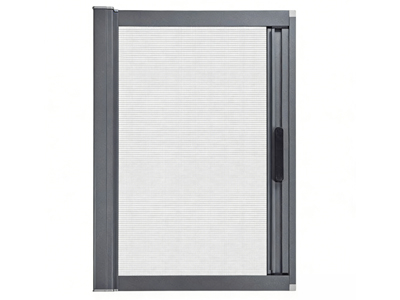
H01 invisible retractable screen — protecting DC homes from the #6 mosquito city in America
🏛️ H01 DC Edition – Code-Compliant Protection
Washington DC – America's #6 Mosquito City
Washington DC has moved up two spots in Orkin's 2026 Mosquito Cities List, ranking #6 nationally [citation:4]. The ranking is based on the number of new residential mosquito treatments performed by Orkin from March 18, 2025, to March 18, 2026, reflecting where pest control demand is highest [citation:4].
Orkin entomologist Shannon Sked explained: "Over the past decade, we've seen mosquito activity expand beyond traditional hotspots and become a nationwide concern" [citation:4]. DC's rise in the rankings reflects the growing mosquito pressure in the Mid-Atlantic region, driven by climate conditions and the expanding range of invasive mosquito species [citation:4].
📊 Orkin 2026 Top 10 Mosquito Cities: 1. Los Angeles, 2. Chicago, 3. New York, 4. Detroit, 5. Atlanta, 6. Washington DC, 7. Houston, 8. Dallas, 9. Cleveland, 10. Denver [citation:4][citation:15]
West Nile Virus – An Active Threat in DC
West Nile virus has been endemic in Washington DC since 2002 and remains the only mosquito-borne disease endemic in the District [citation:5].
2025 West Nile Detection in DC
- July 2025: Four American crows tested positive for West Nile virus in four different DC wards — Wards 2, 3, 4, and 5 — marking the first detections in wild birds since 2021 [citation:5].
- 2025 Mosquito Pools: As of August 2025, 3 mosquito pools (1.3%) had tested positive for West Nile virus, collected at the end of June [citation:5].
- 2024 Mosquito Pools: A total of 14 mosquito pools (4.0%) tested positive for West Nile virus in 2024 [citation:5].
- Human Cases: Between 2020 and 2024, an average of 3 human West Nile virus cases were reported annually in DC, all between July and September. Five cases were reported in 2024, including one asymptomatic blood donor [citation:5].
The DC Department of Health warns that West Nile virus is transmitted primarily by infected Culex species mosquitoes, which "commonly circulates between birds and mosquitoes" and can spill over into humans [citation:5]. About 80% of infected people show no symptoms, but less than 1% develop severe neuroinvasive disease, which can be life-threatening. Those over 50 and immunocompromised individuals are at higher risk for severe illness [citation:5].
Healthcare providers in DC are advised to consider West Nile virus in patients with compatible symptoms, as it can share similar symptoms with other arboviral diseases such as dengue and chikungunya [citation:5].
🧬 DC West Nile Facts: West Nile virus has been endemic in DC since 2002. An average of 3 human cases were reported annually from 2020 to 2024. In July 2025, four American crows tested positive across four wards, and 3 mosquito pools (1.3%) were positive. The virus is transmitted by infected Culex mosquitoes that feed on infected birds and then bite people [citation:5].
Dengue Fever – A Growing Threat in the DC Region
In 2025, the first-ever case of locally transmitted dengue fever was confirmed in Virginia, in a patient living in the Fairfax and Loudoun counties — the DC suburbs [citation:13]. The patient had not recently left Virginia but had been in close contact with an international traveler who was diagnosed with the same virus. Health officials believe a local mosquito bit the infected traveler and then the new patient, spreading the virus locally [citation:13].
Virginia is now the ninth state to report local dengue transmission since 2010, joining Florida, Hawaii, Texas, California, Arizona, North Carolina, West Virginia, and New York [citation:13]. Nationwide, 3,798 dengue cases were reported in 2024, a 359% increase from the annual average of 828 cases between 2010 and 2023. Among these, 105 were locally acquired [citation:10].
Dengue is spread through the bites of infected Aedes species mosquitoes, including Aedes albopictus (Asian tiger mosquito) and Aedes aegypti [citation:13]. The Asian tiger mosquito is established in the DC area [citation:2]. Symptoms include fever, severe headache, muscle and joint aches, and nausea. Severe dengue can cause internal bleeding and even death if not treated promptly [citation:13].
Health officials recommend that travelers heading to dengue-endemic regions wear insect repellent, long-sleeved shirts, and long pants, and sleep in air-conditioned rooms or rooms with window screens [citation:13].
Invasive Plants – A Hidden Driver of DC's Mosquito Problem
Recent studies have identified an unexpected factor contributing to DC's mosquito pressure: invasive plants. Research shows that invasive trees in economically disadvantaged neighborhoods of Baltimore and Washington DC are contributing to a rise in mosquito populations [citation:7].
The nonnative leaves serve as an excellent nourishment source for mosquito larvae, promoting faster growth and larger size, which ultimately enhances their ability to transmit diseases. This finding underscores the significance of plant quality over quantity in managing mosquito outbreaks [citation:7].
The Asian tiger mosquito (Aedes albopictus) is listed as a main alien, invasive species in the Washington DC Area [citation:2]. In addition, invasive plants like kudzu and Japanese knotweed — common in the DC region — create dense, moist undergrowth that provides ideal mosquito resting habitat.
This means that neighborhood vegetation can quietly shape public health risks — and even if you maintain your own yard, adjacent green spaces with invasive plants may contribute to mosquito pressure [citation:7].
🌿 DC's Invasive Plant Problem: Invasive trees in lower-income neighborhoods of Baltimore and Washington DC provide mosquito larvae with nourishment that promotes faster growth and larger size, enhancing disease transmission capacity. The Asian tiger mosquito (Aedes albopictus) is established in the DC area. Invasive plants like kudzu and Japanese knotweed create ideal mosquito habitat [citation:7][citation:2].
DC Law – Landlord Screen Requirements (March 15 – November 15)
Washington DC has one of the most comprehensive landlord-tenant screen laws in the country [citation:14]. DC law requires landlords to:
- Put screens on all doors and windows from March 15 to November 15 of every year [citation:14]
- Ensure screens don't have holes or cracks [citation:14]
- Have at least 16 meshes to the inch (16 mesh per inch) — or a screen that is just as effective [citation:14]
- Provide hinged screen doors that open outwards and are self-closing [citation:14]
- Alternatives to screens may only be used with DOB approval [citation:14]
Under DC housing enforcement and general habitability principles, rental units must be safe and free from conditions that harm health, including openings that allow insect infestation [citation:11]. Landlords must replace torn or missing window screens that cause pest problems or allow entry of pests [citation:11].
If a landlord fails to provide or repair screens, tenants can file a complaint with the DC Department of Buildings (DOB) or contact the Office of the Tenant Advocate (OTA) for help understanding rights, mediation options, and referrals to legal assistance [citation:11].
Under federal fair housing rules, tenants with a disability can request a reasonable accommodation (for example, installing finer screening to avoid insect-borne illness) in writing. The Fair Housing Act may require the landlord to grant reasonable accommodations even if the lease or building rules would otherwise prohibit the change [citation:11].
📋 DC Landlord Screen Law: DC law requires landlords to put screens on all doors and windows from March 15 to November 15 each year. Screens must not have holes or cracks, must have at least 16 meshes to the inch, and screen doors must be self-closing. The MBORMC H01 exceeds the 16-mesh requirement with 20+ mesh per inch [citation:14].
How the H01 Protects DC Homes
The H01 is specifically designed for DC's urban environment:
- Exceeds DC code — With 20+ mesh per inch, the H01 surpasses the DC legal requirement of 16 mesh per inch [citation:14]
- Blocks West Nile vectors — Fine mesh blocks Culex mosquitoes that transmit West Nile virus [citation:5]
- Blocks Aedes vectors — Blocks Aedes albopictus (Asian tiger mosquito) and Aedes aegypti, which transmit dengue, Zika, and chikungunya [citation:13][citation:2]
- Invisible when retracted — Preserves views of DC's monuments and skyline
- No-drill installation — Perfect for DC renters and homeowners who don't want to damage window frames [citation:11]
- PET electrostatic mesh — Captures PM2.5 and urban dust from DC's city environment
- Fully removable — Take it with you when you move — no damage, no lost security deposit
H01 Applications for DC Homes
🏛️ Historic DC Neighborhoods (Georgetown, Capitol Hill, Dupont Circle)
DC's historic neighborhoods have beautiful, distinctive windows — many with wood frames that can't be drilled without damaging historic character. The H01 mounts with adhesive tape — no drilling into historic wood frames, no damage to architectural details. The invisible cassette when retracted preserves the neighborhood's historic appearance. DC's landmark laws often restrict exterior modifications, but the H01's interior installation and invisible design comply with these regulations.
🏢 DC Condos & Apartments
DC's condos and apartments often have strict HOA rules about window modifications. The H01's no-drill adhesive installation requires no screws or permanent changes — perfect for renters and condo owners. The invisible cassette when retracted complies with building rules. In DC, landlords must provide screens from March 15 to November 15, and the H01 exceeds the 16-mesh requirement [citation:14].
🌳 Near Parks & Green Spaces (Rock Creek Park, National Mall, Anacostia Park)
DC's extensive park system — Rock Creek Park, the National Mall, Anacostia Park — provides beautiful recreation but also mosquito habitat. Invasive plants in these green spaces contribute to mosquito pressure [citation:7]. Homes near green spaces face higher mosquito pressure. The H01 provides a barrier between your home and the mosquitoes breeding in nearby green spaces.
🏡 Suburban DC (Maryland & Virginia)
Suburban DC homes in Montgomery County, Prince George's County, Arlington, and Fairfax face mosquito pressure from nearby yards, retention ponds, and green spaces. The H01 provides essential protection, and the 304 stainless steel option is available for homes with pets. The washable mesh is easy to clean after storms.
Comparison – H01 vs. Traditional DC Screens
How to Order Your H01 for Your DC Home
Protecting your DC home is simple:
- Measure your windows or doors (width × height in mm or inches).
- Choose your mesh type — PET for dust/pollen or 304 stainless steel for durability.
- Select your frame colour — any RAL colour to match your home.
- Contact us via WhatsApp or email with your specifications.
- Install yourself in minutes — no drilling required.
We ship to all DC neighborhoods — Georgetown, Capitol Hill, Dupont Circle, Adams Morgan, and beyond. All screens are custom-made to your measurements and shipped with a 2-year warranty.
DC law requires screens from March 15–November 15. West Nile and dengue are active threats. Get your custom H01 today.
Get a DC Quote