San Francisco is known for its iconic Golden Gate Bridge, rolling fog, and temperate climate. But climate change is rewriting the city's mosquito calendar. According to a 2026 Climate Central analysis, San Francisco has experienced the largest increase in "mosquito disease days" of any major U.S. city — 52 additional days annually compared to the early 1970s [citation:1][citation:4]. Stanford researcher Erin Mordecai explains: "Both mosquitoes and the pathogens they carry are highly sensitive to temperature, meaning that warmer conditions let the mosquitoes emerge earlier, stay active longer, and transmit disease more efficiently" [citation:4].
To make matters worse, the invasive Aedes aegypti mosquito — capable of transmitting dengue, Zika, chikungunya, and yellow fever — has recently been discovered in Castro Valley, the first time it has appeared in the East Bay [citation:15]. The species is now confirmed in 28 California counties, including Contra Costa, Santa Clara, Alameda, and Solano in the Bay Area [citation:13]. Combined with West Nile virus-positive mosquitoes detected in San Francisco and the Bay Area [citation:11], the city's mosquito threat is more serious than ever.
The MBORMC H01 Invisible Retractable Screen is the ideal solution for San Francisco homeowners and renters — custom-fit screens that block both Culex (West Nile vector) and Aedes (dengue/Zika vector) mosquitoes, exceed the California 16-mesh-per-inch requirement [citation:14], preserve views of the Bay, and require no drilling — perfect for San Francisco's historic homes and rental units.
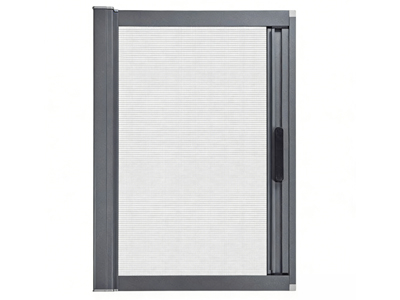
H01 invisible retractable screen — protecting SF homes from the nation's biggest mosquito disease day increase
🌉 H01 San Francisco Edition – Climate-Ready Protection
San Francisco's #1 Climate Change Ranking
Across 239 major U.S. cities studied from 1970 to 2025, 95% saw an increase in mosquito disease days — days warm enough for Culex mosquitoes to transmit West Nile virus, the most common mosquito-borne disease in the country [citation:4]. The 227 cities that saw increases averaged 18 more such days each year than in the early 1970s [citation:4].
San Francisco topped the list with 52 more mosquito disease days annually, followed by Reno, Nevada (+50), Santa Maria, California (+49), Albany, Georgia (+41), and Salinas, California (+40) [citation:1][citation:12]. A Bug of the Week analysis similarly found that the number of "biting days" in San Francisco has increased by 43 days since 1979 [citation:8].
🌡️ Mosquito Disease Days – National Context: "Mosquito disease days" refer to the number of days each year with temperatures warm enough for Culex mosquitoes to transmit West Nile virus. 95% of major US cities saw an increase, with San Francisco seeing the largest rise (+52 days). Both mosquitoes and the pathogens they carry are highly sensitive to temperature — warmer conditions let mosquitoes emerge earlier, stay active longer, and transmit disease more efficiently [citation:4].
West Nile Virus – Active in San Francisco
West Nile virus has been endemic in California since 2002, and San Francisco is part of the state's comprehensive surveillance system [citation:5]. The SF Department of Public Health monitors West Nile virus through mosquito pools, dead bird reports, sentinel chickens, and human cases [citation:5].
2026 West Nile Activity in the Bay Area
- May 2026: Alameda County confirmed its first West Nile virus-positive bird of the year [citation:11].
- 2026 Early Season: The Alameda County Mosquito Abatement District received 177 service requests in March — one of the highest March totals in recorded history — due to wild weather patterns with repeated cycles of rain and heat that allowed mosquitoes to emerge earlier than usual. Operations Supervisor Joseph Huston noted: "We are a month ahead with our mosquito populations this year" [citation:11].
- 2026 Bay Area: The California Department of Public Health is reporting more West Nile virus activity in both mosquito and bird samples than in recent years, which consequently increases the risk of humans getting sick [citation:15].
- 2024-2025: West Nile virus detections in coastal California counties were low, but health officials warn this does not guarantee similarly low activity in 2026 [citation:11].
West Nile Virus Health Risks
Most people infected with West Nile virus do not develop any illness. However, approximately 20% of infected people will develop mild symptoms including fever, headache, body aches, nausea, vomiting, and eye pain [citation:5]. It is estimated that 1 in 150 persons infected develops a more severe form of the disease, including encephalitis, meningitis, and acute flaccid paralysis. Case fatalities among hospitalized patients range from 10 to 14%, and some permanent neurological impairment may occur [citation:5].
🦟 West Nile Virus in California: West Nile virus is the most common mosquito-borne disease in California. It is transmitted primarily by infected Culex mosquitoes that feed on infected birds and then bite people. There is currently no human vaccine available to prevent West Nile virus, making mosquito bite prevention essential [citation:5].
Invasive Aedes Aegypti – The New Bay Area Threat
On July 20, 2026, the Alameda County Mosquito Abatement District discovered multiple Aedes aegypti mosquitoes in traps in Castro Valley — the first time the species has been found in the East Bay [citation:15]. The insect, native to Africa and known as the "yellow fever mosquito," is capable of transmitting dengue, Zika, chikungunya, and yellow fever — diseases that California has worked hard to keep out of its communities [citation:13].
Aedes aegypti has been increasingly found across new areas of California since it first arrived in 2013, and is now confirmed in 28 counties, including Contra Costa, Santa Clara, Alameda, and Solano in the Bay Area [citation:13][citation:15]. Unlike Culex mosquitoes that bite at dawn and dusk, Aedes aegypti is an aggressive daytime biter that prefers feeding on humans [citation:15].
Why Aedes Aegypti Is Spreading in the Bay Area
Erika Castillo, regulatory and public affairs director for the Alameda County Mosquito Abatement District, said recent humid weather — due to both monsoonal moisture and tropical storm remnants — led to ideal conditions for the Aedes aegypti [citation:15].
Taylor Kelly, scientific and technical services manager for the Santa Clara County Mosquito and Vector Control District, explained: "They love hot temperatures. It speeds up their development, and this humidity that we're experiencing can really support their survivorship longevity" [citation:15].
With the development of an El Niño in the Pacific Ocean, local officials are watching closely to see whether these insects continue to spread widely in the Bay Area [citation:15].
🧬 Aedes Aegypti in California: Once largely pushed out of California, this aggressive "ankle-biter" has re-established itself in Southern California over the past 15 years and is now confirmed in 28 counties, including Contra Costa, Santa Clara, Alameda, and Solano in the Bay Area. It can transmit dengue, Zika, chikungunya, and yellow fever [citation:13].
California Building Code – Screen Requirements
California has a statewide screen requirement under the California Code of Regulations, Title 22, Section 70857, which states: "To protect against insects, screens of 6 mesh per centimeter (16 mesh per inch) shall be provided on doors and openable windows" [citation:14].
Additionally, the California Health and Safety Code (Section 17920.3) defines a substandard building as one that lacks "screens for windows or doors when such screens are necessary for the safety or health of the occupants."
San Francisco's Building Code incorporates the California standards. The International Property Maintenance Code (IPMC) 304.14, which California jurisdictions adopt, requires screens of a minimum of 16 mesh per inch on every door and window used for ventilation [citation:10]. The IPMC also requires that screen doors have self-closing devices [citation:10].
The H01 meets and exceeds these requirements. With a mesh density of approximately 20+ mesh per inch, it provides superior protection against both Culex and Aedes mosquitoes while maintaining airflow and visibility.
📋 California Screen Requirement: "To protect against insects, screens of 6 mesh per centimeter (16 mesh per inch) shall be provided on doors and openable windows" (CCR Title 22, Section 70857) [citation:14]. The H01's 20+ mesh per inch exceeds this requirement — providing better protection against both West Nile and Aedes vectors.
San Francisco Tenant Rights – Pest Control
Under California law, landlords have a duty to ensure that rental units are habitable, including being free from pest infestations. Section 1941.1 of the California Civil Code requires that rental units have "screens on windows and doors" to prevent the entry of insects and pests.
Additionally, San Francisco's Health Code Article 11 prohibits public health nuisances, including those related to vectors, and requires property owners to address conditions that could lead to mosquito infestations [citation:6]. The Vector Control and Healthy Housing Inspection Program allows the Department of Public Health to inspect properties and issue violation notices for nuisance conditions [citation:6].
If a landlord fails to provide screens that meet code requirements, tenants can file a complaint with the San Francisco Department of Building Inspection or the San Francisco Rent Board.
How the H01 Protects San Francisco Homes
The H01 is specifically designed for San Francisco's unique environment:
- Exceeds CA/CA code — With 20+ mesh per inch, the H01 surpasses the 16-mesh requirement [citation:14]
- Blocks West Nile vectors — Fine mesh blocks Culex mosquitoes that transmit West Nile virus [citation:5]
- Blocks Aedes aegypti — Prevents the invasive yellow fever mosquito from entering your home [citation:15]
- Built for climate change — 6063-T5 aluminium frame and PET mesh are durable in changing conditions
- Invisible when retracted — Preserve views of the Golden Gate Bridge, Bay, and city skyline
- No-drill installation — Perfect for San Francisco renters and historic home owners
- Removable and washable — Easy to clean and maintain
H01 Applications for San Francisco Homes
🏡 Victorian & Edwardian Homes
San Francisco's historic Victorians and Edwardians have beautiful, distinctive windows. The H01 mounts with adhesive tape — no drilling into historic wood frames, no damage to architectural details. The invisible cassette when retracted preserves the building's historic character. This is essential in neighborhoods like Pacific Heights, Haight-Ashbury, and Alamo Square.
🏢 Apartments & Condos
SF's condos and apartments often have strict HOA rules about window modifications. The H01's no-drill adhesive installation requires no screws or permanent changes — perfect for renters and condo owners. The invisible cassette when retracted complies with building rules. In San Francisco, landlords have a duty to provide screens [citation:6].
🌊 Near the Bay (Marina, Mission Bay, Dogpatch)
Homes near the Bay face mosquito pressure from nearby marshes and waterways. The San Francisco International Airport area and Mills Field have seen above-average breeding of Aedes washinoi [citation:2]. The H01 provides a barrier between your home and mosquitoes from nearby water sources.
🌳 Near Parks & Green Spaces (Golden Gate Park, Presidio, Buena Vista Park)
SF's parks provide beautiful recreation but also mosquito habitat. The H01 provides essential protection for homes near green spaces.
Comparison – H01 vs. Traditional SF Screen Solutions
How to Order Your H01 for Your San Francisco Home
Protecting your San Francisco home is simple:
- Measure your windows or doors (width × height in mm or inches).
- Choose your mesh type — PET for dust/pollen or 304 stainless steel for durability.
- Select your frame colour — any RAL colour to match your home.
- Contact us via WhatsApp or email with your specifications.
- Install yourself in minutes — no drilling required.
We ship to all San Francisco neighborhoods — Pacific Heights, Haight-Ashbury, Marina, Mission, Sunset, Richmond, and beyond. All screens are custom-made to your measurements and shipped with a 2-year warranty.
Climate change has added 52 mosquito disease days to SF. Invasive Aedes aegypti has arrived. Get your custom H01 today.
Get a San Francisco Quote