Las Vegas — the entertainment capital of the world, famous for its casinos, shows, and desert heat. But a new threat has emerged in the valley: an aggressive, invasive mosquito species that bites all day long. The Aedes aegypti mosquito, known for transmitting dengue, Zika, chikungunya, and yellow fever, has explosively expanded across the Las Vegas Valley since its first detection in 2017 [citation:1][citation:3]. In 2026, the Southern Nevada Health District started mosquito surveillance one month early due to warmer temperatures and recent rainfall, with health officials warning that mosquitoes are breeding sooner than ever [citation:3][citation:12].
The MBORMC H01 Invisible Retractable Screen is the ideal solution for Las Vegas homeowners — custom-fit screens that block both Aedes aegypti and Culex mosquitoes, preserve your views of the Strip and surrounding mountains, and require no drilling — perfect for renters and homeowners alike.
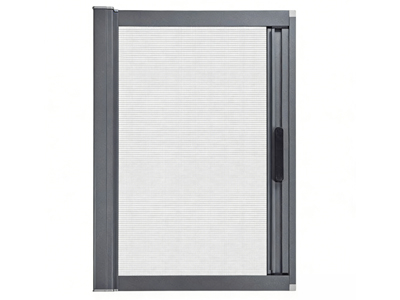
H01 invisible retractable screen — protecting Las Vegas homes from the Aedes aegypti invasion
🎰 H01 Las Vegas Edition – Built for Desert Protection
The Aedes Aegypti Invasion – Las Vegas's New Mosquito Threat
The Aedes aegypti mosquito is one of the most dangerous mosquito species in the world. It is the primary vector for dengue, Zika, chikungunya, and yellow fever viruses [citation:1][citation:6]. Unlike most mosquitoes that bite at dawn and dusk, Aedes aegypti is an aggressive daytime biter that prefers feeding on humans over birds [citation:3][citation:10][citation:11].
In 2017, the Southern Nevada Health District detected Aedes aegypti for the first time in the Las Vegas Valley [citation:1][citation:3]. At that time, only 5 of 117 census tracts (4%) were positive for the species [citation:1][citation:6]. By 2023, the species had explosively expanded to 147 of 276 census tracts (53%) — a dramatic 13-fold increase in presence [citation:1][citation:6][citation:15].
In Clark County, Aedes aegypti has spread from 4 ZIP codes in 2017 to 57 ZIP codes in 2024 [citation:3]. UNLV Professor Louisa Messenger confirmed that the mosquito has become established throughout the Las Vegas metropolitan area [citation:1][citation:7].
🦟 Aedes Aegypti Explosion: 2017: 4% of census tracts positive → 2023: 53% of census tracts positive. This dramatic expansion represents a 13-fold increase in just six years [citation:1][citation:6]. The mosquito has established itself in an arid desert environment where it was previously predicted to have low likelihood of survival [citation:15].
Why Aedes Aegypti Thrives in the Las Vegas Desert
Las Vegas's climate was once thought too dry for Aedes aegypti. However, the species has proven remarkably adaptable [citation:1][citation:15]. Summer temperatures frequently exceed 100°F, and precipitation averages less than 5 inches per year, mostly during winter and the North American Monsoon season [citation:1].
The mosquito survives and thrives because:
- Urban heat island effect: Las Vegas's urban environment retains heat, creating microclimates suitable for mosquito survival [citation:1]
- Irrigation and water features: Golf courses, decorative ponds, and residential landscaping provide water sources [citation:8]
- Monsoon season: Brief but intense thunderstorms create standing water in containers, tires, and plant saucers [citation:1]
- Human activity: Aedes aegypti breeds in small containers — bottle caps, children's toys, plant saucers — that collect water around homes [citation:10][citation:11]
UNLV researcher Trishnan Wickramasinghe, who is studying mosquitoes in private backyards, noted that the species is "surviving in Las Vegas and thriving and spreading disease in Clark County" [citation:4].
West Nile Virus – An Ongoing Threat in the Valley
While Aedes aegypti gets the headlines, West Nile virus remains the most common mosquito-borne disease in Las Vegas. The primary vector for West Nile virus in the valley is the Culex mosquito species [citation:13].
2026 West Nile Activity
- June 2026: The Southern Nevada Health District confirmed the first mosquitoes of the season testing positive for West Nile virus in three Las Vegas ZIP codes: 89121, 89169, and 89139 [citation:2][citation:9][citation:13].
- June 2026: Clark County reported its first human case of West Nile virus of the season [citation:13].
- 2026 Trap Data: As of June 2026, nearly 30,000 mosquitoes had been captured in more than 1,200 traps across Clark County. 96% of captured mosquitoes were Culex — the primary vectors for West Nile virus [citation:13].
2025 West Nile Activity
- July 2025: The health district identified the first West Nile virus-positive mosquito pool of the season in ZIP code 89123 [citation:11].
- 2024: Clark County reported 26 human cases of West Nile virus, including 14 neuroinvasive cases [citation:3][citation:10][citation:13].
- 2024: Health District staff set more than 3,400 traps and tested 3,567 mosquito pools, with 388 positive for West Nile and 21 positive for St. Louis Encephalitis [citation:10].
- 2019: Clark County reported 43 human cases of West Nile virus — the highest number in recent years [citation:11][citation:13].
UNLV researchers are now studying mosquitoes in private backyards to understand how they survive and transmit diseases in the Las Vegas Valley [citation:4]. The study, running through November 2026, uses 18 private yards across the valley and tests collected mosquitoes for multiple viruses [citation:4].
🧬 West Nile Virus in Las Vegas: 2024: 26 human cases, 388 positive mosquito pools. 2026: First positive mosquitoes detected in June, first human case reported. 96% of captured mosquitoes are Culex — the primary West Nile vector [citation:10][citation:13].
Summerlin – Las Vegas's Mosquito Hotspot
Summerlin, the master-planned community on the west side of the valley, has become Las Vegas's epicenter for mosquito activity. With ample water features — decorative ponds, golf course water hazards — and extensive landscaping, Summerlin provides ideal mosquito habitat [citation:8].
Residents report that mosquitoes have made it impossible to enjoy their backyards. Lam Xuan, a Summerlin resident for more than 20 years, told the Las Vegas Review-Journal that he never encountered mosquitoes in the area until 2023. He has scars on his legs from frequent bites and has tried electric zappers, fly ribbons, and coconut oil to fight the pests [citation:8].
Pest control companies have seen a dramatic increase in mosquito service requests. Johnny Longhurst, operations manager at JS Pest Control, said mosquito control requests were rare in his 37-year career until 2023, when a "shocking" number of people started calling about mosquitoes. He estimates that over 80% of his 400+ mosquito control customers live in Summerlin and the northwest valley [citation:8].
Summerlin South has had the most mosquito traps of any single Clark County ZIP code as of September 2025, according to health district data [citation:8].
🏠 Summerlin Mosquito Problem: "I never encountered mosquitoes in the area until last summer." — Lam Xuan, Summerlin resident for 20+ years. Pest control companies report 80% of mosquito service requests come from Summerlin and the northwest valley [citation:8].
Climate Change – Mosquito Season Starting Earlier
Warmer-than-average temperatures and recent rainfall have forced the Southern Nevada Health District to begin mosquito surveillance one month earlier than usual in 2026 [citation:3][citation:12].
Dr. Cassius Lockett, District Health Officer, explained: "Starting mosquito surveillance one month early gives us a critical head start. With warmer temperatures and the potential for standing water from recent rains, mosquitoes can begin breeding sooner than usual" [citation:12].
UNLV Professor Louisa Messenger noted that Las Vegas's recent temperate weather has been perfect for mosquito breeding and effectively extended the mosquito season by an extra month [citation:3].
However, extreme heat could reduce activity: "If we set temperature extreme records this summer, we actually may see die off of mosquito activity in June and July when it typically gets incredibly hot outside," Messenger said [citation:3].
Health officials urge residents to eliminate standing water before mosquito populations increase [citation:12].
How the H01 Protects Las Vegas Homes
The H01 is specifically designed for Las Vegas's unique desert environment:
- Blocks Aedes aegypti — The fine 1.2mm mesh blocks this aggressive daytime biter that can fit through standard screens [citation:10].
- Blocks Culex mosquitoes — The primary West Nile vector is also blocked [citation:13].
- Built for desert heat — The 6063-T5 aluminium frame and PET mesh won't warp or degrade in 110°F+ temperatures.
- Invisible when retracted — Preserve your views of the Strip and surrounding mountains.
- PET electrostatic mesh — Captures desert dust and pollen, improving indoor air quality.
- No-drill installation — Perfect for Las Vegas renters and homeowners who don't want to damage window frames.
- Removable and washable — Easy to clean after desert dust storms.
H01 Applications for Las Vegas Homes
🎰 Summerlin
Summerlin residents are at the frontline of the mosquito invasion [citation:8]. The H01 provides essential protection for homes with decorative ponds, golf course views, and extensive landscaping. The invisible design when retracted preserves the community's aesthetic.
🏡 Henderson & Anthem
Henderson homes face mosquito pressure from nearby wetlands, Lake Mead, and irrigation. The H01 provides protection against both Aedes aegypti and Culex mosquitoes. The 304 stainless steel option is available for homes near water.
🏢 Las Vegas Strip Area & Downtown
Even in the heart of the city, mosquitoes find breeding sites — construction containers, rooftop pools, and landscaping. The H01 protects apartments and condos on and near the Strip.
🏜️ Desert Springs & Aliante
Desert Springs and Aliante residents face both desert dust and mosquito pressure. The H01's PET electrostatic mesh captures dust, while the fine mesh blocks mosquitoes.
Comparison – H01 vs. Traditional Las Vegas Screen Solutions
How to Order Your H01 for Your Las Vegas Home
Protecting your Las Vegas home is simple:
- Measure your windows or doors (width × height in mm or inches).
- Choose your mesh type — PET for dust/pollen or 304 stainless steel for durability.
- Select your frame colour — any RAL colour to match your home.
- Contact us via WhatsApp or email with your specifications.
- Install yourself in minutes — no drilling required.
We ship to all Las Vegas neighborhoods — Summerlin, Henderson, Downtown, and beyond. All screens are custom-made to your measurements and shipped with a 2-year warranty.
This aggressive daytime biter has spread to 53% of Las Vegas census tracts. West Nile virus is active. Get your custom H01 today.
Get a Las Vegas Quote