Dallas is a city of big things — big business, big skies, big heat. But it's also home to a big mosquito problem. Ranked #8 on Orkin's 2026 list of worst US cities for mosquito activity, Dallas's extreme summer heat, high humidity, and the urban heat island effect combine to create a perfect storm for mosquito-borne disease [citation:13]. In 2012, a massive West Nile virus outbreak swept through the Park Cities, causing 225 cases, 173 neuroinvasive cases, and 19 deaths [citation:3][citation:8]. The Culex quinquefasciatus mosquito, which "breeds in bottle caps full of water, drains, overwatered lawns, and any kind of anything holding water around your house," is the primary vector — and it thrives in urban Dallas [citation:3].
The MBORMC H01 Invisible Retractable Screen is the ideal solution for Dallas homeowners — custom-fit screens that block Culex quinquefasciatus (West Nile vector) as well as Aedes aegypti and Aedes albopictus (dengue, Zika vectors), preserve your views, and require no drilling. The H01's PET electrostatic mesh also captures the fine dust and pollen that come with North Texas summers.
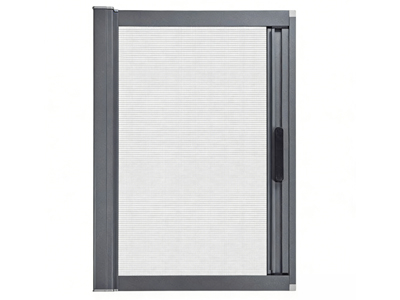
H01 invisible retractable screen — protecting Dallas homes from the #8 mosquito city in America
🤠 H01 Dallas Edition – Built for Texas Heat
Dallas – America's #8 Mosquito City
Dallas ranked #8 on Orkin's 2026 Mosquito Cities List, down one spot from #7 in 2025 [citation:13]. The ranking is based on the number of new residential mosquito treatments performed by pest control professionals over a one-year period, reflecting where pest control demand is highest [citation:13].
Orkin entomologist Shannon Sked explained: "Over the past decade, we've seen mosquito activity expand beyond traditional hotspots," with climate change creating conditions for the yellow fever mosquito to thrive [citation:13]. Dallas's position in the top 10 reflects the consistent and severe mosquito pressure that defines North Texas summers.
📊 Orkin 2026 Top 10 Mosquito Cities: 1. Los Angeles, 2. Chicago, 3. New York, 4. Detroit, 5. Atlanta, 6. Washington DC, 7. Houston, 8. Dallas, 9. Cleveland, 10. Denver [citation:13]
West Nile Virus – Dallas's Urban Threat
West Nile virus is the most common mosquito-borne disease in Dallas. The primary vector is the Culex quinquefasciatus mosquito, also known as the Southern house mosquito [citation:3][citation:8].
2012 Park Cities Outbreak – A Historic Warning
In 2012, West Nile virus "burned through the Park Cities," two wealthy municipalities surrounded by Dallas, causing 225 cases of West Nile fever, 173 cases of the more serious neuroinvasive form of the disease, and 19 deaths [citation:3][citation:8].
Dr. Robert Haley, an infectious disease expert at UT Southwestern, explained that urban heat islands were a key factor: "The downtown area is what's called a heat island. It's always two, three, or four degrees warmer in downtown Dallas than in outlying areas. And the prevailing winds move that hot air up into Park Cities, making it even warmer" [citation:3].
2025-2026 West Nile Activity
- August 2026: Dallas County reported its first human case of West Nile virus for the season. The patient was a Dallas resident in their early 50s diagnosed with the neuroinvasive form of the disease [citation:2].
- 2026 Trap Data: There were 167 positive mosquito samples in Dallas County as of August 2026 [citation:2].
- 2025: Dallas County reported 10 human cases of West Nile virus with one death — a 70-year-old man with underlying medical conditions diagnosed with West Nile Neuroinvasive Disease [citation:6][citation:11][citation:15].
- 2025 Trap Data: Dallas County found 245 positive traps and reported 8 human cases as of October 2025 [citation:11].
- 2024: Dallas County reported one West Nile death in North Dallas [citation:9].
Dr. Philip Huang, Director of Dallas County Health and Human Services, warned: "Our first human case is an important reminder that West Nile virus is still active here in Dallas County. Take a few minutes to protect yourself from mosquito bites, especially when spending time outdoors" [citation:2].
🦟 Culex quinquefasciatus — The Southern House Mosquito: Dr. Robert Haley explains: "The Culex quinquefasciatus lives around houses — they breed in bottle caps full of water, drains, overwatered lawns, and any kind of anything holding water around your house — and they don't go very far." This means your own yard is the primary source of risk — making window screens essential [citation:3][citation:8].
Urban Heat Island Effect – Why Dallas Is a Hotspot
Dallas's urban heat island effect is a major driver of mosquito-borne disease risk. The Culex quinquefasciatus mosquito thrives when temperatures reach about 80°F, and "in warmer weather, mosquitoes bite more" [citation:10].
As Dr. Haley explained, "urban outbreaks, not rural outbreaks" are the pattern for West Nile virus in Dallas [citation:3]. The combination of:
- Concrete and pavement — absorb and retain heat, creating warmer nighttime temperatures
- Dense housing — provides abundant human hosts for mosquitoes
- Drainage systems — create standing water habitats
- Overwatered lawns — provide breeding sites for Culex mosquitoes
creates a perfect environment for mosquito-borne disease transmission. This is why the Park Cities — just north of downtown Dallas — experienced such a devastating outbreak in 2012 [citation:3][citation:8].
Aedes Mosquitoes – Dengue, Zika & Chikungunya Risk
Beyond West Nile virus, Dallas faces growing risks from Aedes mosquitoes. A 2025 NIH-funded study of the Dallas-Fort Worth metroplex found that:
- Aedes aegypti — the primary vector for dengue, Zika, and chikungunya — is positively correlated with hot and dry conditions within densely populated locations, with peak abundance from weeks 33 to 44 (mid-August through early November) [citation:14].
- Aedes albopictus (Asian tiger mosquito) is positively correlated with cooler temperatures in higher socioeconomic locations with lower human population density, with peak abundance from weeks 19 to 32 (early May through early August) [citation:14].
- The diversity of environmental conditions in the Dallas-Fort Worth metroplex enables both species to "exploit differential niche spaces," increasing overall disease risk [citation:14].
This means that Dallas homeowners face multiple mosquito species with different seasonal peaks and different disease risks — making comprehensive protection essential.
🧬 DFW Aedes Study: A 2025 NIH-funded study of the Dallas-Fort Worth metroplex found that Aedes aegypti (dengue/Zika vector) peaks in late summer/fall, while Aedes albopictus (Asian tiger mosquito) peaks in late spring/early summer. The diversity of environmental conditions in DFW enables both species to exploit different niches [citation:14].
Dallas Mosquito Season – May Through November
Dallas's mosquito season is long and intense. According to Dallas County Health and Human Services:
- Active season: May 1 through October 31, with monitoring running through mid-November [citation:4][citation:11]
- Peak season: June through August, when temperatures climb into the mid-90s and humidity stays high, shortening the mosquito life cycle to 5-7 days [citation:5]
- Warm, wet winters (like 2025's January rainfall of 5.69 inches) lead to amplification of the virus early in the summer [citation:9][citation:3]
- Heavy rainfall — Dallas had nearly 5 inches of rain in May 2025 — creates standing water, and mosquitoes can grow from egg to adult in as little as seven days [citation:9]
The City of Dallas maintains an integrated mosquito management program with:
- 90 trap site locations citywide for West Nile virus monitoring
- Spraying operations activated within 24 hours of a positive trap result, within a ½-mile radius
- Larvicide treatments to reduce mosquito populations
- Community outreach and education [citation:4]
But government spraying is not 100% effective — personal protection, including window screens, is essential [citation:4].
How the H01 Protects Dallas Homes
The H01 is specifically designed for Dallas's challenging environment:
- Blocks Culex quinquefasciatus — the primary West Nile vector that breeds around homes [citation:3]
- Blocks Aedes aegypti and Aedes albopictus — dengue, Zika, and chikungunya vectors [citation:14]
- Built for Texas heat — 6063-T5 aluminium frame and PET mesh won't warp or degrade in 100°F+ temperatures
- PET electrostatic mesh — captures PM2.5, dust, and pollen from North Texas's dry summers
- Invisible when retracted — preserve your views of the Dallas skyline
- No-drill installation — perfect for Dallas renters and homeowners
- Removable and washable — easy to clean after dust storms
H01 Applications for Dallas Homes
🏡 Park Cities (Highland Park, University Park)
The Park Cities were the epicenter of the 2012 West Nile outbreak [citation:3]. Residents of Highland Park and University Park face the urban heat island effect that creates ideal Culex habitat. The H01 provides essential protection against West Nile virus, and the invisible design preserves the neighborhood's historic character.
🏘️ North Dallas & Suburban DFW (Plano, Frisco, Allen)
Suburban homes in Plano, Frisco, and Allen face mosquito pressure from nearby yards, retention ponds, and golf courses. The H01 provides essential protection, and the 304 stainless steel option is available for homes with pets.
🏢 Downtown Dallas & Uptown
Downtown Dallas's urban heat island creates warmer conditions that support mosquito activity [citation:3]. The H01 protects apartments and condos in downtown and Uptown from mosquito intrusion.
🌿 Near Parks & Creeks (White Rock Lake, Trinity River)
Dallas's extensive green spaces — White Rock Lake, the Trinity River, and other parks — provide beautiful recreation but also mosquito habitat. The H01 provides a barrier between your home and the mosquitoes breeding in nearby green spaces.
Comparison – H01 vs. Traditional Dallas Screen Solutions
How to Order Your H01 for Your Dallas Home
Protecting your Dallas home is simple:
- Measure your windows or doors (width × height in mm or inches).
- Choose your mesh type — PET for dust/pollen or 304 stainless steel for durability.
- Select your frame colour — any RAL colour to match your home.
- Contact us via WhatsApp or email with your specifications.
- Install yourself in minutes — no drilling required.
We ship to all Dallas neighborhoods — Park Cities, North Dallas, Downtown, Uptown, and beyond. All screens are custom-made to your measurements and shipped with a 2-year warranty.
Culex quinquefasciatus breeds around your home. Aedes mosquitoes are expanding in DFW. Get your custom H01 today.
Get a Dallas Quote