Australia's rental market is the frontline of the country's mosquito-borne disease risk. With Ross River virus, dengue, and Japanese encephalitis cases surging — national mosquito-borne virus cases nearly doubled between 2023 and 2024 — the question of who is responsible for window screens has become a critical health and legal issue for landlords, tenants, and property managers [citation:7].
While Queensland leads the nation in mosquito-borne disease risk, all Australian states and territories have distinct laws governing who is responsible for screens, who pays for repairs, and what tenants are allowed to install. The MBORMC H01 Invisible Retractable Screen offers the perfect solution for rental properties — no-drill adhesive installation means no damage to window frames, fully removable so tenants can take screens when they move, and no landlord consent required in many states.
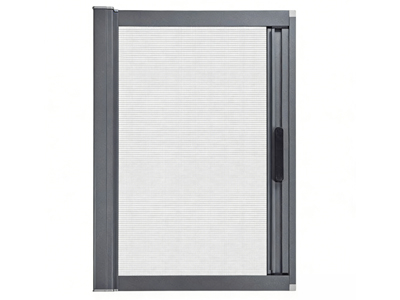
MBORMC H01 — no-drill, fully removable, ideal for rental properties
📋 H01 Rental Edition – Landlord & Tenant Friendly
Australian Landlord Responsibilities — What the Law Requires
When a tenant moves into a rental property in Australia, the landlord must ensure the property is "fit for habitation" — clean, safe, and in good repair [citation:6]. This includes:
- Working locks on all external doors and accessible windows [citation:2][citation:10]
- Functioning fittings and fixtures, including screens (if they exist) [citation:2]
- Compliance with minimum housing standards [citation:6][citation:10]
The Difference Between Fly Screens and Security Screens
Queensland's rental laws distinguish between basic fly screens and security screens [citation:2]:
- Basic fly screens are lightweight and designed purely to keep insects out. They are generally the landlord's responsibility to maintain if they were provided at the start of the tenancy.
- Security screens are designed to withstand significant force and provide security. Landlords are not legally required to install security screens unless they were already present [citation:2].
In some states, such as South Australia, landlords may be legally obligated to provide fly screens if the lack of screens makes the property uninhabitable [citation:7].
📋 ACT Government Guidance: In the ACT, "all flywire mesh and frames will be provided in good order and condition on allocation or post-allocation of the property." Tenants are responsible for repairing or replacing damaged or missing fly screens, but the initial provision is the landlord's duty [citation:5].
Tenant Rights — Who Pays for Screens?
In a 2025 Australian investor forum discussion, landlords and tenants debated who should pay for fly screens in rental properties [citation:12]. Opinions varied widely, reflecting a complex legal landscape.
When Landlords Must Pay
Landlords are generally responsible for maintaining screens that were provided at the start of the tenancy. If a screen is damaged by fair wear and tear — due to age, weather, or normal use — the landlord must repair or replace it [citation:2][citation:5].
In some states, the landlord may be required to install screens if their absence makes the property uninhabitable. In a 2000 South Australian case, the Residential Tenancies Tribunal ordered landlords to "fit flyscreens to the windows in the front two bedrooms" because the lack of screens meant "the house could not be properly ventilated" [citation:7].
When Tenants Must Pay
Tenants are responsible for damage caused by pets, accidents, or misuse [citation:2]. This includes screens shredded by dogs or cats, torn by moving furniture, or otherwise damaged beyond fair wear and tear. In the ACT, tenants are "responsible for the repair of damaged flyscreens and the replacement of missing flyscreens" [citation:5].
If a tenant wants a screen installed in a property that didn't have one at the start of the tenancy, the tenant may need to pay for it — unless the landlord agrees to share the cost [citation:4].
🔑 Key Principle: The landlord is responsible for maintaining screens provided at the start of the tenancy. The tenant is responsible for damage caused by pets, accidents, or misuse. A tenant who wants a new screen in a property that didn't have one usually pays for it.
Tenant Installation Rights — What Screens Can Tenants Install?
One of the most common questions from Australian renters is: Can I install screens without my landlord's permission?
In New South Wales, the answer is yes — under certain conditions. The NSW Residential Tenancies Regulation 2019 explicitly includes "inserting fly screens on windows" as a minor alteration for which it would be unreasonable for a landlord to withhold consent [citation:8]. This means NSW landlords cannot unreasonably refuse a tenant's request to install fly screens.
Similarly, the regulation includes:
- Securing furniture to walls
- Fitting childproof latches
- Installing or replacing internal window coverings
- Making modifications that do not penetrate a surface or permanently modify the premises [citation:8]
In other states, tenants must obtain written approval from the landlord or property manager before installing screens [citation:2][citation:4]. However, no-drill, removable screens that do not permanently alter the property are generally exempt from these restrictions [citation:9].
⚖️ NSW Law on Tenant-Installed Fly Screens: The NSW Residential Tenancies Regulation 2019 includes "inserting fly screens on windows" as a minor alteration that a landlord cannot unreasonably refuse. Screens that do not penetrate a surface or permanently modify the premises are also covered under this provision [citation:8].
Why Rental Properties Need Mosquito Screens in Australia
With Australia's mosquito-borne disease crisis — national case numbers nearly doubling in 2024 — the health case for screens in rental properties is stronger than ever.
As one South Australian case illustrates, the lack of screens can make a property uninhabitable. In that case, a tenant with a young child was unable to open windows for ventilation without flies and insects entering the property [citation:7].
In Queensland's mosquito-prone regions (Cairns, Townsville, the Torres Strait), the absence of screens poses a significant public health risk. Ross River virus, dengue, and Japanese encephalitis are all transmitted by mosquitoes, and the Asian tiger mosquito has now been detected on the mainland [citation:8].
The good news for tenants and landlords? No-drill, removable screens like the H01 solve all these problems without the complications of permanent installation.
Comparison — H01 vs. Traditional Rental Screen Solutions
How Landlords and Tenants Can Use the H01
For Landlords
Landlords can purchase H01 screens as a value-add for rental properties in mosquito-prone areas. The no-drill installation means no damage to window frames, and the screens are tax-deductible as a maintenance expense. Offering screened windows can also attract tenants seeking homes with insect protection.
For Tenants
Tenants can purchase H01 screens themselves for their own windows. The no-drill, removable design means they can take them when they move — no loss of bond. In NSW, tenants can install fly screens without unreasonable landlord refusal [citation:8].
How to Order Your H01 for Your Rental Property
Ordering is simple:
- Measure your windows or doors (width × height in mm).
- Choose your mesh type — PET for dust/pollen or 304 stainless steel for durability.
- Select your frame colour — any RAL colour to match the property.
- Contact us via WhatsApp or email with your specifications.
- Install in minutes — no drilling required. No permanent changes to the property.
We ship to all Australian states and territories. All screens are custom-made to your measurements and shipped with a 2-year warranty.
No-drill installation means no damage to window frames. Fully removable — no bond deductions. Get your custom H01 today.
Get a Rental Quote