Living in the American Southwest — Arizona, Nevada, Texas, Southern California — offers incredible beauty: stunning sunsets, wide-open skies, and year-round sunshine. But desert living comes with a hidden cost: dust. Fine caliche dust, haboob storms, pollen, and blowing sand infiltrate homes through the smallest gaps, coating surfaces, aggravating allergies, and damaging HVAC systems. The MBORMC H01 Invisible Retractable Screen with PET electrostatic mesh is engineered specifically for desert living — actively trapping dust and pollen before they enter your home, while rolling up invisibly when not needed.
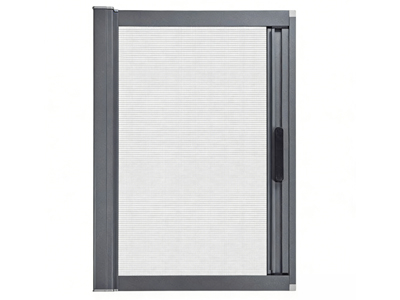
PET electrostatic mesh actively traps desert dust and pollen before they enter your home
🏜️ H01 Desert Edition – Engineered for Dusty Climates
The Desert Dust Problem – More Than Just an Inconvenience
Desert dust is not like ordinary dust. In the Sonoran and Mojave Deserts, the soil contains caliche — a fine, alkaline particulate that is incredibly persistent [citation:12]. After a haboob (a massive dust storm common in Arizona and Nevada), fine desert particles coat every outdoor surface, infiltrate through window gaps, and settle inside homes [citation:12].
The consequences of desert dust in the home are significant:
- Health impacts: Fine particulate matter (PM2.5) from desert dust can trigger asthma, allergies, and respiratory irritation. In desert-like environments, the energy yield of solar panels is drastically reduced due to dust accumulation, illustrating how pervasive dust particles are [citation:5].
- Increased cleaning burden: In Las Vegas, Henderson, and nearby desert communities, fine dust can enter through tiny gaps, open doors, shoes, windows, and the HVAC system [citation:8]. Homes require constant dusting and sweeping.
- HVAC strain: Dust clogs air filters, reducing efficiency and increasing energy costs. A good insect screen on every window is your home's quiet first line of defense — especially when the temps jump and monsoon season stirs everything up [citation:4].
- UV and heat damage: The desert sun is relentless. In cities like Las Vegas and Phoenix, standard plastic screen components often warp, become brittle, or completely melt when temperatures climb [citation:2]. Traditional screens degrade, while the H01's 6063-T5 aluminium frame and PET mesh remain stable.
🏜️ Phoenix Dust Fact: In 2024, Phoenix recorded 70 days above 110°F and 113 consecutive days above 100°F — a new all-time record [citation:14]. Screens designed for moderate climates simply weren't engineered for this environment. The H01 is built for the Southwest.
How PET Electrostatic Mesh Works in Desert Environments
The H01's PET electrostatic dust-proof mesh is uniquely suited to desert living. Unlike ordinary screens that simply block insects, PET (polyethylene terephthalate) fibre is treated to create a stable electrostatic charge that actively attracts microscopic particles. This is the same principle used in electrodynamic dust shields (EDS), where electrostatic forces remove dust particles from surfaces — applied here to capture dust before it enters your home.
Research shows that electrostatic dust removal can significantly improve air quality. Studies measuring dust removal effectiveness found that electrostatic dust removal increased image quality metrics from 28.1 dB to 34.2 dB — demonstrating a substantial reduction in particulate matter [citation:9]. In practical terms, the PET mesh captures:
- PM2.5 particles — the fine dust that penetrates deep into lungs
- Caliche dust — the alkaline desert soil that coats surfaces
- Pollen — a major allergen in the Southwest
- Pet dander — for homes with animals
- Construction dust — especially in growing desert communities
When the mesh becomes saturated with dust, it's removable and washable. Simply take it down, rinse it under a tap, and reinstall it in minutes. In dusty areas, homeowners often regret screens that are hard to remove, awkward to wash, or installed in a way that makes the glass behind them tougher to access [citation:6]. The H01 eliminates this problem.
🧪 Electrostatic Dust Removal Efficiency: Studies show that electrostatic dust shields effectively remove particles from surfaces, with removal efficiency dependent on material composition and thickness [citation:13]. The H01's PET mesh applies this same principle — using electrostatic attraction to capture dust before it enters your home, keeping your indoor air cleaner and surfaces less dusty.
Desert Insects – A Surprising Threat
Many people assume deserts are too dry for mosquitoes. Wrong. The Southwest has a surprising variety of mosquito species — and diseases:
- West Nile virus is consistently detected in Arizona, Nevada, and Texas.
- Monsoon season creates standing water that serves as mosquito breeding grounds.
- Irrigation — golf courses, lawns, and agricultural areas — provides year-round mosquito habitat.
- No-see-ums (gnats) are common at dusk and can pass through standard screens [citation:4]. The H01's fine 1.2mm mesh blocks them.
Beyond mosquitoes, desert homes face other unwelcome visitors: scorpions, cockroaches, and wasps that can find their way through torn or poorly fitted screens [citation:12]. A tight, well-fitted window screen keeps them out while you enjoy the night air [citation:4].
Why Desert Homeowners Choose the H01
Southwest homeowners have specific needs that the H01 addresses perfectly:
- Dust filtration: The PET mesh captures PM2.5 and caliche dust before it enters your home.
- Pollen protection: Southwest pollen seasons can be intense; the electrostatic mesh traps pollen.
- Heat and UV resistance: The 6063-T5 aluminium frame and PET mesh won't warp or degrade in 110°F heat.
- Energy efficiency: You can open windows for evening ventilation instead of running air conditioning constantly, reducing energy bills. In Las Vegas and Phoenix, security mesh creates a powerful "solar shading" effect, lowering internal temperatures by up to 30% [citation:2].
- Washable design: In dusty climates, screens need regular cleaning. The H01's removable mesh makes this simple.
- Preserved views: When the screen is retracted, you have unobstructed views of the stunning desert landscape.
Comparison – H01 vs. Other Desert Screen Options
H01 Applications for Desert Homes
🏜️ Phoenix & Scottsdale – Sonoran Desert
Phoenix homeowners face extreme heat, haboob dust storms, and monsoon humidity. The H01's PET mesh traps caliche dust during storms, while the 6063-T5 aluminium frame won't warp in 115°F heat. After a haboob, the fine caliche dust that coats every outdoor surface packs into screen mesh and reduces airflow [citation:12]. The H01's washable mesh can be rinsed clean after a dust event.
🌵 Las Vegas & Henderson – Mojave Desert
Las Vegas's desert environment combines extreme heat with construction dust from constant development. In Las Vegas, Henderson, and nearby desert communities, fine dust can enter through tiny gaps, open doors, shoes, windows, and the HVAC system [citation:8]. The H01 provides a barrier against construction dust and pollen, while the invisible design preserves views of the Strip and surrounding mountains.
🤠 Texas (El Paso, Midland, Odessa) – Chihuahuan Desert
West Texas is one of the windiest regions in the US, with frequent dust storms. The H01's electrostatic mesh traps the fine dust that permeates the region, while the retractable design means you can enjoy views of the desert landscape when the wind dies down.
🌿 Tucson & Southern Arizona
Tucson's monsoon season brings dramatic dust storms and humidity. The H01 provides year-round protection against dust, pollen, and insects — and when the monsoon passes, the screen rolls up to let you enjoy the clear desert skies.
🏡 Golf Course Communities
Many desert communities are built around golf courses, which bring irrigation, mosquitoes, and occasional stray golf balls. The H01's 304 stainless steel option (available on request) provides impact resistance for homes on the fairway.
Desert Screen Maintenance – Why Removability Matters
In the desert, screens get dirty fast. Phoenix's desert environment is uniquely hard on window screens [citation:12]:
- Caliche dust from haboobs packs into mesh and reduces airflow.
- Hard water deposits from sprinklers leave mineral stains.
- Monsoon season adds a layer of mud.
- UV exposure degrades mesh fibers over time.
The right way to clean window screens in Phoenix is to remove them, rinse with a hose, scrub with mild soap and a soft brush, rinse again, and allow to dry fully before reinstalling [citation:12]. The H01's removable and washable design makes this easy — unlike fixed screens that must be cleaned in place or replaced entirely.
🧹 Cleaning Tip for Desert Screens: In dusty climates like Phoenix, screens benefit from cleaning two to three times per year — especially after the spring pollen season and after monsoon season [citation:12]. The H01's removable mesh makes this a 15-minute task rather than a full-day project.
The Global Mosquito and Dust Market – A Growing Industry
The demand for mosquito screens is growing rapidly worldwide, and desert communities are no exception. According to market research:
- The global mosquito screen door market was valued at US$2.21 billion in 2024 and is projected to reach US$3.91 billion by 2034, growing at a CAGR of 5.9%.
- QYResearch forecasts the global market will reach US$2.004 billion by 2032, with a CAGR of 6.0% from 2026 to 2032 [citation:3].
- The United States market is projected to reach approximately US$817 million by 2034, growing at 5.1% CAGR.
- North America is a key growth region, driven by rising awareness of mosquito-borne diseases and home improvement trends [citation:7][citation:11].
Key growth drivers include rising awareness of mosquito-borne disease risks, climate change expanding mosquito habitats, increasing urbanization, growing demand for home improvement and outdoor living, and technological innovation — like the H01's invisible retractable design and electrostatic dust filtration.
Why the H01 is the Ultimate Desert Screen
For desert homeowners, the H01 offers advantages that no other screen can match:
- Electrostatic dust filtration — actively captures PM2.5 and pollen, unlike ordinary screens that let them pass through.
- Heat and UV resistance — built for 110°F+ temperatures and intense desert sun.
- Removable and washable — clean it after haboobs and dust storms.
- Invisible when retracted — preserve your desert views when the screen is not needed.
- No-drill installation — no damage to stucco, masonry, or rental properties.
- Insect protection — blocks mosquitoes, no-see-ums, wasps, and even scorpions.
- Energy efficiency — open windows for evening ventilation and reduce AC costs.
How to Order Your H01 for Your Desert Home
Ordering is simple:
- Measure your window or door opening (width × height in mm or inches).
- Choose PET electrostatic mesh for dust and pollen protection.
- Select your frame colour — any RAL colour to match your home.
- Contact us via WhatsApp or email with your specifications.
- Install yourself in minutes — no drilling required.
We ship to all desert cities — Phoenix, Scottsdale, Tucson, Las Vegas, Henderson, El Paso, Midland, and beyond. All screens are custom-made to your measurements and shipped in protective packaging with a 2-year warranty.
Stop desert dust and pollen before they enter your home. Get your custom H01 Dust-Proof Screen today.
Get a Desert Quote