Australia is home to one of the highest pet ownership rates in the world — over 69% of Australian households have a pet, with dogs and cats being the most popular . But with pets come unique challenges, especially when it comes to mosquito protection. Australia's mosquito-borne diseases, including heartworm (Dirofilaria immitis), Ross River virus, and Barmah Forest virus, pose significant health risks to dogs, cats, horses, and other animals .
Yet traditional screens are no match for excited dogs and determined cats — they scratch, bite, and push right through standard mesh. The MBORMC H01 Invisible Retractable Screen with 304 stainless steel mesh offers the perfect solution: a screen that's scratch-proof, bite-proof, and rust-proof, protecting both your pets and your home.
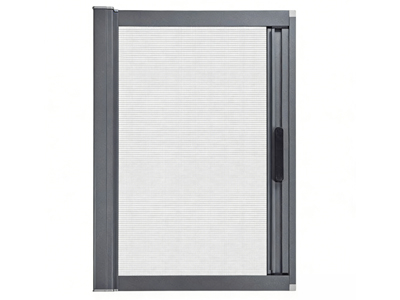
304 stainless steel mesh — scratch-proof, bite-proof, rust-proof
🐾 H01 Pet-Proof Australia Edition – Built for Aussie Pets
Heartworm — A Deadly Mosquito-Borne Disease
Heartworm (Dirofilaria immitis) is a parasitic worm transmitted by mosquitoes that can be fatal to dogs, cats, and other animals . The disease is endemic to Australia, with the highest prevalence along the eastern seaboard — from northern Queensland down to Victoria .
Key facts about heartworm in Australia:
- Transmission: When a mosquito bites an infected animal, it picks up microscopic heartworm larvae. The larvae mature in the mosquito over 10-14 days and are then transmitted to the next animal the mosquito bites .
- Lifecycle: Once injected, the larvae travel to the heart and lungs, where they mature into adult worms up to 30 cm long .
- Health impact: Adult worms can block blood flow in the lungs and heart, leading to heart failure and death .
- Prevention: While there is preventive medication, the best defence is preventing mosquito bites .
Australia has 6 mosquito species known to transmit heartworm. The most important vector is Culex annulirostris — the same species that also transmits Japanese encephalitis virus and Ross River virus .
🩺 Heartworm in Australian Pets: Heartworm is endemic to Australia, with the highest prevalence along the eastern seaboard from Queensland to Victoria. The disease is transmitted by mosquitoes and can be fatal. Prevention relies on avoiding mosquito bites .
Ross River Virus — A Threat to Pets and Their Owners
Ross River virus (RRV) is the most common mosquito-borne disease in Australia, with approximately 5,000 cases annually . While RRV is best known for affecting humans, it also poses a risk to animals. Australia's wildlife — including kangaroos, wallabies, and possums — serve as reservoir hosts for the virus .
Mosquitoes that feed on infected wildlife can transmit RRV to humans and domestic animals. Dogs and horses can also be infected with RRV, though they are typically not the primary reservoir .
With Australian case numbers surging — RRV cases nearly doubled from 1,710 in 2023 to 3,375 in 2024 — the risk to pets and their owners is greater than ever .
🦘 RRV and Animals: Kangaroos, wallabies, and possums are reservoir hosts for Ross River virus. Mosquitoes that feed on infected wildlife can transmit the virus to dogs, horses, and humans. RRV cases in Australia nearly doubled in 2024 .
The Problem with Standard Screens in Australian Pet Homes
Australian pet owners know the frustration all too well. Standard screens are no match for:
- Dogs excited to get outside — they charge through flimsy screens, leaving gaping holes
- Cats scratching at windows — they use screens as scratching posts, shredding the mesh
- Puppies and kittens — they chew on everything, including screens
- Repeated daily use — pets going in and out of doors wears out the mesh
One Australian customer review notes: "I have two large dogs and they destroyed the previous screen within a week. I needed something that could handle them" . Another review states: "My cat kept climbing the screen and tearing holes in it. I was replacing screens every few months" .
The cost adds up. A professional screen replacement in Australia typically costs $200-$500 per screen . And in areas with high mosquito pressure — like Queensland, northern NSW, and the Torres Strait — these damaged screens are more than just an expense. They're a health risk.
🐕 Australian Pet Screen Problem: "I have two large dogs and they destroyed the previous screen within a week." "My cat kept climbing the screen and tearing holes in it." Damaged screens are not just annoying — they leave homes vulnerable to mosquito-borne diseases .
Why 304 Stainless Steel Is the Answer
The H01's 304 stainless steel mesh is specifically designed for Australian pet households. It is the same material used in marine-grade applications and is:
- Scratch-proof — dogs' claws cannot damage the woven steel
- Bite-proof — strong enough to withstand chewing
- Rust-proof — resists corrosion even in coastal areas
- High tensile strength — withstands impacts and repeated use
- Fine mesh (1.2mm aperture) — blocks mosquitoes, flies, and wasps
Unlike pet-resistant polyester mesh (which can still be torn by determined pets), stainless steel offers true pet-proof protection .
Other Mosquito-Borne Diseases Affecting Australian Pets
Beyond heartworm and RRV, Australian pets face other mosquito-borne threats:
- Barmah Forest virus — similar to RRV, transmitted by mosquitoes in coastal and inland regions
- Japanese encephalitis virus — has been detected across multiple Australian states and is transmitted by Culex annulirostris .
- Dengue and Zika viruses — while not endemic in Australia, the establishment of Aedes albopictus (Asian tiger mosquito) on the mainland raises the risk of future outbreaks affecting both humans and animals .
With Australia's national case numbers for mosquito-borne viruses nearly doubling between 2023 and 2024 , the importance of protecting pets from mosquito bites has never been greater .
🦟 Australia's Growing Mosquito Threat: National mosquito-borne virus cases nearly doubled between 2023 and 2024. Asian tiger mosquito detected on mainland in 2026. JEV has been detected across multiple states. Pets are at risk from all of these diseases .
H01 Applications for Australian Pet Homes
🏡 Homes with Large Dogs
Australian households with large breeds — including Labradors, Staffies, Kelpies, and German Shepherds — face the highest risk of screen damage. The H01's 304 stainless steel mesh withstands the impact of even the most excited dog.
🐈 Homes with Cats
Cats love to scratch and climb. They see traditional screens as scratching posts or as a way to access the outdoors. The H01's stainless steel mesh is impervious to claws, and the retractable design means you can roll the screen up when your cat is particularly determined.
🏖️ Coastal Pet Homes
If you live near the coast — in Queensland, northern NSW, or Victoria — salt air corrodes ordinary metals. The 304 stainless steel mesh is marine-grade and resists rust and corrosion, making it ideal for coastal areas.
🌿 Properties Near Wildlife Habitat
Many Australian homes are near bushland, wetlands, or national parks. These areas support high mosquito populations and wildlife (kangaroos, wallabies, possums) that serve as RRV and JEV reservoirs. The H01 provides a barrier between your home and the mosquitoes breeding in nearby wildlife habitats .
Comparison – H01 vs. Other Pet Screen Options
How to Order Your H01 Pet-Proof Screen
Protecting your pets and your home is simple:
- Measure your windows or doors (width × height in mm).
- Choose 304 stainless steel mesh for maximum pet-proof durability.
- Select your frame colour — any RAL colour to match your home.
- Contact us via WhatsApp or email with your specifications.
- Install yourself in minutes — no drilling required.
We ship to all Australian states and territories. All screens are custom-made to your measurements and shipped with a 2-year warranty.
Heartworm is endemic. RRV cases are surging. 304 stainless steel mesh resists scratching, biting, and rust. Get your custom H01 today.
Get a Pet-Proof Quote